#6 – Whippets

I was always under the impression that the Whippets, the group of boys Solly grew up with,and the friends he worries about in the letters, was a gang.  All the stories I heard were about breaking into places or breaking out of places.

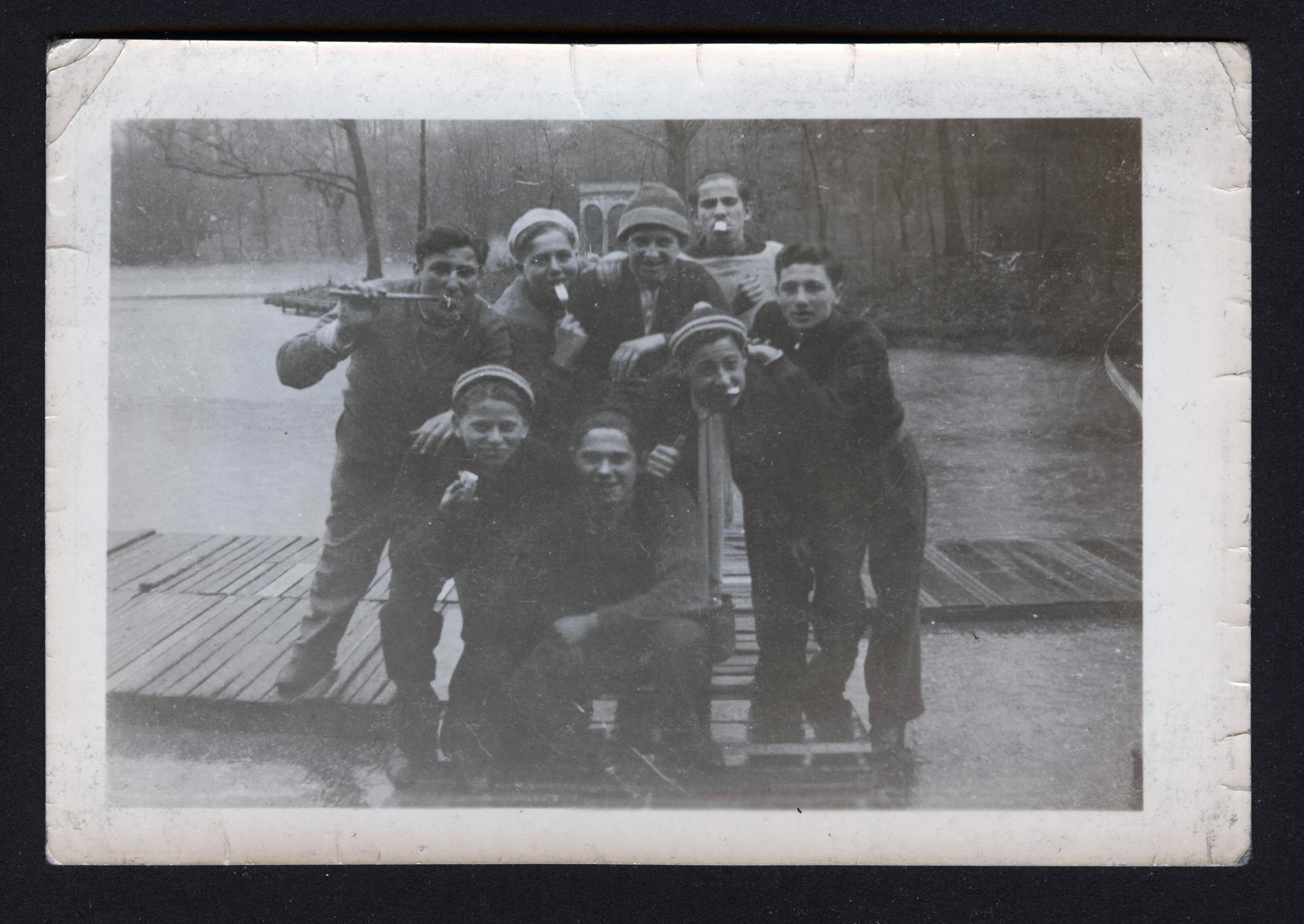
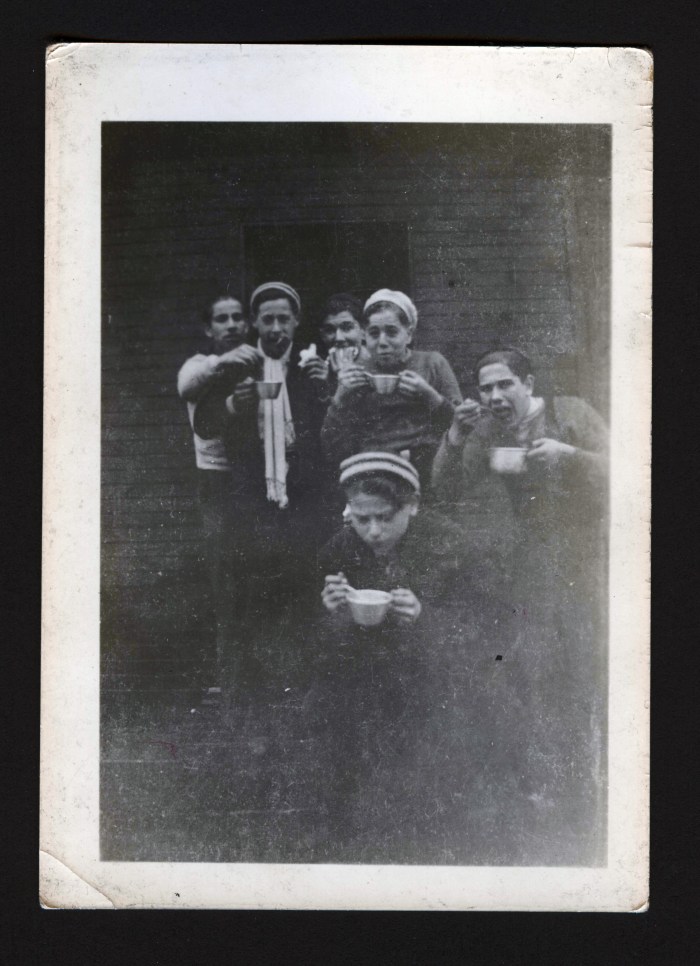
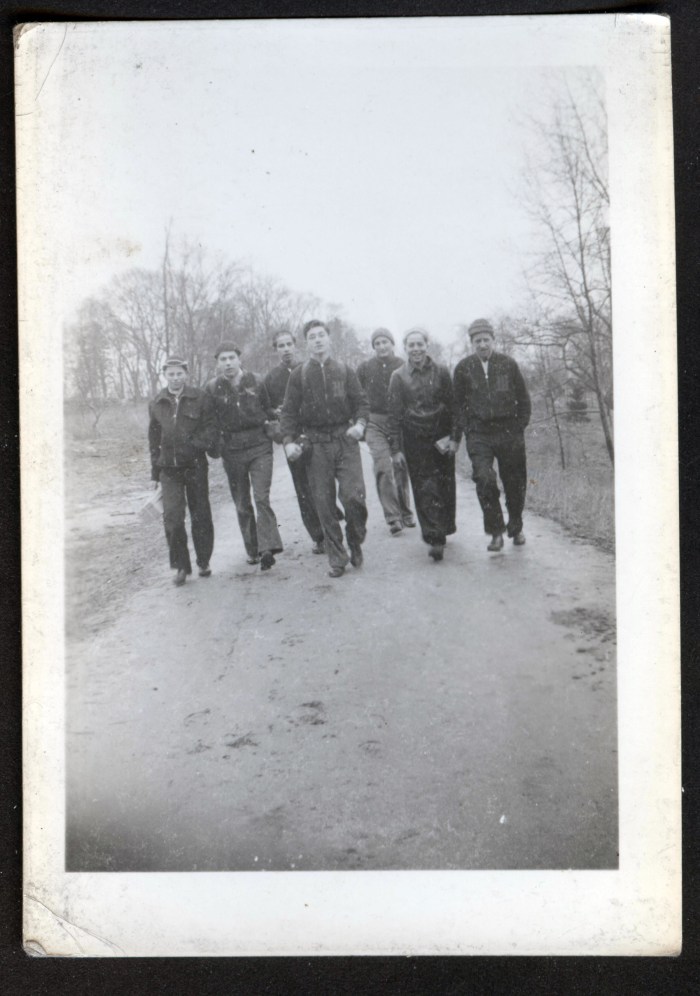
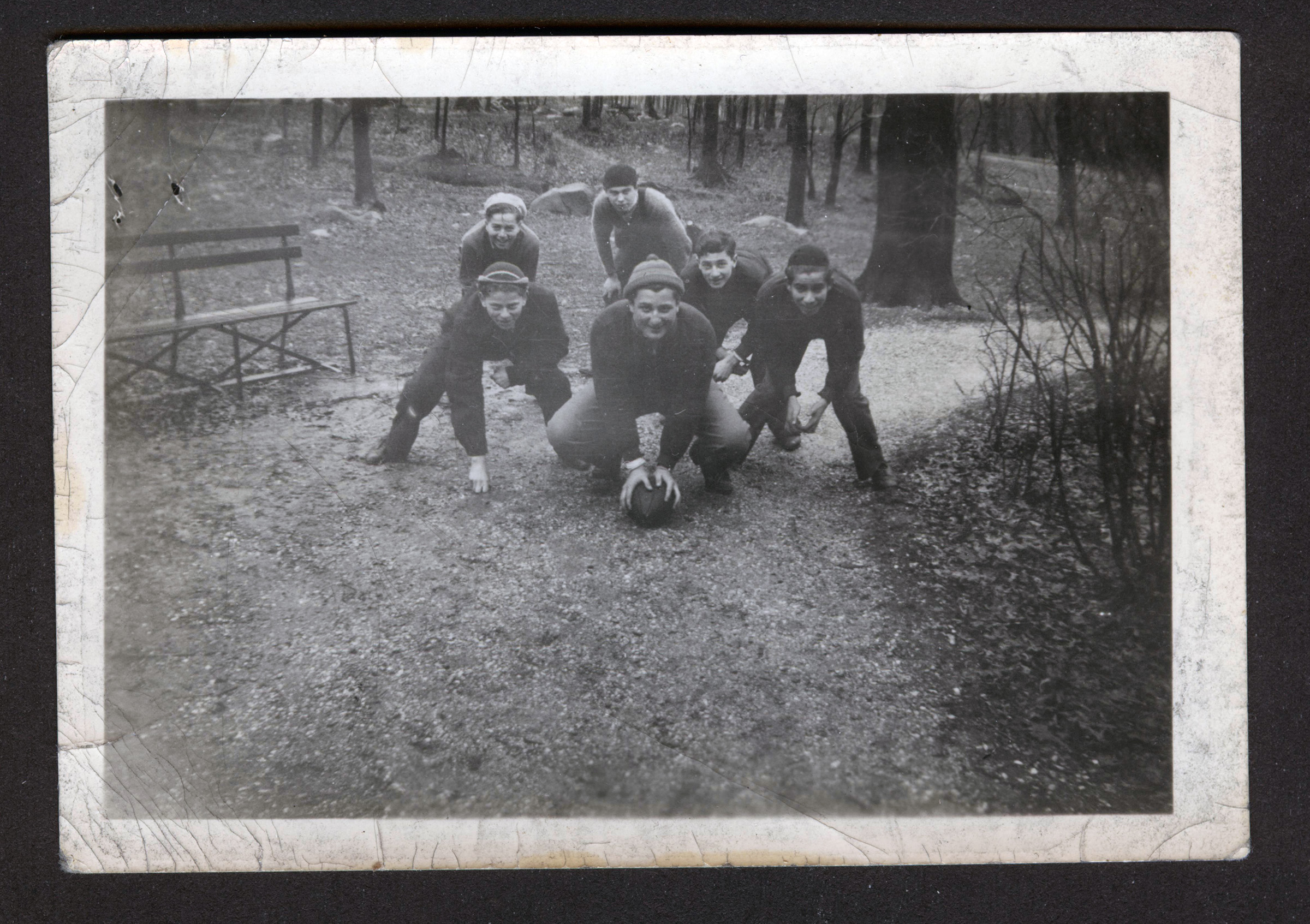
These four pictures were found in Solly’s envelope of photos I refer to in the About page. I felt they should be included in the Blog.  Besides the obvious connection to the letters, such as Solly writing and inquiring in them about the other guys, it seemed like Sol, what he was called at the time he started to save these items, kept them together with with the Army photos and documents deliberately.

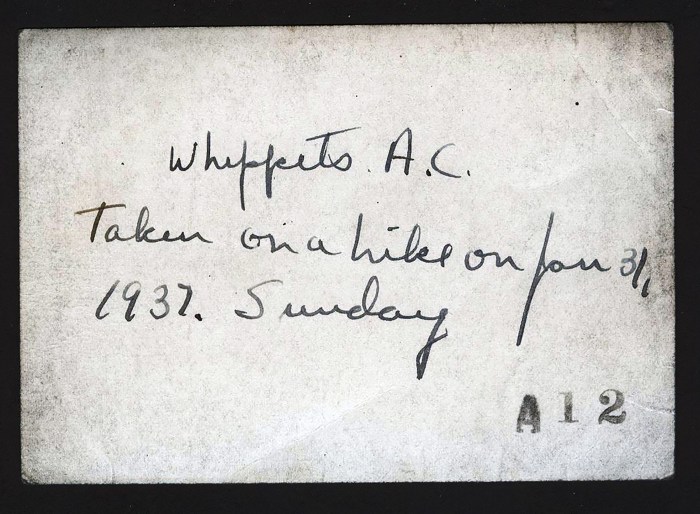
On the back of the first photo below they are referred to as Whippets A.C., which means Athletic club.  Selma was only able to identify one of the other boys for sure and in some of the pictures actually had to have Solly pointed out to her.  “I did not know him when he had that fat face,” Selma said.

All of these pictures appear to be the same day as the first photo below, which is marked on the reverse side by Esther as January 31, 1937.  Solly is 15 1/2.
Whippets_02_front_mst
Solly up front with hands on football, Ben Derzansky behind his left shoulder, Jan 31, 1937.
Whippets_02_reverse_mst
Reverse side above picture
Whippets_04_mst
Solly far left, Ben Derzansky far right, Jan. 31, 1937. Marshmallows on a stick?


Whippets_05v1_mst
Metal cups and pots for canteen cups.  An all day outing.


Whippets_03_front_mst
The Whippet in front appears to be carrying the only back pack.

We believe there were 9 Whippets in total.  We believe all of them were shipped overseas and fought in the war in Europe and the Pacific.  We believe they all returned home in one piece.

The Whippets kept in close contact their entire lives with yearly gatherings that included all their children.

This is a photo of some of the Whippets at one of the large multi-family gatherings we all attended in 1981.

Whippets_06_front_mst

Whippets_06_reverse_mst

#7 – Help Identify

Can you help identify . . .

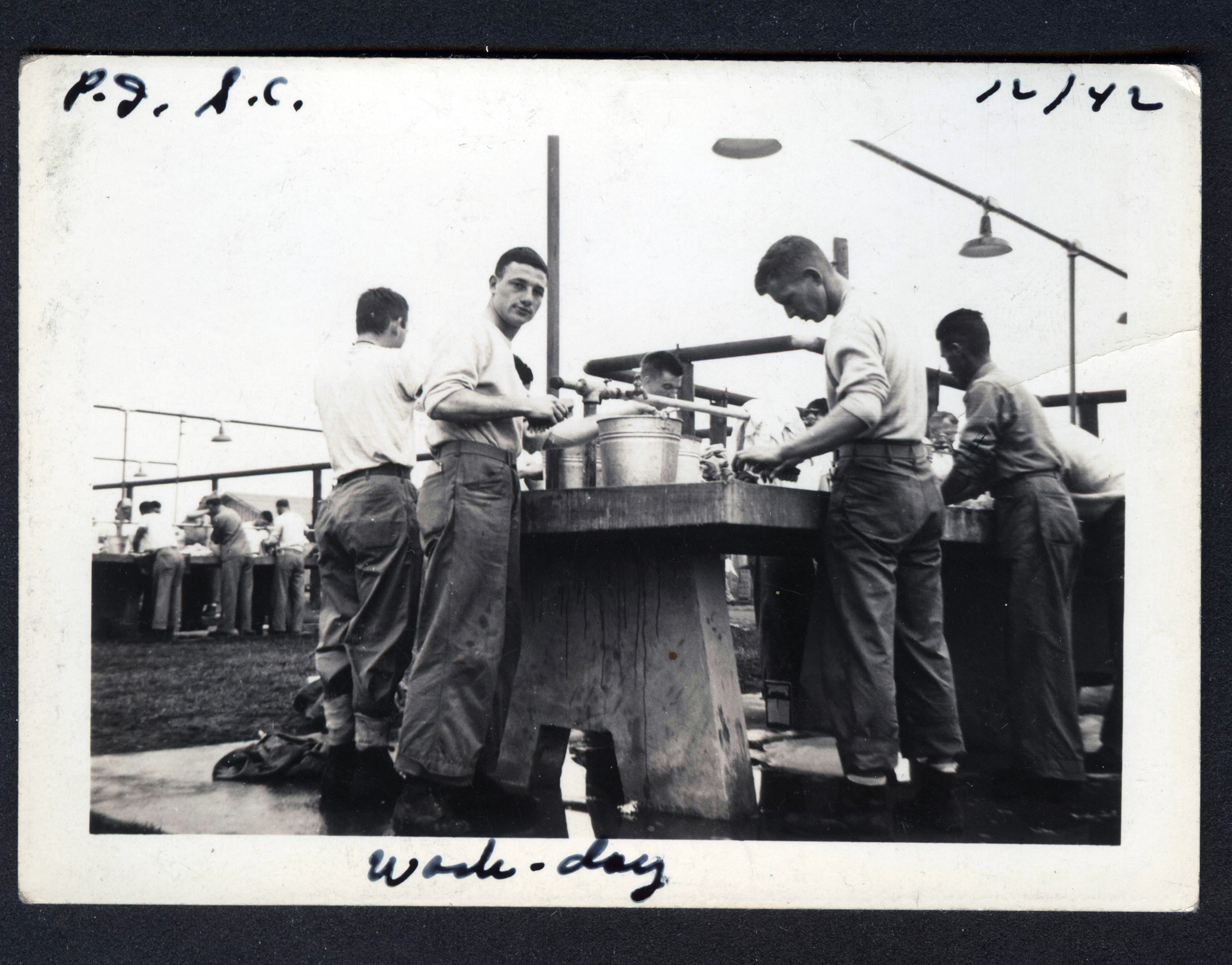
These two photos were either in the envelope Esther kept or in one of Sol’s desk draw envelopes.  Both pictures are dated December, 1942, nearly a year before Solly was drafted.  So, who are they of?  If the relevant clue is that they are deliberately part of Esther or Solly’s collection then it must be from or of someone in the family inner circle?  First thought – Mike.  He is not in the pictures but he still could have sent them home.  The uniforms are Army.  The notation in the upper left corner of both photos seems to indicate a place in South Carolina. Notice how the people in the picture are not identified by name but by state.  The handwriting looks like Esther’s.

Pre1944_18_1942_unknown_mst
Unidentified picture #1
Pre1944_19_1942_unknown_mst
Unidentified picture #2

#12 – P.M. the daily newspaper

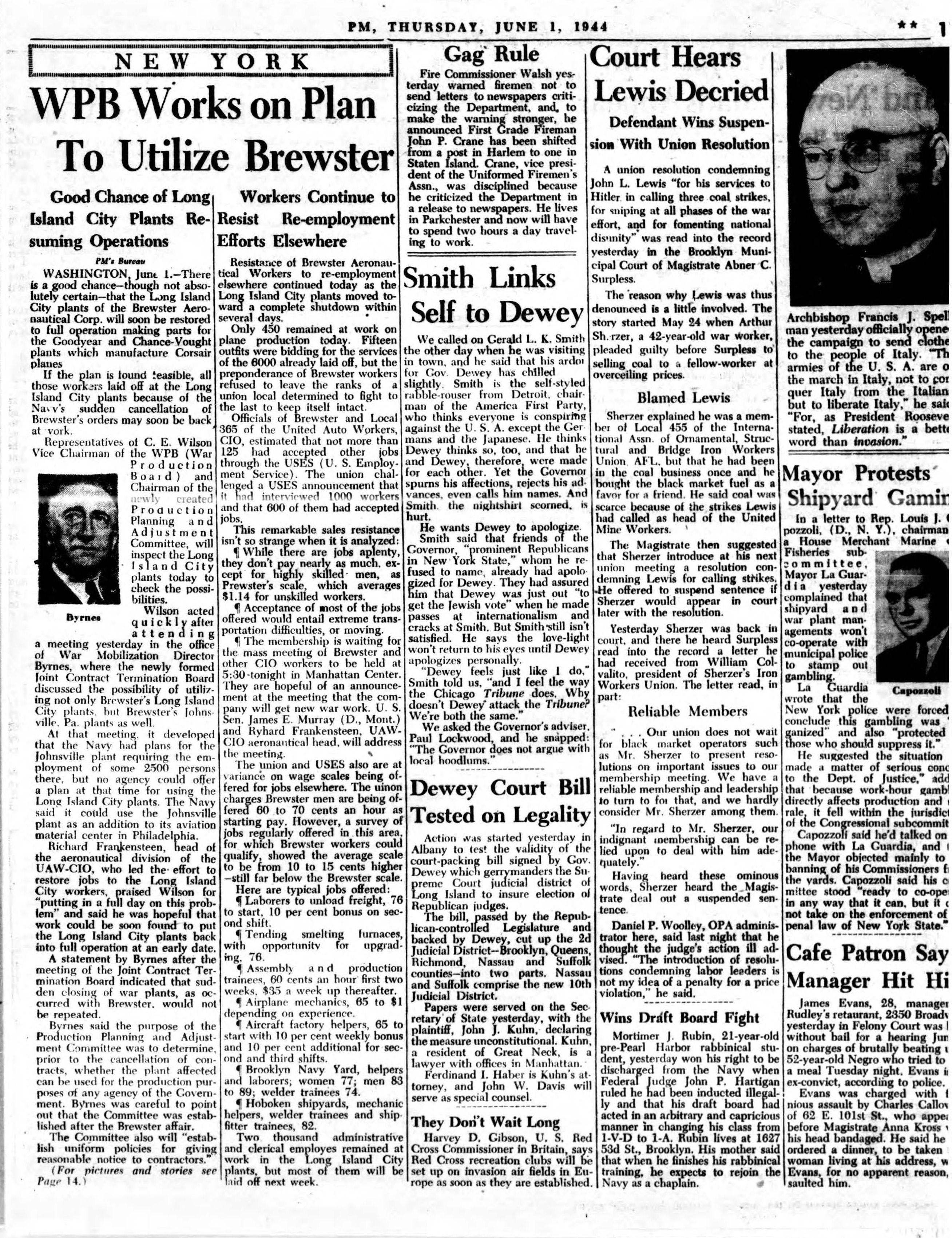
Solly mentions P.M in the February 9, 1945 letter for the first time, and then later on in the April 19, 1945 letter he talks about receiving his copies, and again a week or so later in the April 27th letter he boasts that he has gotten the major from Brooklyn to start reading P.M.   Solly talks about how reading P.M. makes him feel like he is back home, riding the subway, and catching up with news of the world.

P.M. was a very liberal leaning daily newspaper published in New York City by Ralph Ingersoll from June 1940 to June 1948 and financed by Chicago millionaire Marshall Field III.  The origin of the name is unknown, although Ingersoll recalled that it probably referred to the fact that the paper appeared in the afternoon; The New Yorker reported that the name had been suggested by Lillian Hellman.

The paper borrowed many elements from weekly news magazines, such as many large photos and at first was bound with staples. In an attempt to be free of pressure from business interests, it did not accept advertising.  There were accusations that the paper was Communist-dominated, but the editorial pages of P.M. were frequently critical with the Communist Party’s paper, the Daily Worker.


PM_Daily_060144_mst
A page out of P.M., 1944

P.M. was also a highly literary and intellectual read and attracted some of the great writers and political innovators of its time.  Theodor Geisel, better known as Dr. Seuss, published more than 400 cartoons on PM‘s editorial page. Crockett Johnson’s comic strip Barnaby debuted in the paper in 1942. Other artists who worked at PM included Ad Reinhardt, one of the founders of Abstract Expressionism, and Joseph LeBoit, who both contributed margin cartoons and drawings.

Coulton Waugh created his short-lived strip, Hank, which began April 30, 1945 in PM. The story of a disabled GI returning to civilian life, Hank had a unique look due to Waugh’s decorative art style, combined with dialogue lettered in upper and lower case rather than the accepted convention of all uppercase lettering in balloons and captions. Some dialogue was displayed with white lettering reversed into black balloons.

The comic strip Hank.

Hank sought to raise questions about the reasons for war, and how it might be prevented by the next generation. Waugh discontinued it at the very end of 1945 because of eyestrain. Cartoonist Jack Sparling created the short-lived comic strip Claire Voyant, which ran from 1943 to 1948 in PM, and which was subsequently syndicated by the Chicago Sun-Times.

 Journalist I. F. Stone was the paper’s Washington correspondent. He published an award-winning series on European Jewish refugees attempting to run the British blockade to reach Palestine, later collected and published as Underground to Palestine. Staffers included theater critic Louis Kronenberger and film critic Cecelia Ager. Weegee, Margaret Bourke-White and Arthur Leipzig were the photographers. The sports writers were Tom Meany, Tom O’Reilly and George F. T. Ryall, who covered horse racing. Sophie Smoliar was the New York City reporter working frequently with photographer Arthur Felig (Weegee) submitted by her son and a collection of her original articles. Elizabeth Hawes wrote about fashion, and her sister Charlotte Adams covered food.

Other writers who contributed articles included Erskine Caldwell, Myril Axlerod, McGeorge Bundy, Saul K. Padover, James Wechsler, eventually the paper’s editorial writer, Penn Kimball, later a professor at the Columbia University Graduate School of Journalism, Heywood Hale Broun, James Thurber, Dorothy Parker, Ernest Hemingway, Eugene Lyons, Earl Conrad; Ben Stolberg, Malcolm Cowley, Tip O’Neill (later Speaker of the United States House of Representatives); and Ben Hecht (playwright and author).

The primary point of my listing all the names of these people who worked at P.M. is to convey how much this short-lived daily represented some of the most progressive and creative thinkers, artists and journalists of its day.  Our family was part of a well-informed and intellectually demanding readership.  Clearly, this was a newspaper the Kovsky’s could sink their teeth into.

#22 – Engineers

It is not surprising that in WWII the U.S. Army was heavily equipped with engineer troops and equipment.  The Army’s officer corps was highly influenced by the teachings of the Military Academy at West Point, which was in fact the first engineering school in the United States.  Fittingly, the Army focused much of its resources and brains on building a force of engineers in the mid to late 1930’s who would later be a critical element in the ultimate defeat of the Germans and the new and accelerated kind of warfare Hitler and his Generals were waging across Europe.

The primary mission of combat engineers was to KEEP THE ARMIES MOVING TO ATTACK, AND IMPEDING THE ENEMY.

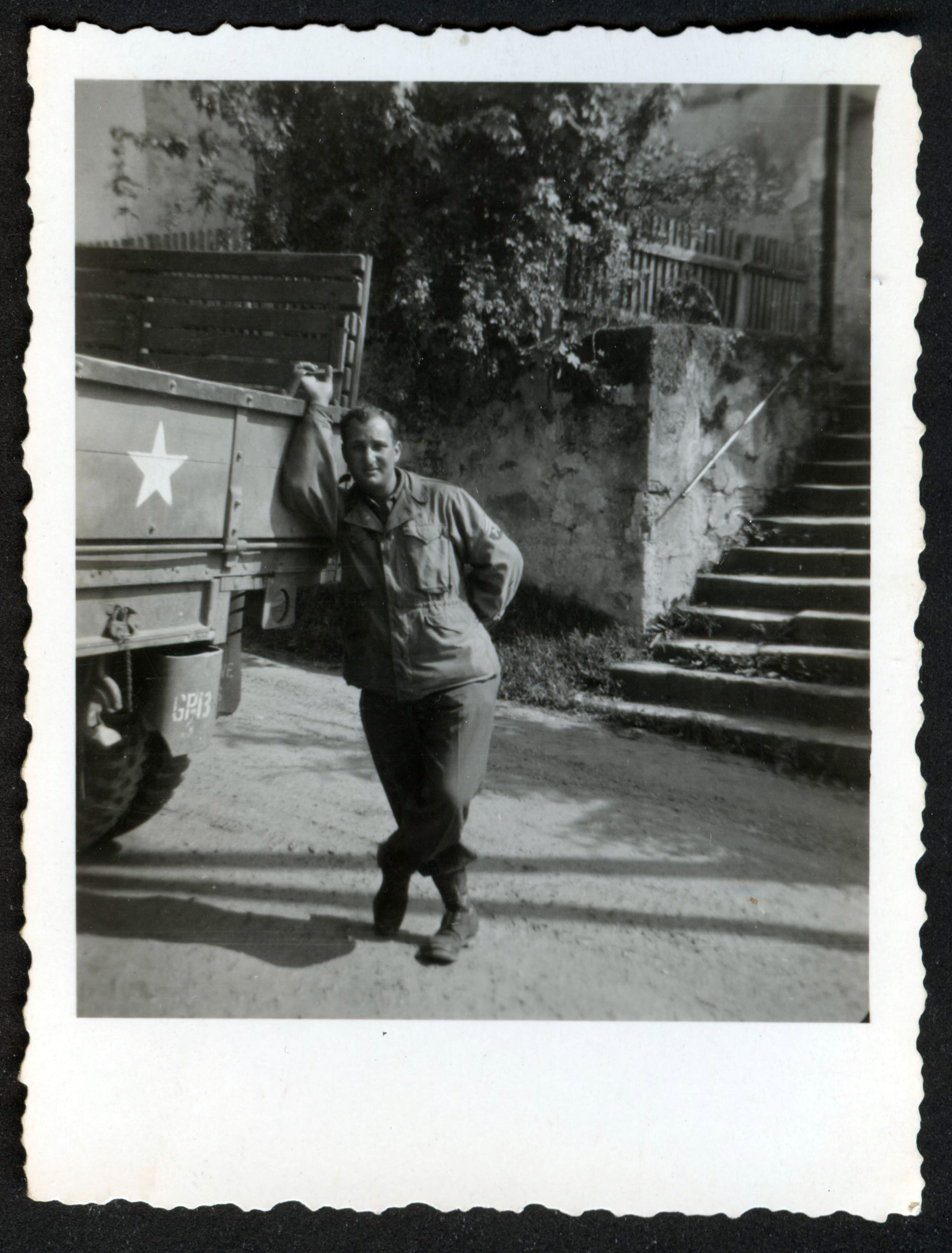
NP-Germany_Engineers_03_mst
Solly in Germany, 1945. Upon first seeing this picture, Selma said: “Now that’s what he looked like when I met him. He was very handsome.”

The divisional combat engineer battalions were trained to perform most engineering tasks including: demolitions; obstacle emplacement; fortification; bridge building which included mobile, floating and fixed bridges; mine warfare; and establishing ammunition dumps.   Combat engineers, like Solly, were considered to be elite specialists because they were the ones who got sent in before the larger corps of engineers arrived. (Read more in Menu>About).

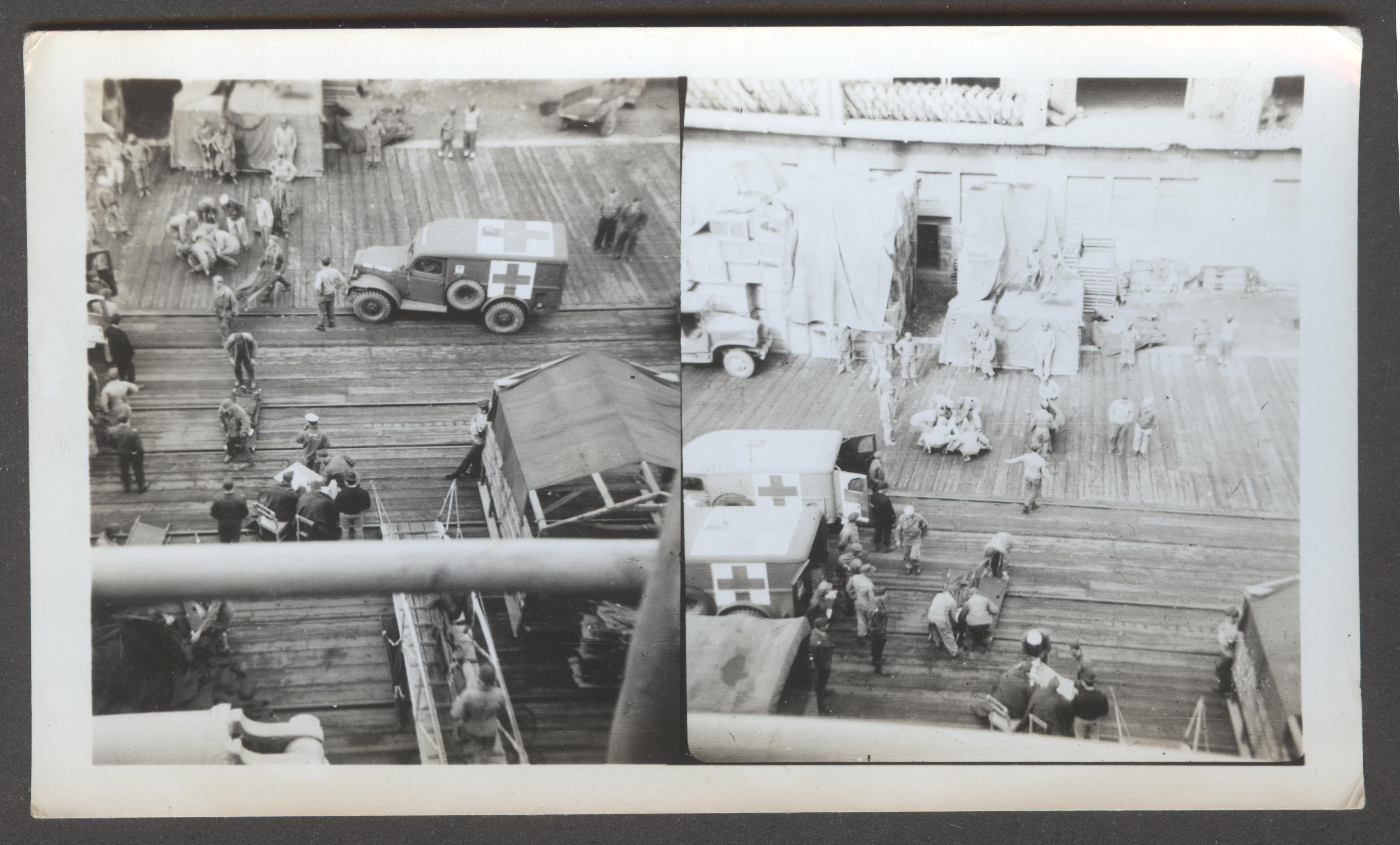
NP-Germany_Engineers_05_mst
Engineers and Medical units at a loading dock. Photo taken by Solly from the deck of a ship

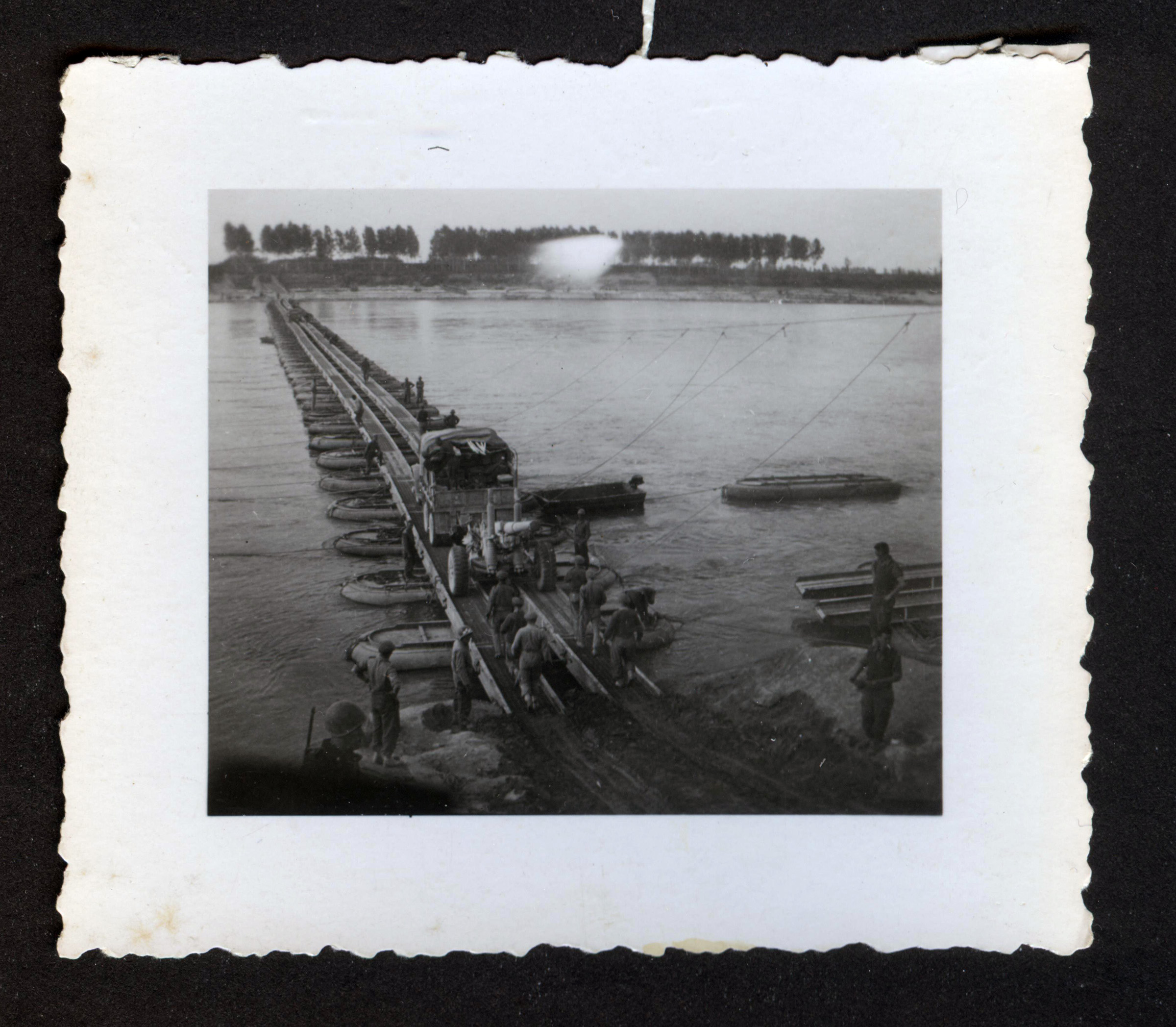
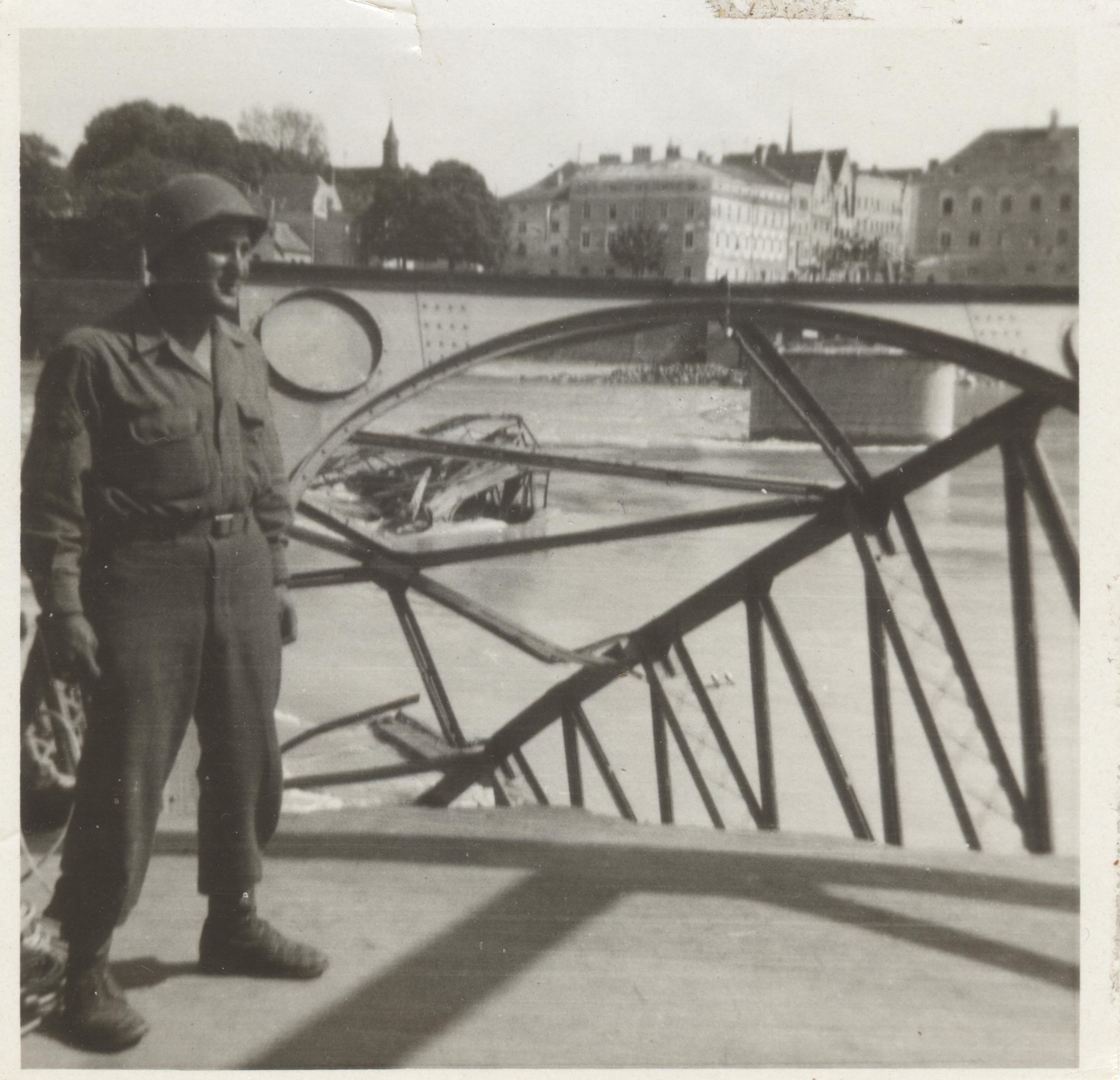
Based on the number of photos Solly took of demolished bridges and the dates and drawings on The Map we know Solly’s Engineering outfit was also tasked with dealing with the rubble the Germans left behind for US forces as they withdrew further north into Germany.  The Germans not only destroyed all bridges along every road capable of handling military traffic but left behind ghost patrols, machine gun nests, and minefields to inflict as many casualties on forward moving groups of engineers and other infantry as possible.

NP-Germany_Engineers_02_mst
Auto mechanic garage, Germany, 1945. Photo by Solly.

In my research I am more interested in the “colors” than the simple facts and I found lots of short films shot by the Army Signal corps of Combat engineers “on the move” during WWII.  For more context, I suggest 4 short reels (a few minutes each) of combat engineers from the months of March-May 1945.  They are either Solly’s army (although I don’t see him) or engineers covering similar terrain as he was at the same time, and place.

Cherbourg / Saint-Lô, start viewing at 1 min. 30 secs:
https://www.youtube.com/watch?v=AGMMo5uShPU

Search for German personnel in Mechernich, Germany, March 8 1945: https://www.youtube.com/watch?v=zevYR-4M_r8

River Crossing, Mar 23 1945:
https://www.youtube.com/watch?v=jZl9zGHgQNI

In the streets of Koblenz, Germany, Mach 1945:
https://www.youtube.com/watch?v=llAFFg8pZEU

#41 – June 9, 1945

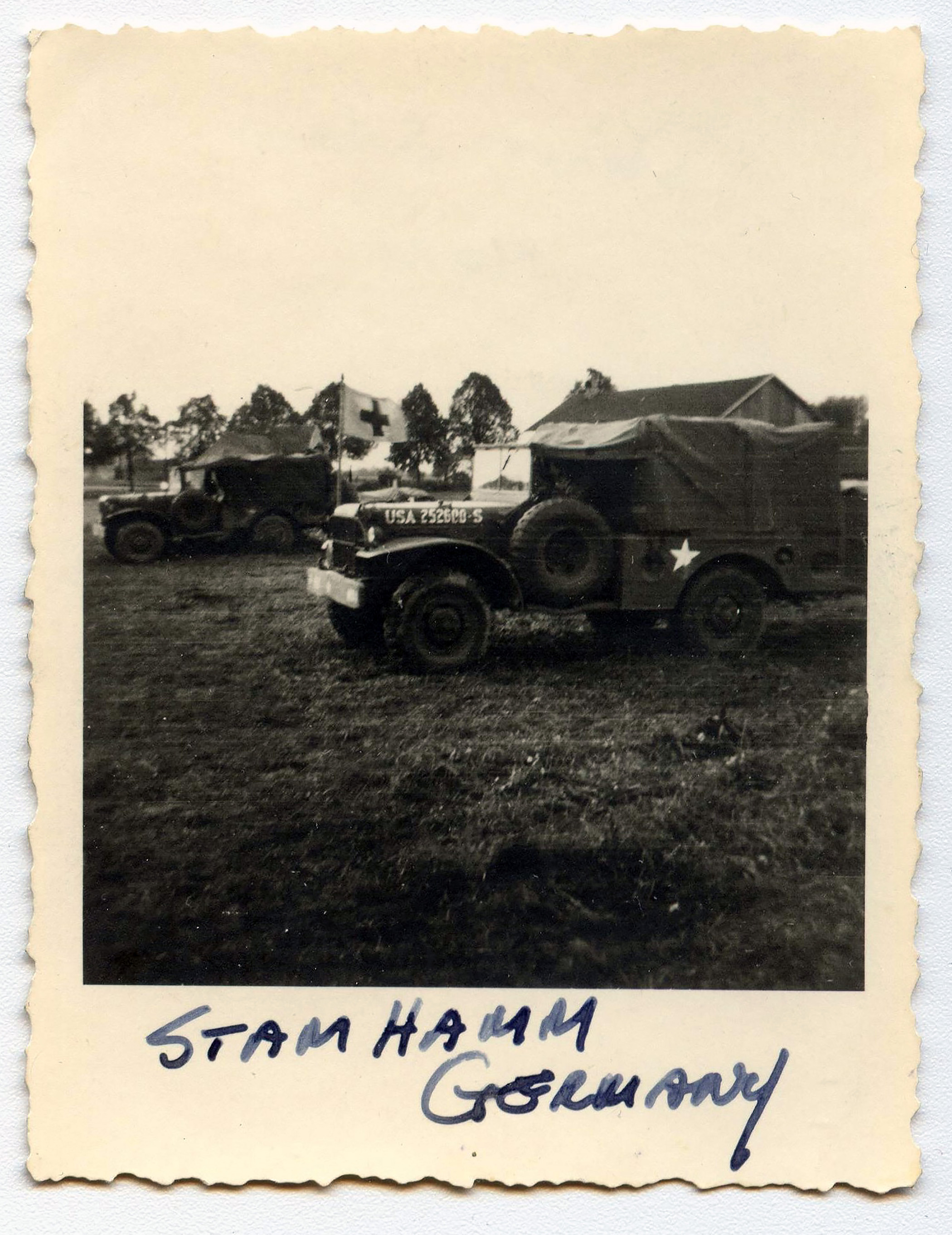
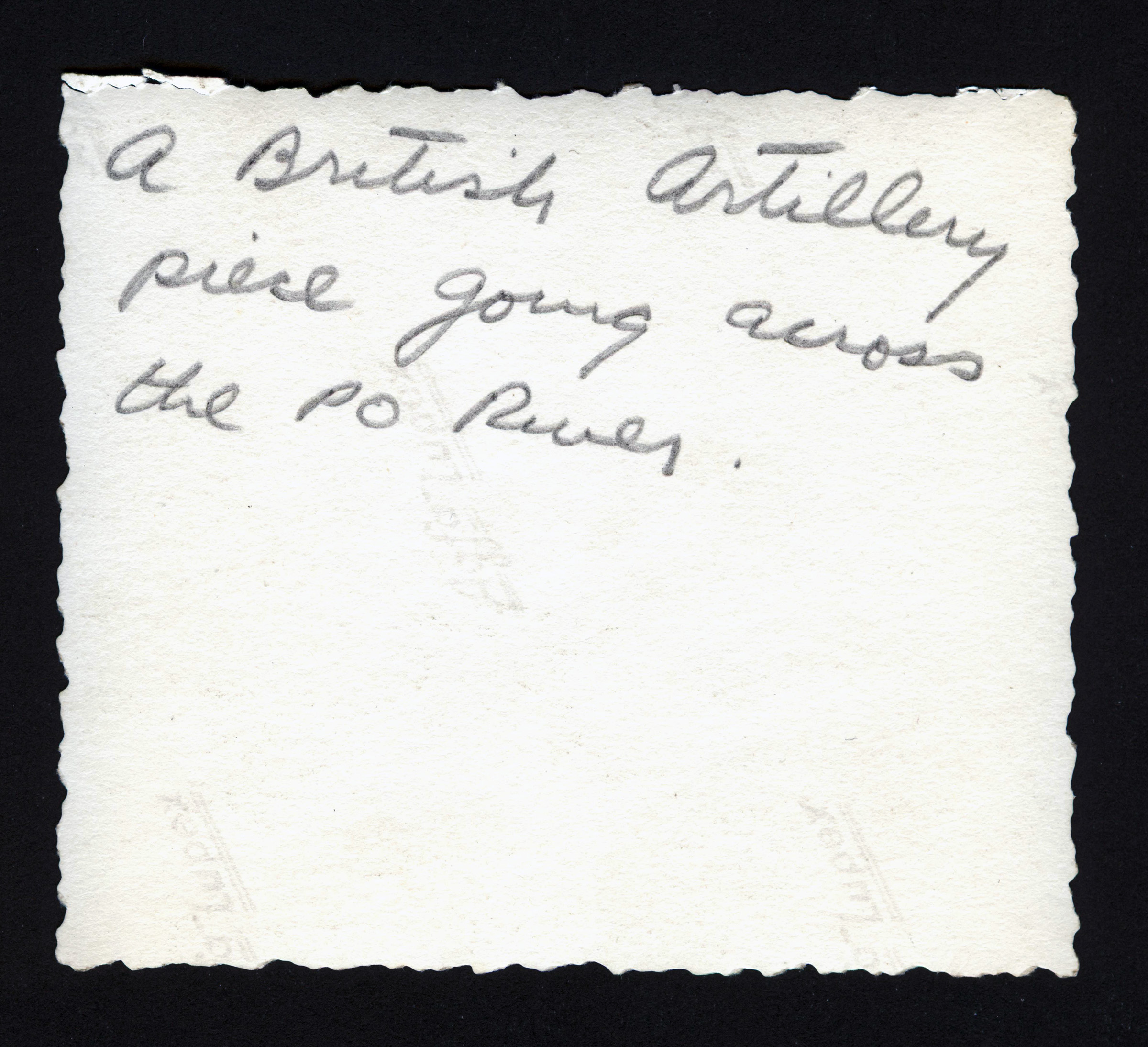
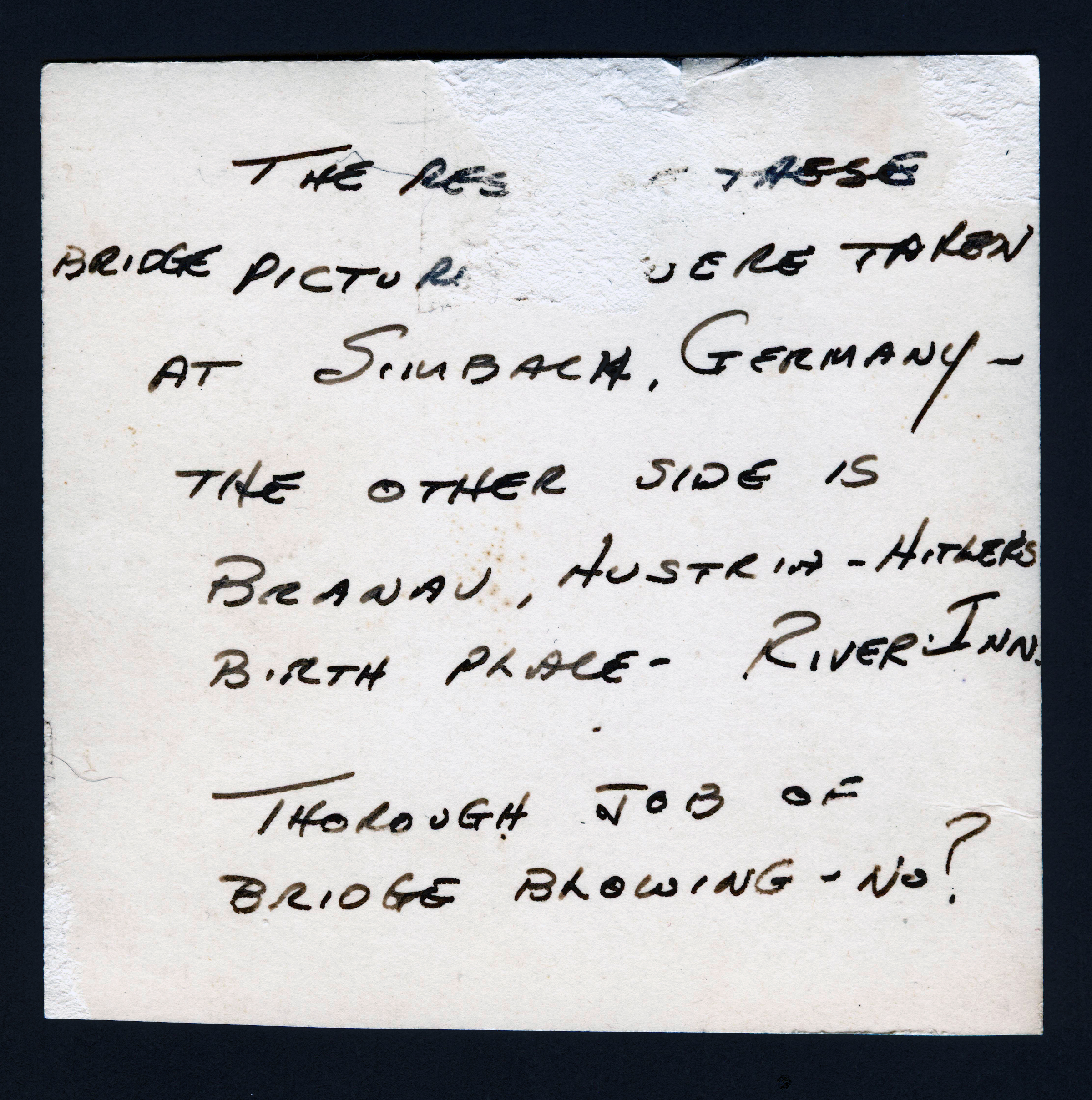
Solly enclosed these 5 photos with their notes on the reverse side in his June 9, 1945 letter to Esther, Dave and Eric.  Handwritten on the back of some of these photos is the same message Solly writes in a number of his other letters: don’t tell mom.

On view: 5 photos Solly took of Germany with images of the reverse side and the handwritten notes he made.

Germany_Photos_envelope_mst
Envelope that contained the 3 photos
Germany_Photos-1-front_mst
Germany photo # 1
Germany_Photos-1-rear_mst
Germany photo #1, reverse side and note
Germany_Photos-2-front_mst
Germany photo #2
Germany_Photos-2-rear_mst
Germany photo #2, reverse side and note
Germany_Photos-3-front_mst
Germany photo # 3
Germany_Photos-3-rear_mst
Germany photo # 3, reverse side and note
Germany_PhotosHome-5-front_mst
Germany photo # 4
Germany_PhotosHome-5-reverse_mst
Germany photo # 4, reverse side and note
Germany_PhotosHome-4-front_mst
Solly – Germany photo # 5
Germany_PhotosHome-4-reverse_mst
Germany photo # 5, reverse side and note

JULY POSTS: #46 – Holocaust Photos 1, 2, 3

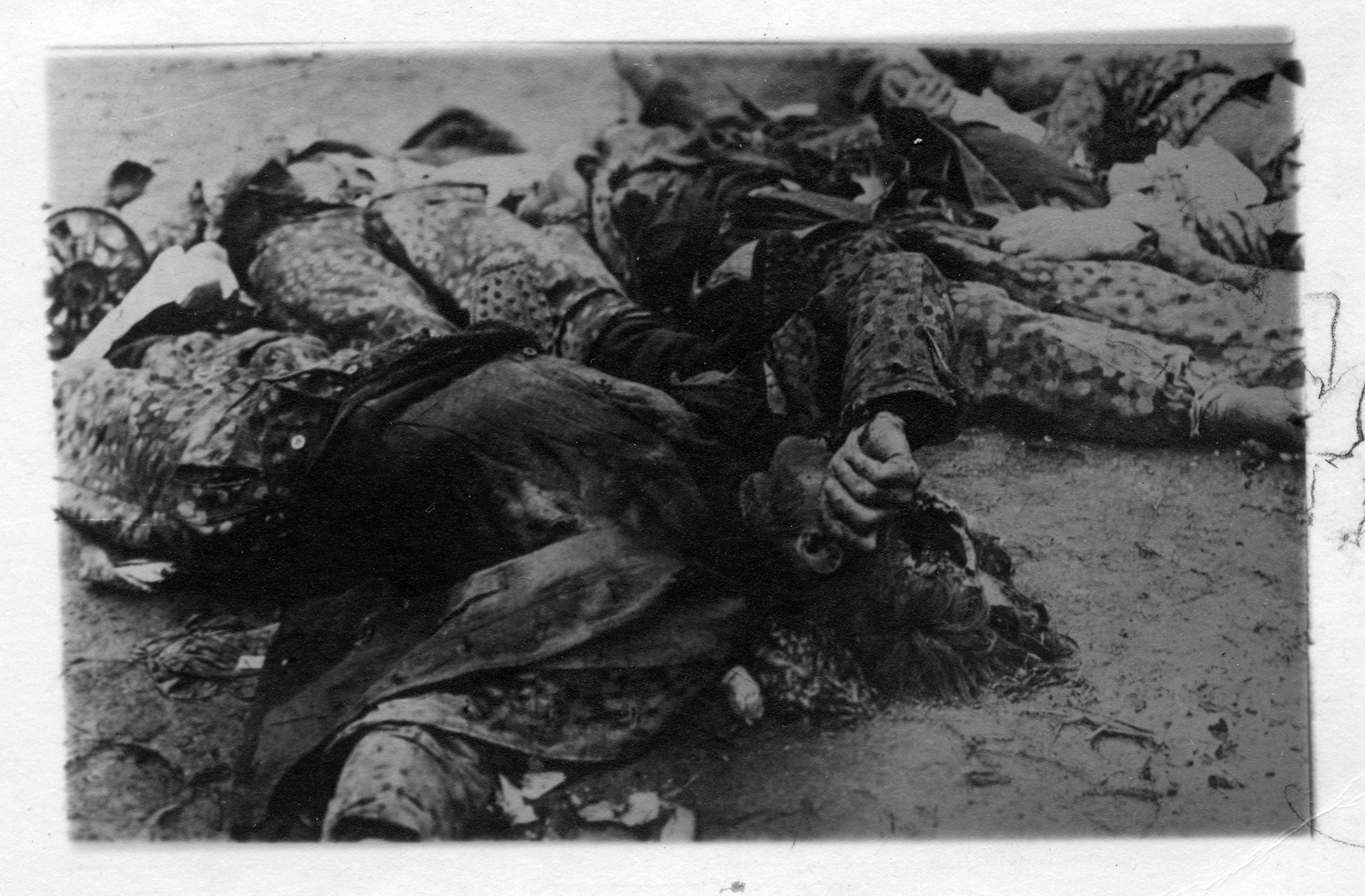
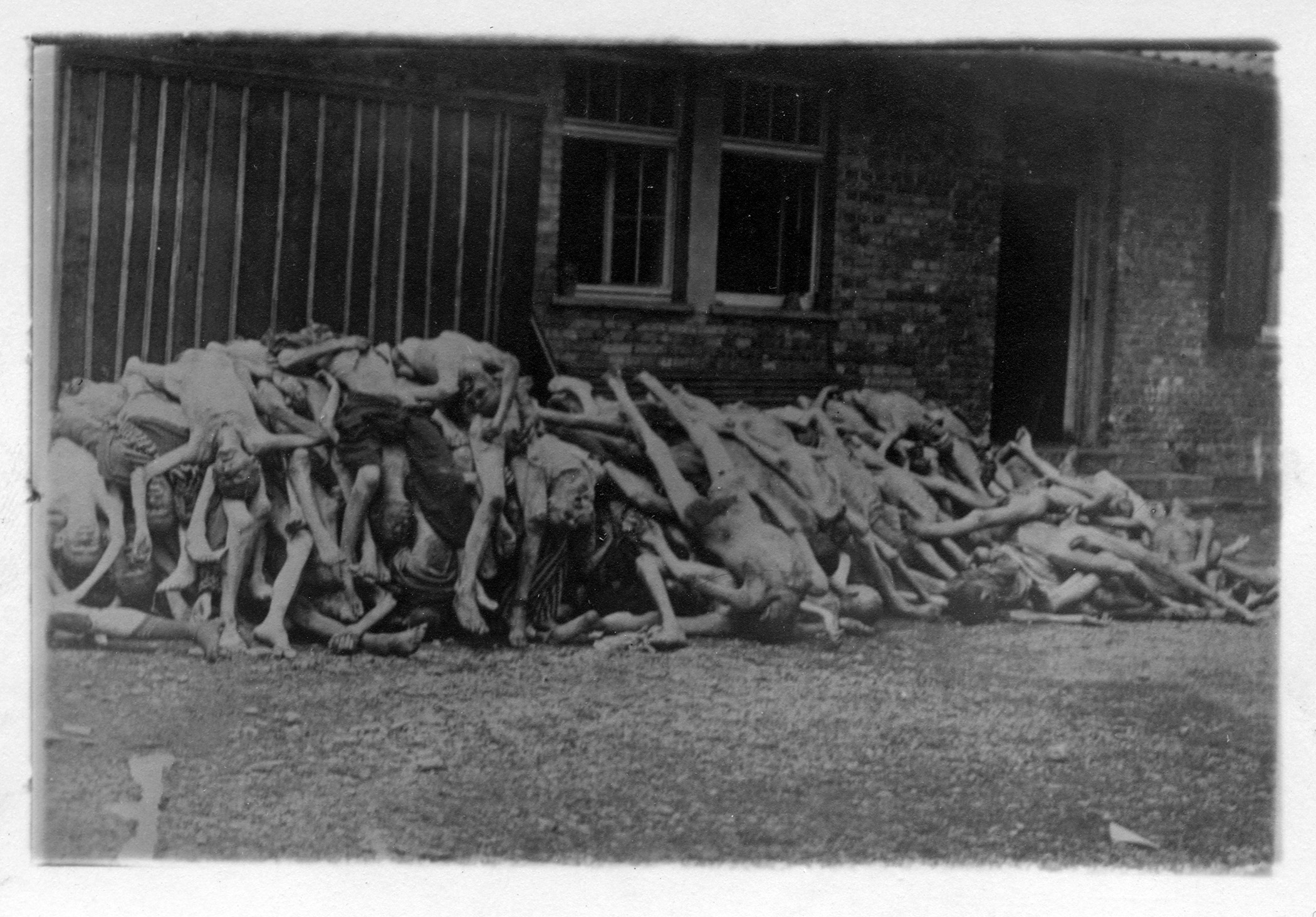
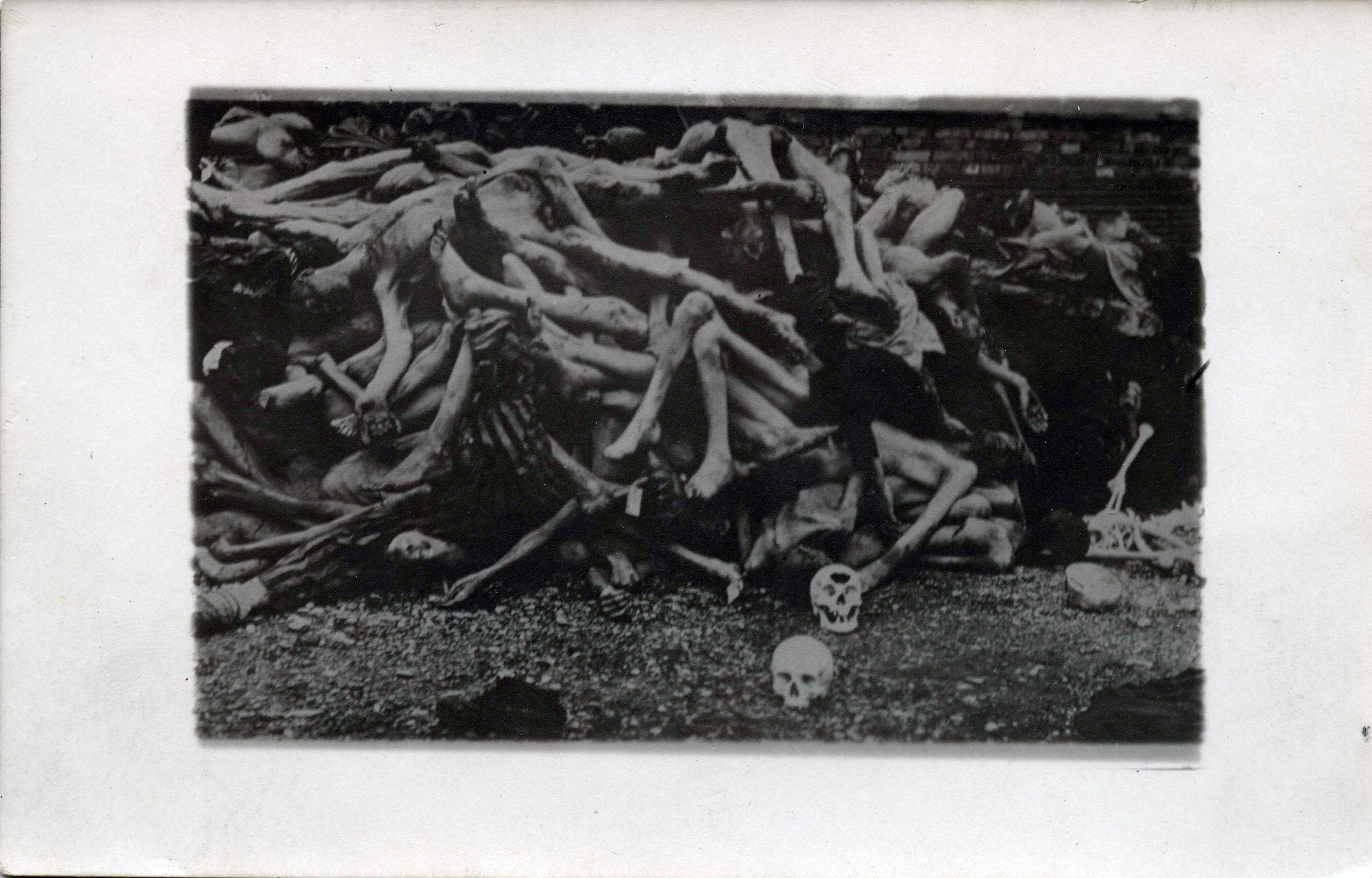
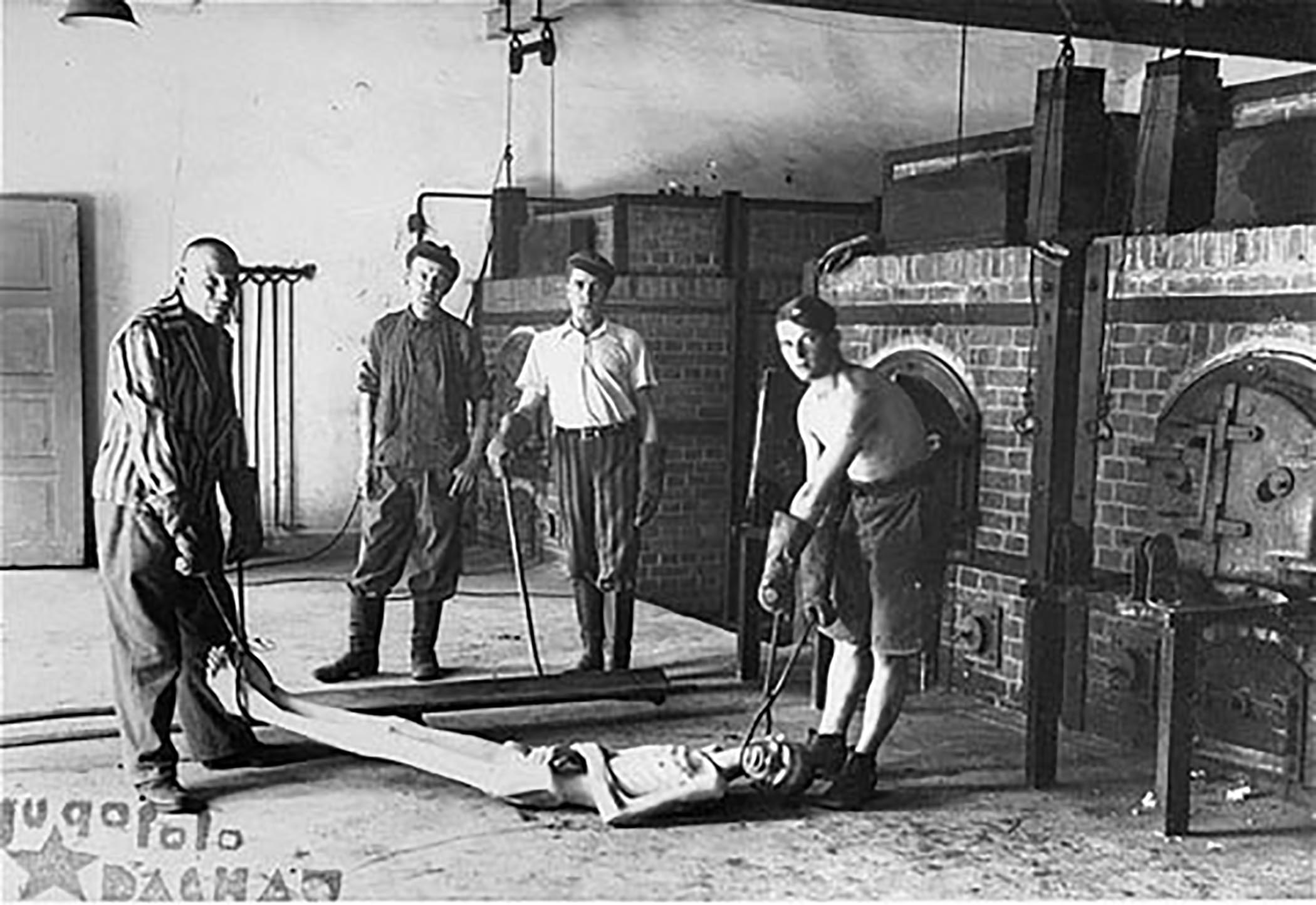
There are no letters from Solly written in July or August 1945.  Instead, I am posting these Holocaust photos my father kept in a small shoe box in the bottom of a drawer.  He brought these home with him.

On view: 3 photo/postcards of concentration camps after Allied liberation.

Dachau_01_NotFound_mst
Concentration camp image #1, not found in Holocaust Museum archive


Dachau_02_NotFound_mst
Concentration camp image #2, not found in Holocaust Museum archive


Dachau_03_NotFound_mst
Concentration camp image # 3, not found in Holocaust Museum archive


#47 – Holocaust Photos 4, 5, 6, 7

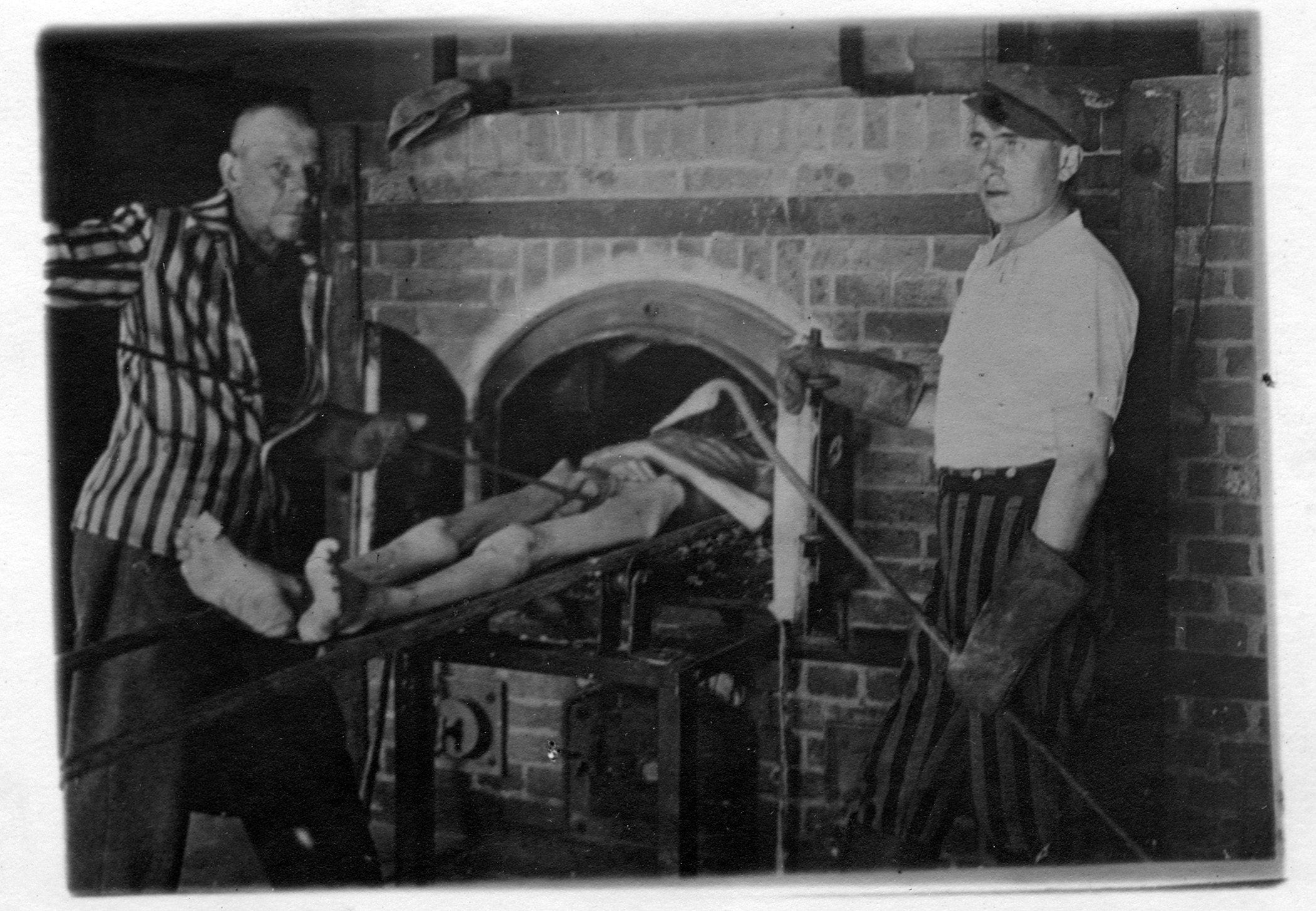
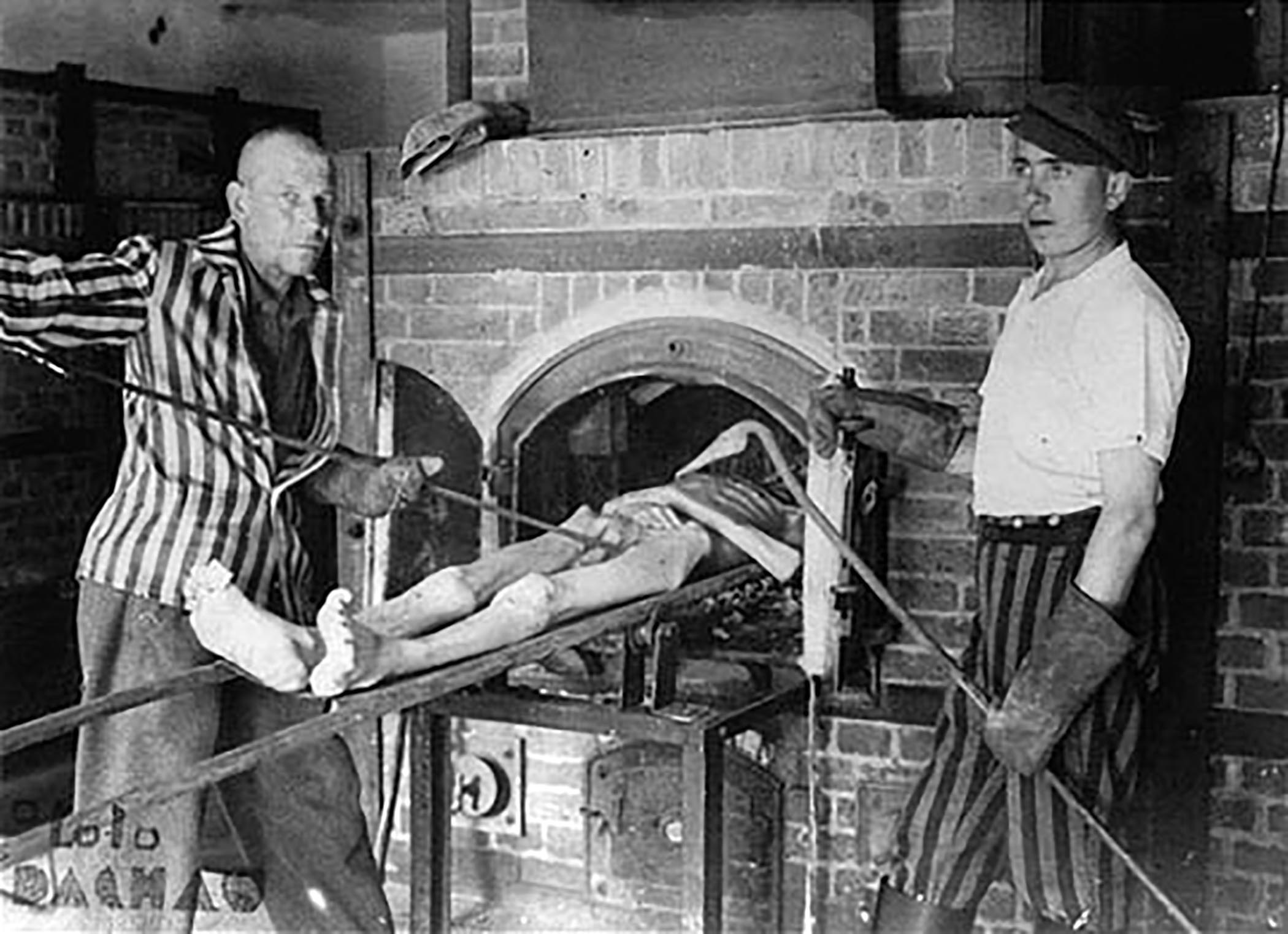
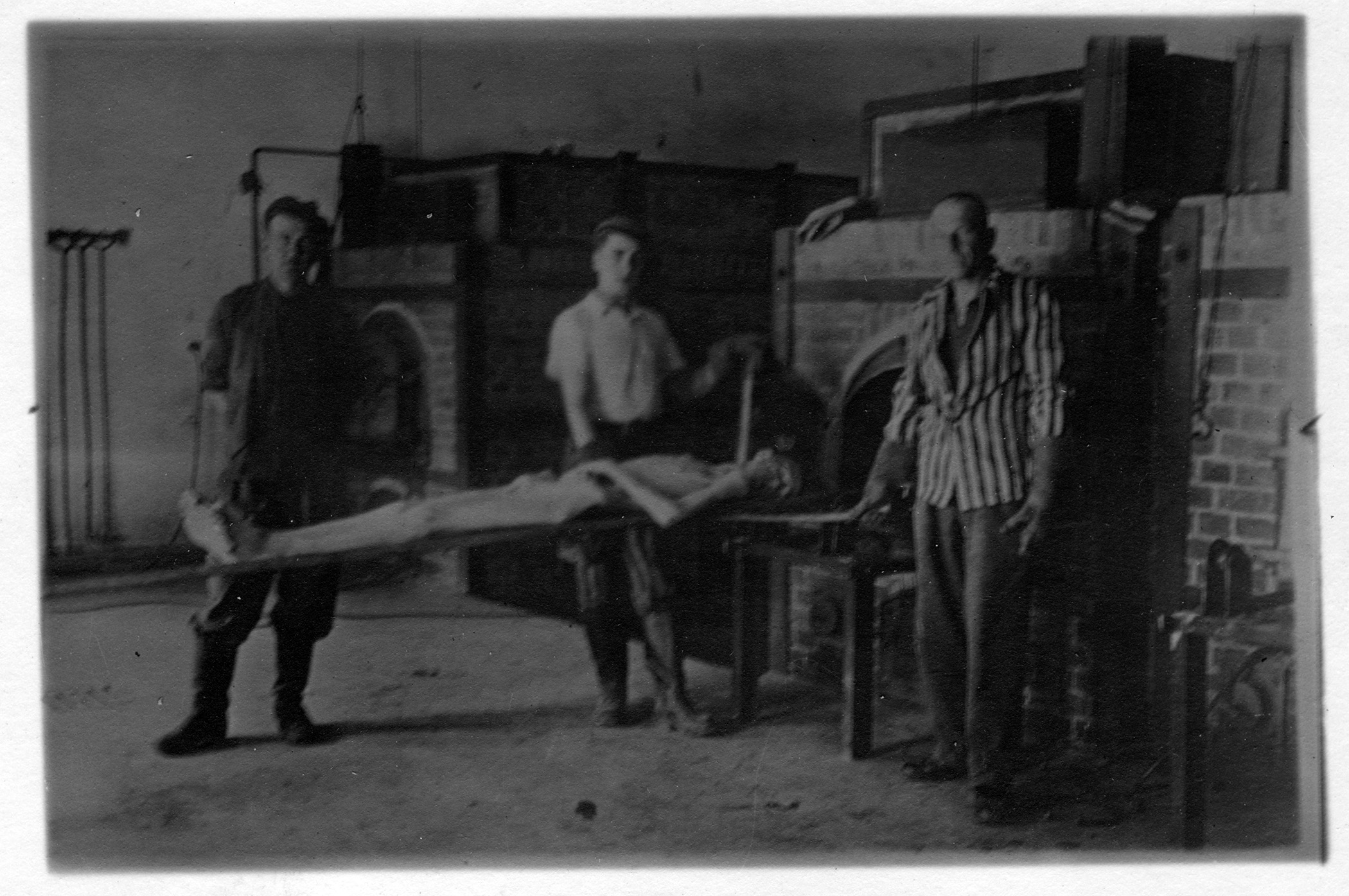
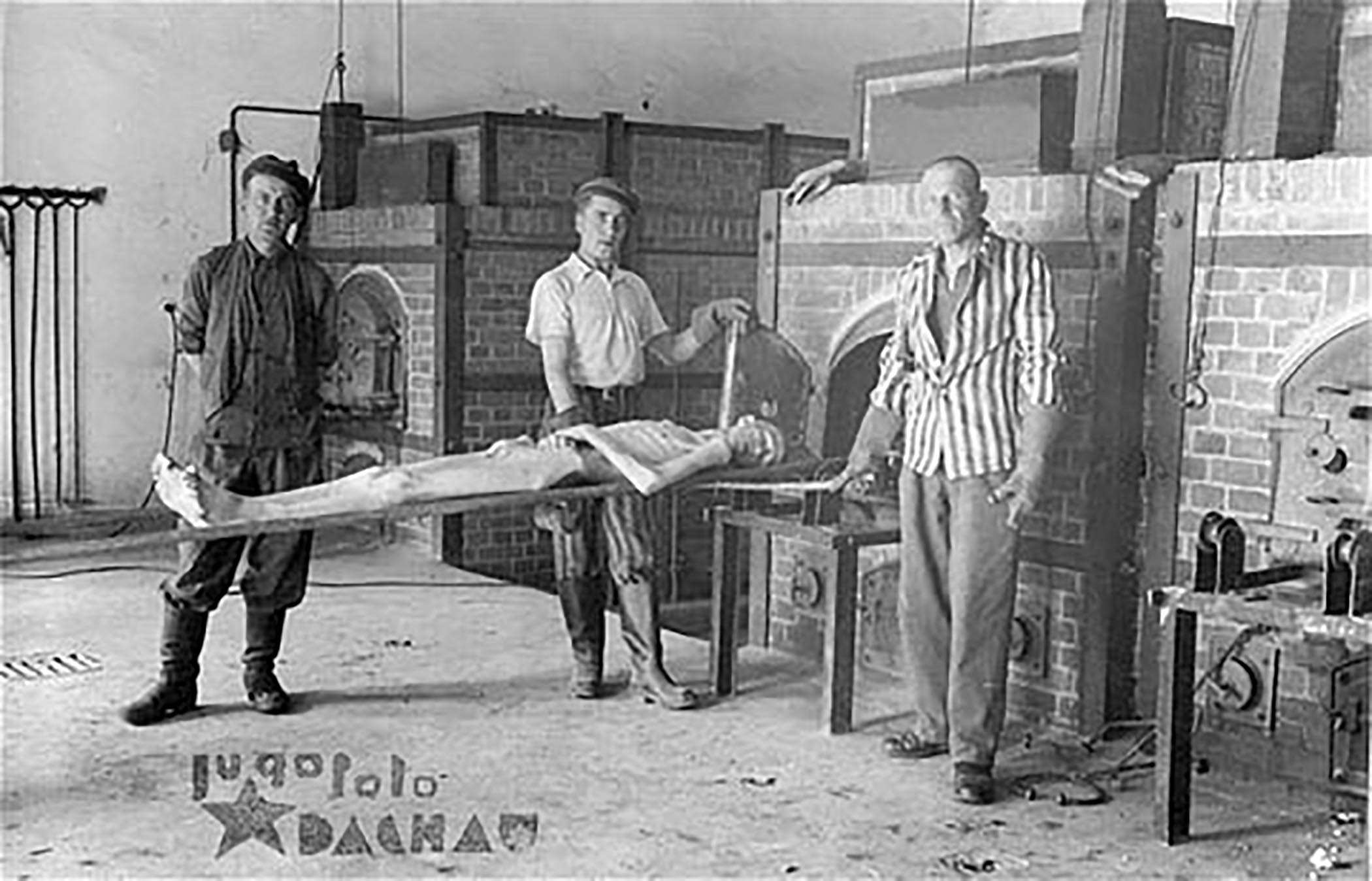
On view: 4 photo/postcards of concentration camps after Allied liberation along with the better image of each as found in the Holocaust Museum online archive 

Dachau_04_NotFound_mst
Holocaust photo/postcard #4, Dachau
Dachau_04-fromwebsite_mst
Holocaust photo/postcard #4, from Museum archive
Dachau_04_mst
Holocaust photo/postcard #5, Dachau
Dachau_04-from-website_mst
Holocaust photo/postcard #5, from Museum archive
Dachau_05_mst
Holocaust photo/postcard #6, Dachau
Dachau_05-from-website_mst
Holocaust photo/postcard #6, from Museum archive
Dachau_06_mst
Holocaust photo/postcard #7, Dachau
Dachau_06-from-website_mst
Holocaust photo/postcard #7, from Museum archive