On view: 3 pages

On view: 3 pages
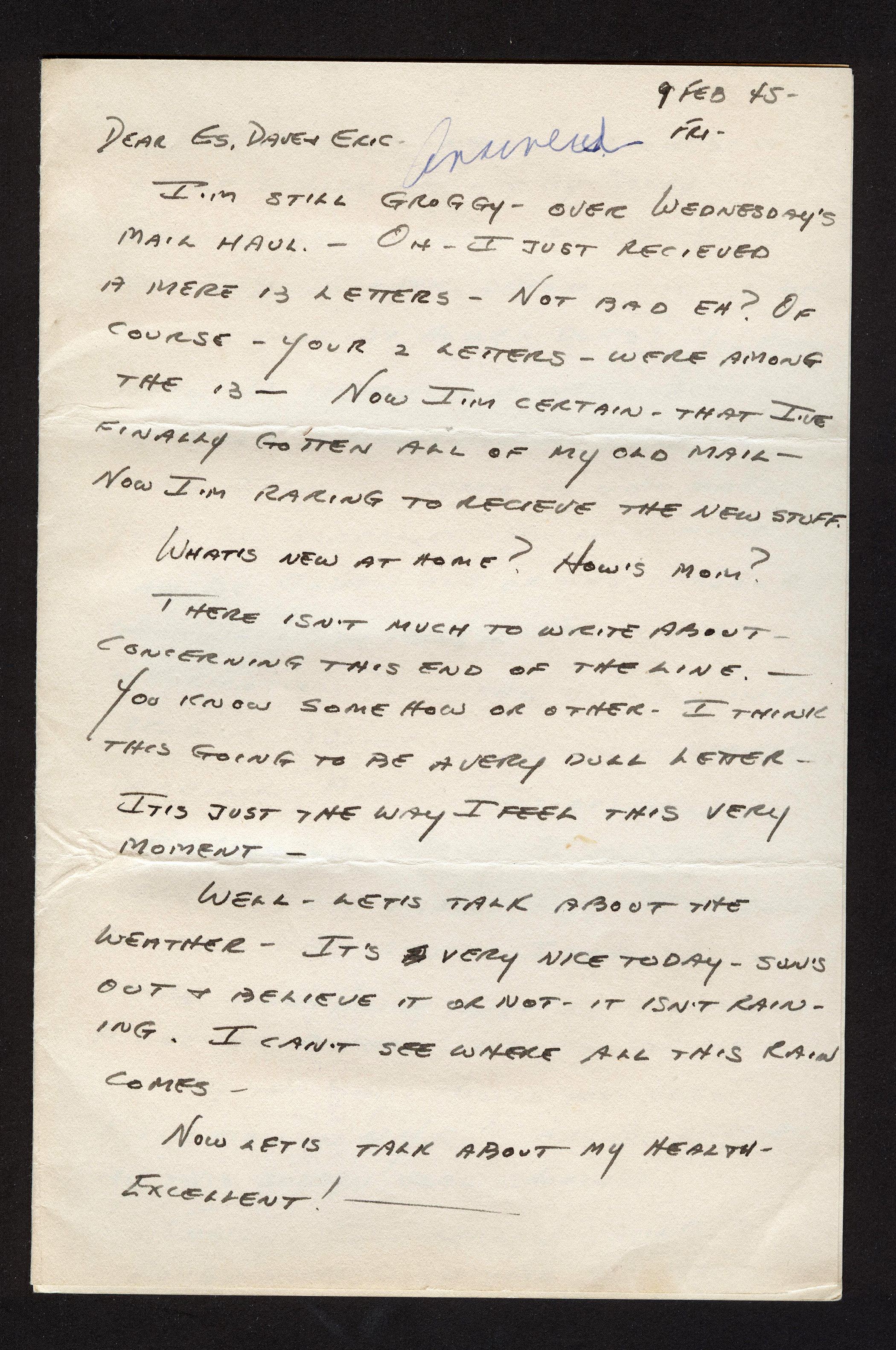
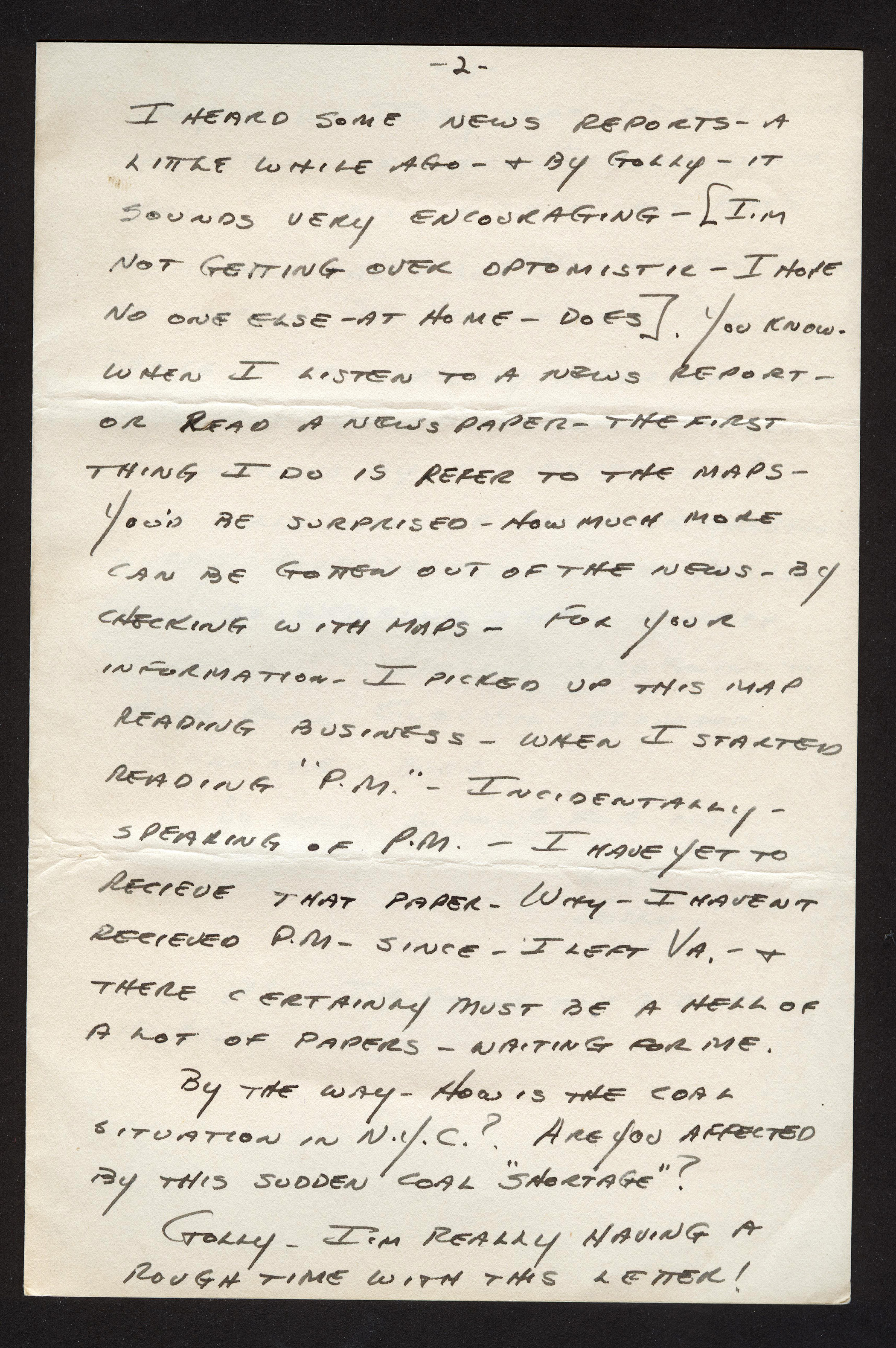
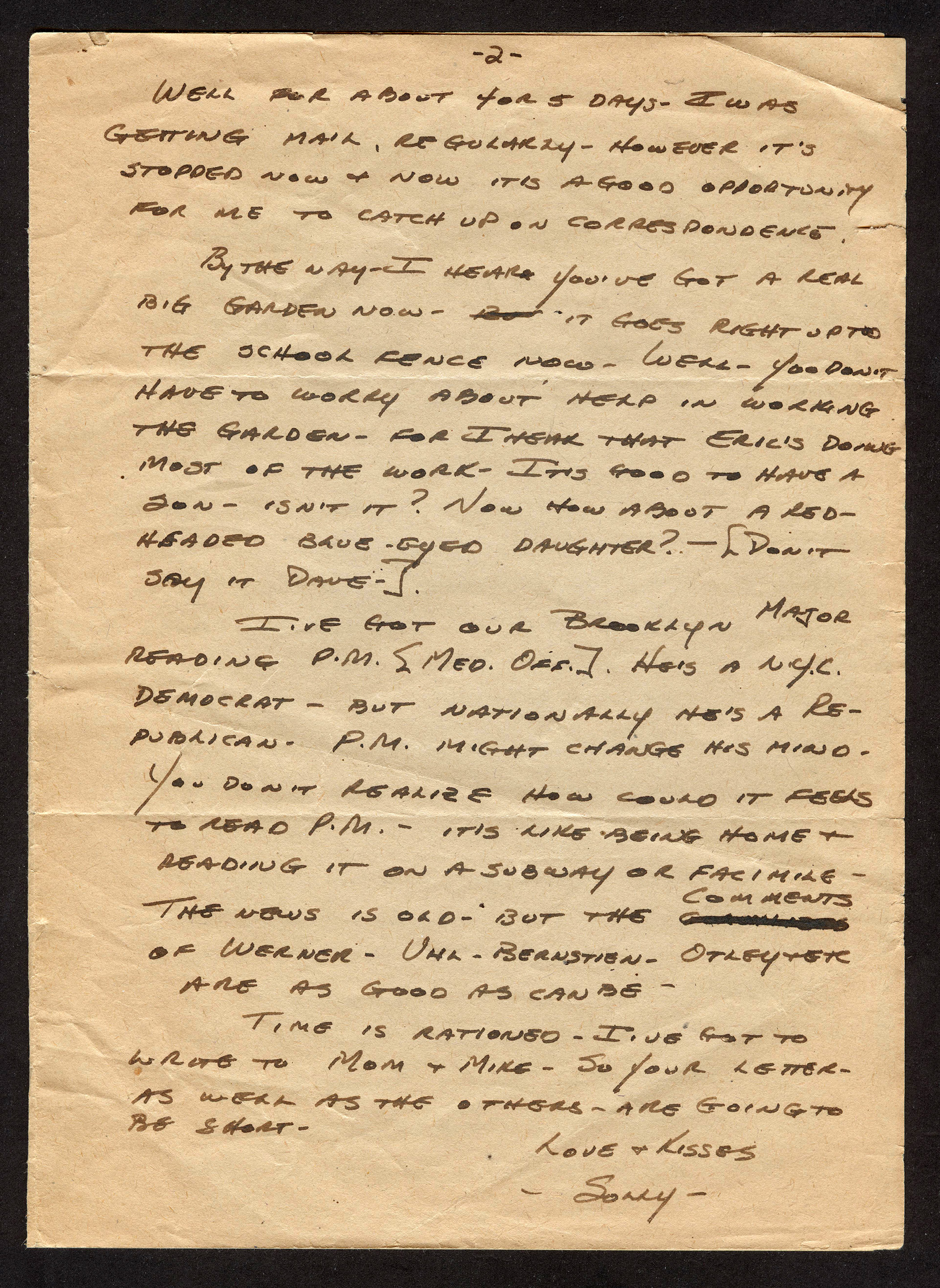
Solly mentions P.M in the February 9, 1945 letter for the first time, and then later on in the April 19, 1945 letter he talks about receiving his copies, and again a week or so later in the April 27th letter he boasts that he has gotten the major from Brooklyn to start reading P.M. Solly talks about how reading P.M. makes him feel like he is back home, riding the subway, and catching up with news of the world.
P.M. was a very liberal leaning daily newspaper published in New York City by Ralph Ingersoll from June 1940 to June 1948 and financed by Chicago millionaire Marshall Field III. The origin of the name is unknown, although Ingersoll recalled that it probably referred to the fact that the paper appeared in the afternoon; The New Yorker reported that the name had been suggested by Lillian Hellman.
The paper borrowed many elements from weekly news magazines, such as many large photos and at first was bound with staples. In an attempt to be free of pressure from business interests, it did not accept advertising. There were accusations that the paper was Communist-dominated, but the editorial pages of P.M. were frequently critical with the Communist Party’s paper, the Daily Worker.
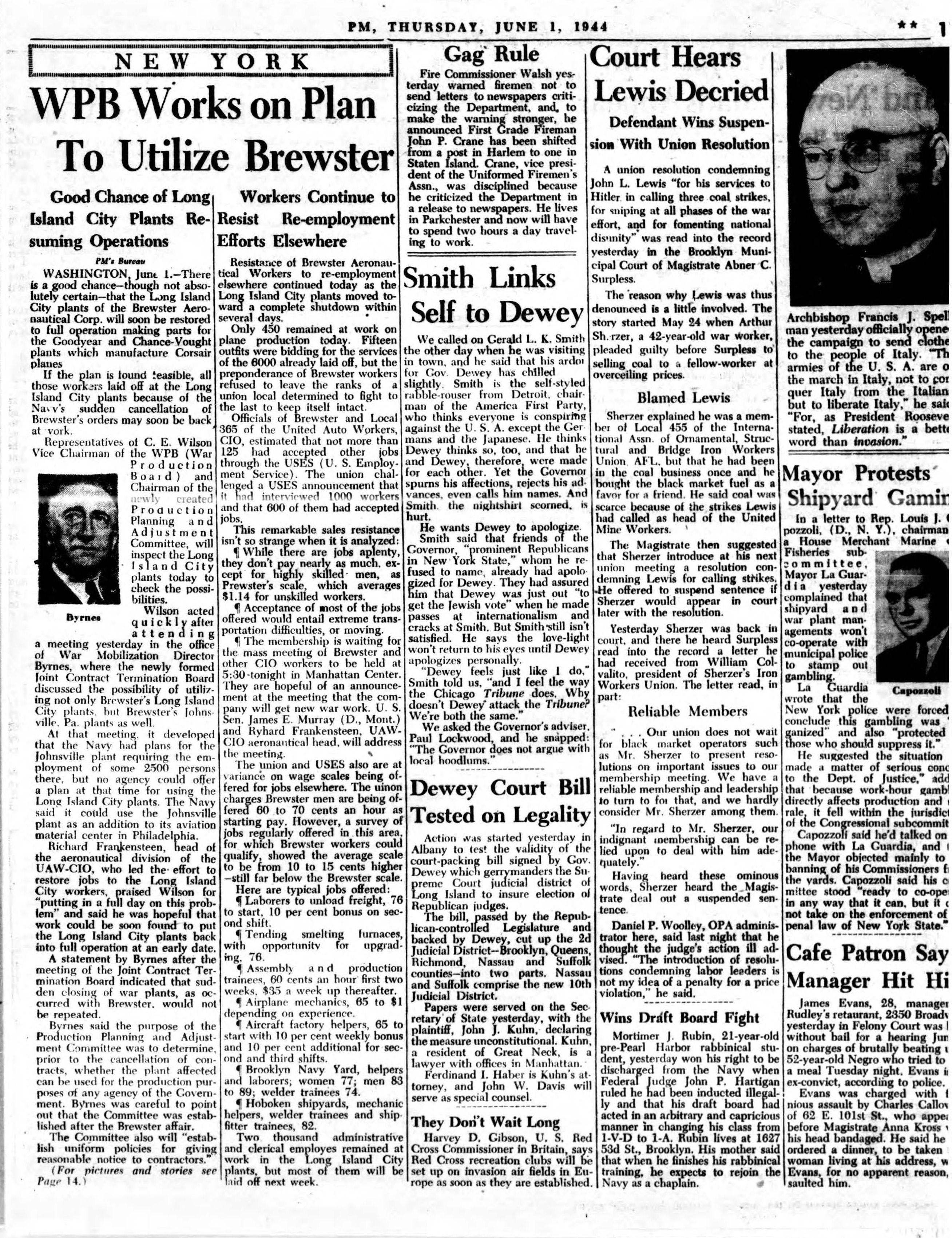
P.M. was also a highly literary and intellectual read and attracted some of the great writers and political innovators of its time. Theodor Geisel, better known as Dr. Seuss, published more than 400 cartoons on PM‘s editorial page. Crockett Johnson’s comic strip Barnaby debuted in the paper in 1942. Other artists who worked at PM included Ad Reinhardt, one of the founders of Abstract Expressionism, and Joseph LeBoit, who both contributed margin cartoons and drawings.
Coulton Waugh created his short-lived strip, Hank, which began April 30, 1945 in PM. The story of a disabled GI returning to civilian life, Hank had a unique look due to Waugh’s decorative art style, combined with dialogue lettered in upper and lower case rather than the accepted convention of all uppercase lettering in balloons and captions. Some dialogue was displayed with white lettering reversed into black balloons.

Hank sought to raise questions about the reasons for war, and how it might be prevented by the next generation. Waugh discontinued it at the very end of 1945 because of eyestrain. Cartoonist Jack Sparling created the short-lived comic strip Claire Voyant, which ran from 1943 to 1948 in PM, and which was subsequently syndicated by the Chicago Sun-Times.
Other writers who contributed articles included Erskine Caldwell, Myril Axlerod, McGeorge Bundy, Saul K. Padover, James Wechsler, eventually the paper’s editorial writer, Penn Kimball, later a professor at the Columbia University Graduate School of Journalism, Heywood Hale Broun, James Thurber, Dorothy Parker, Ernest Hemingway, Eugene Lyons, Earl Conrad; Ben Stolberg, Malcolm Cowley, Tip O’Neill (later Speaker of the United States House of Representatives); and Ben Hecht (playwright and author).
The primary point of my listing all the names of these people who worked at P.M. is to convey how much this short-lived daily represented some of the most progressive and creative thinkers, artists and journalists of its day. Our family was part of a well-informed and intellectually demanding readership. Clearly, this was a newspaper the Kovsky’s could sink their teeth into.
April 19, 1945 is a turning point and you can feel it.
For Solly, like most G.I.’s, he has passed through heavy fire, survived, and is momentarily at rest. There has been mail call and Solly is elated. By this time, according to the Map, Solly’s company has passed through Burgstadt, Germany and is out past the farthest, most eastern edge of the last campaign.
Solly mentions P.M., the Brooklyn newspaper, once again in this letter.
The Solly in this letter, as well as in future letters, knows and appreciates guns and writes Dave that he is boxing up and shipping him a Nazi bayonet and a 16 gauge shotgun.
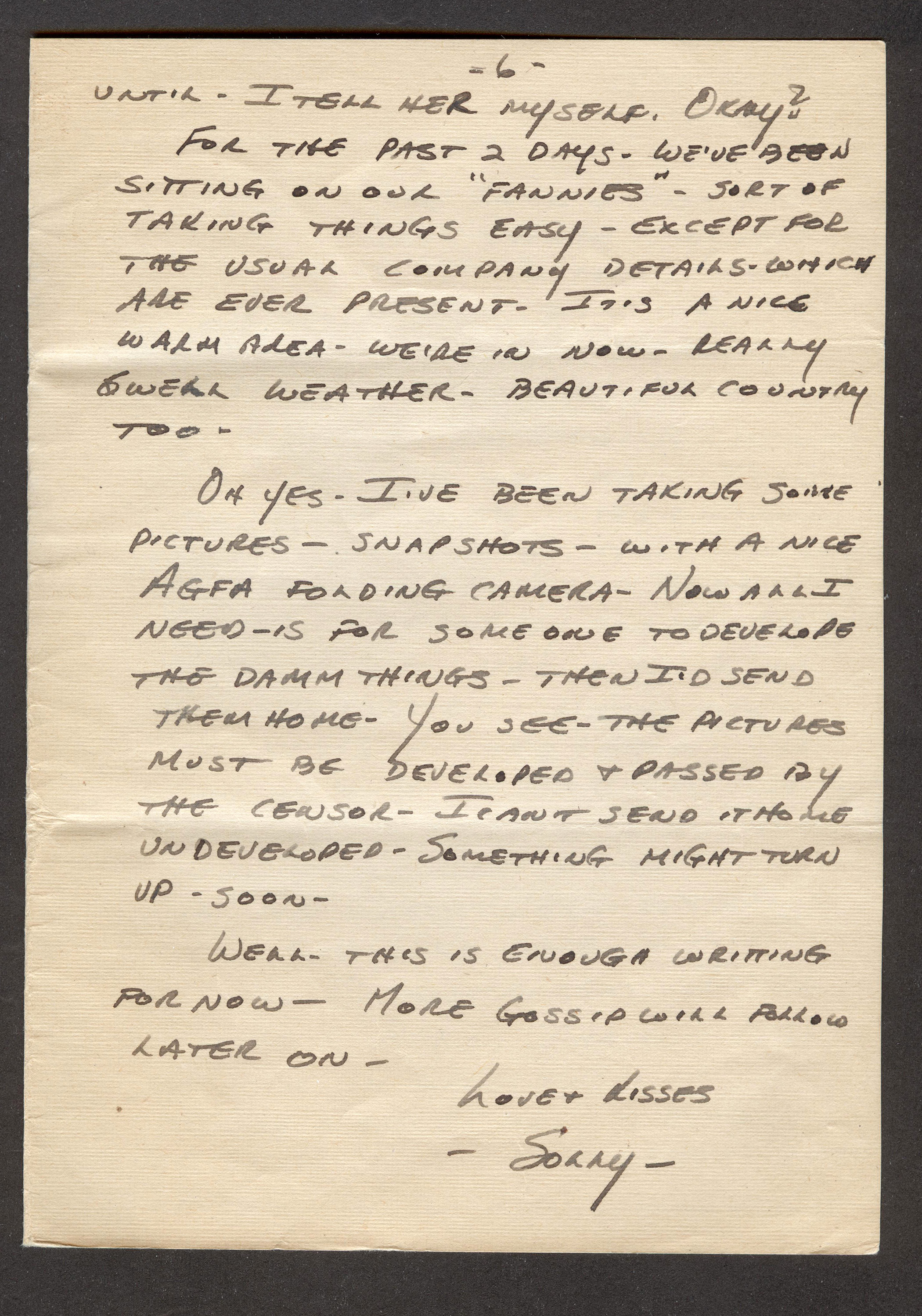
In this letter Solly also talks about his camera for the first time and having recently shot a roll of film but not sure what to do with it next. Censorship is a given and probably not something you think about when you are in combat and on the move, but now that they have a brief pause, or as Solly says they are “sitting on their fannies”, censorship must feel intrusive to him all over again.
On view: 6 pages
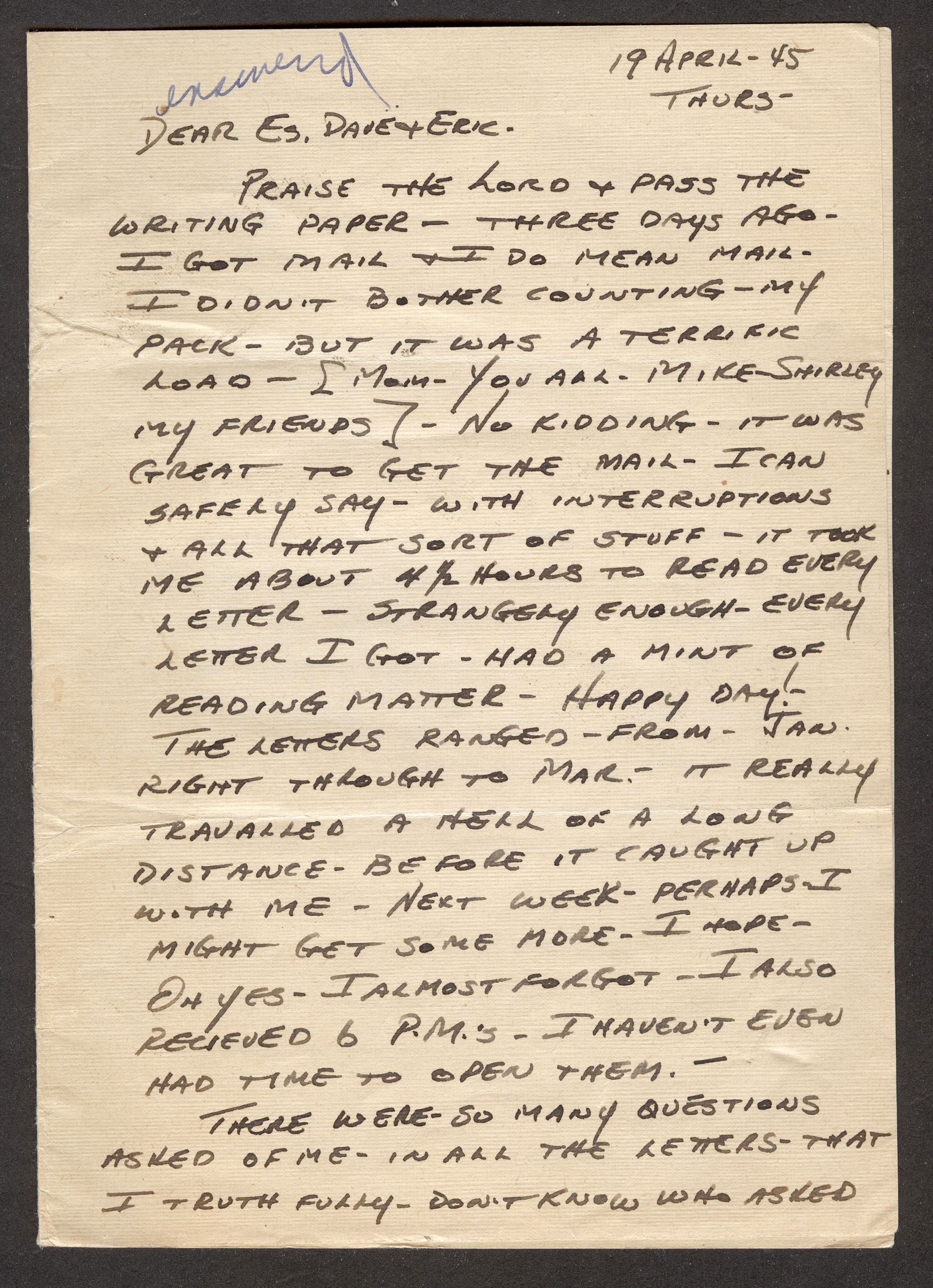
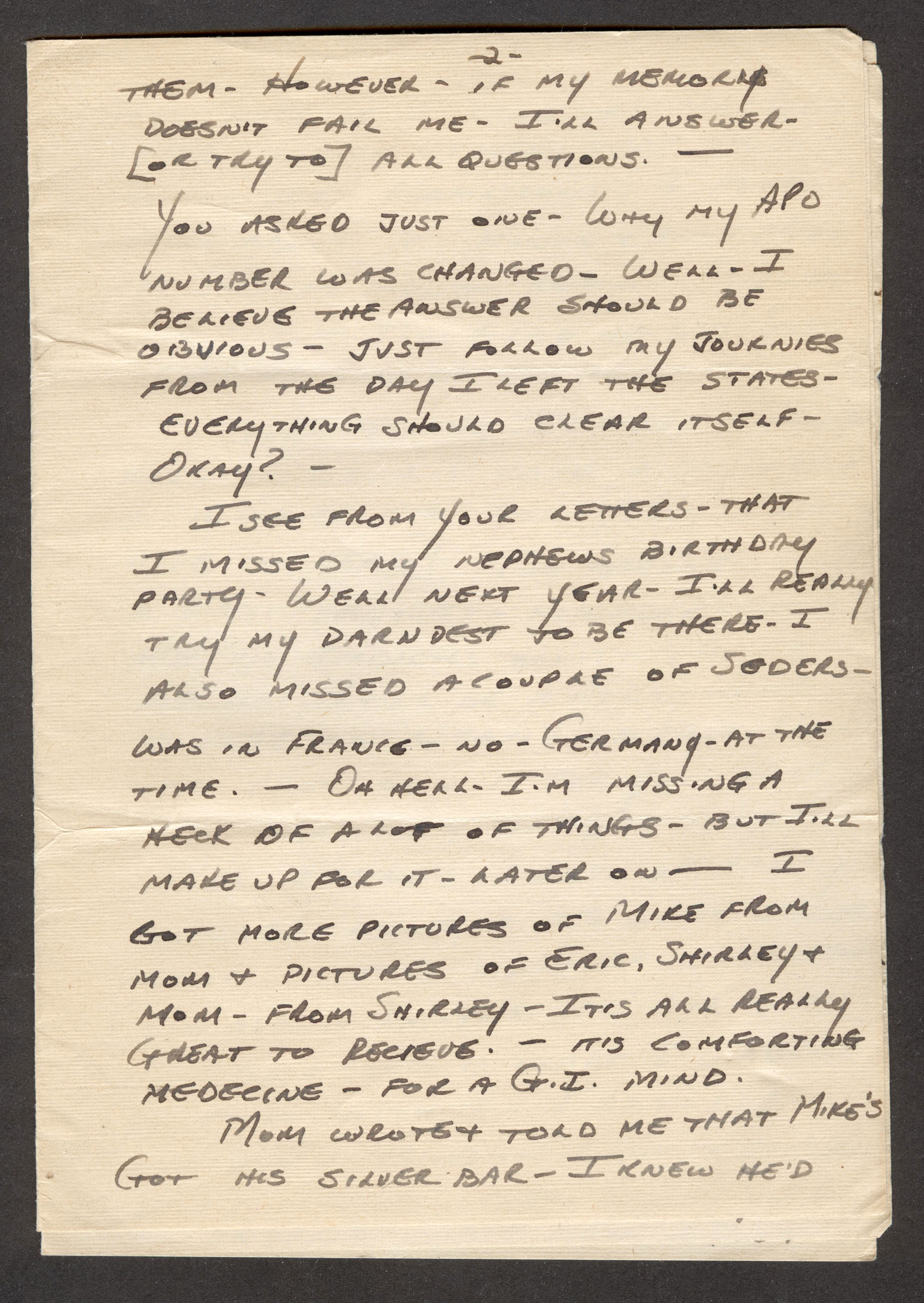
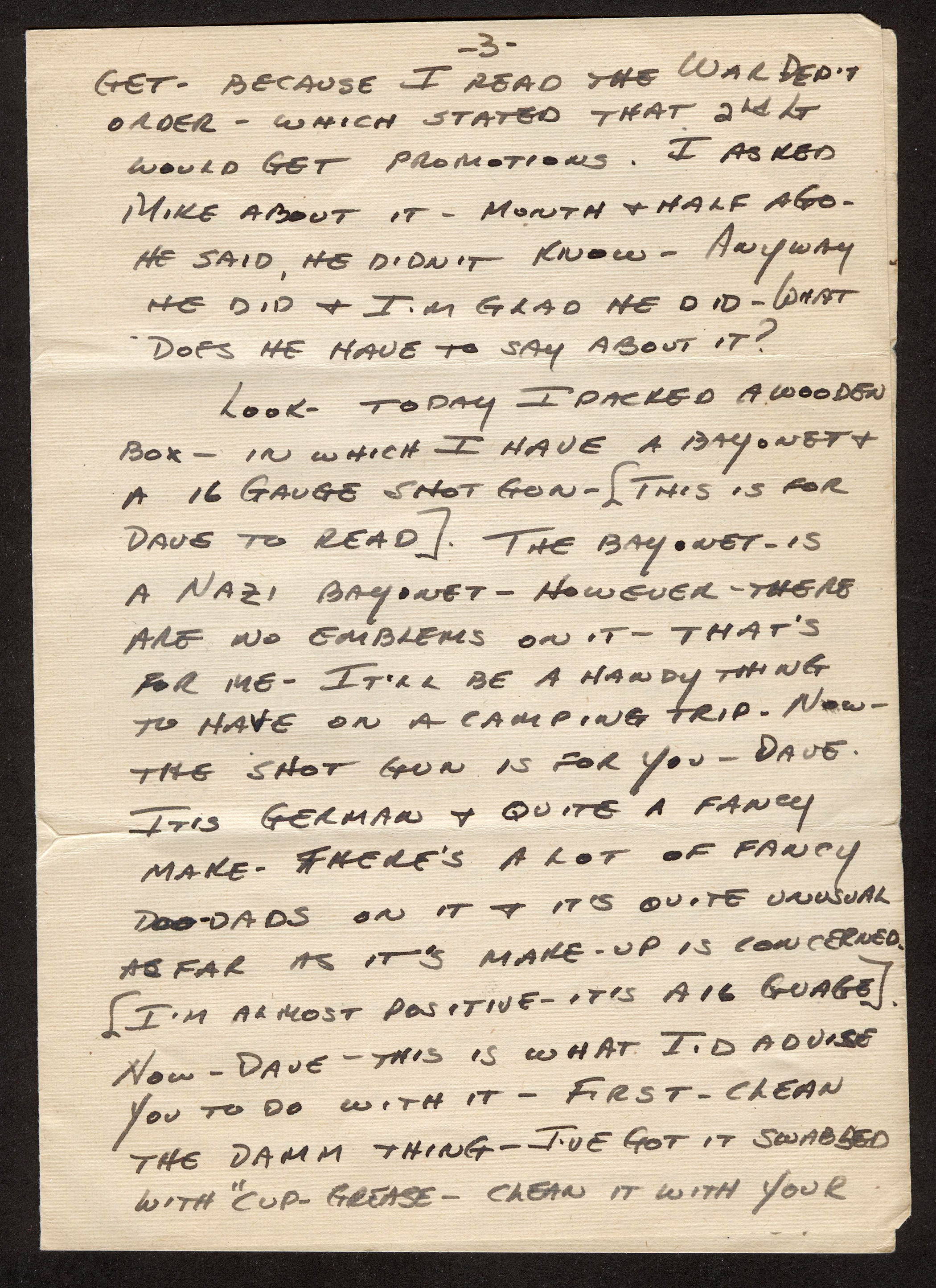
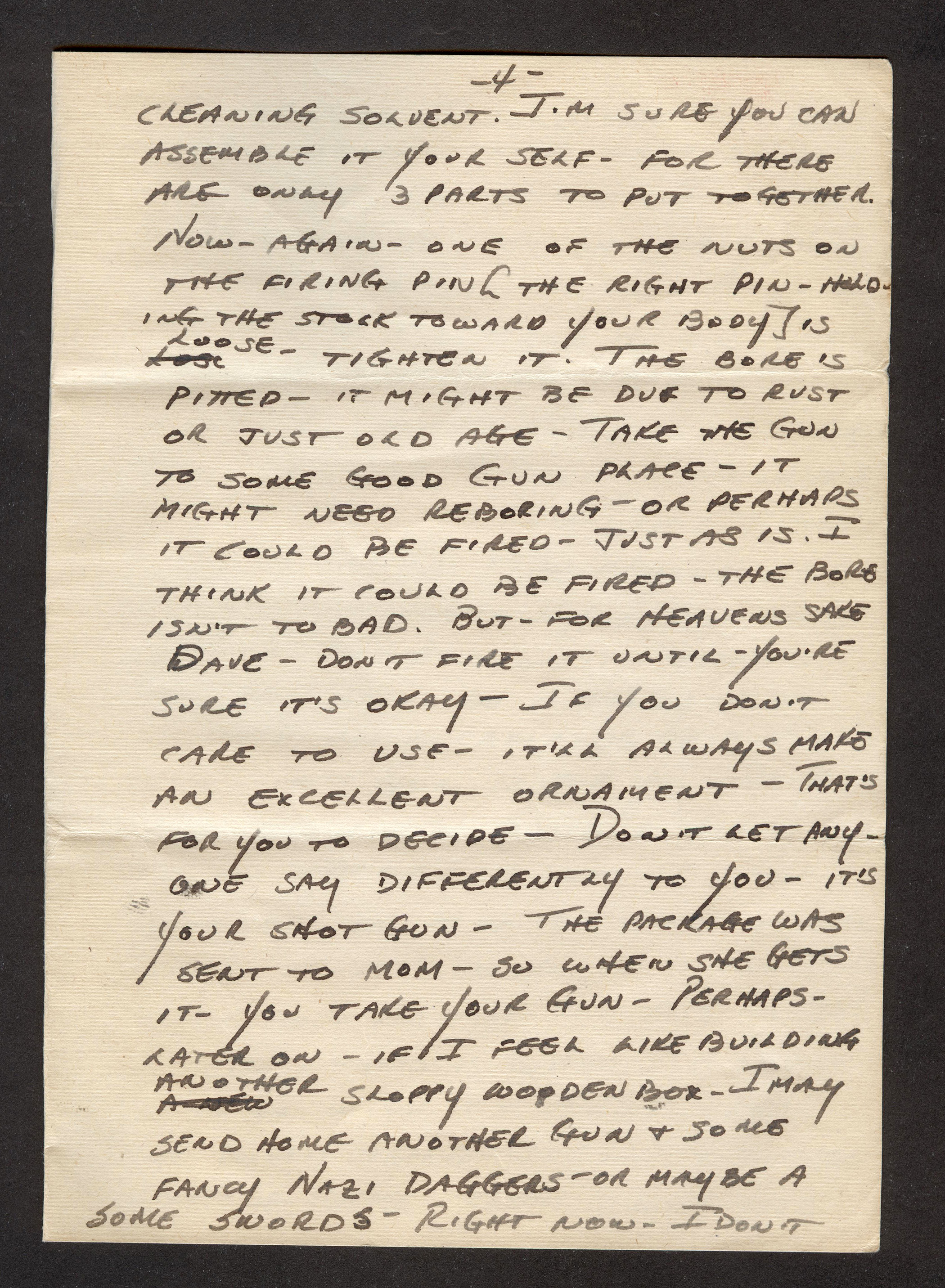
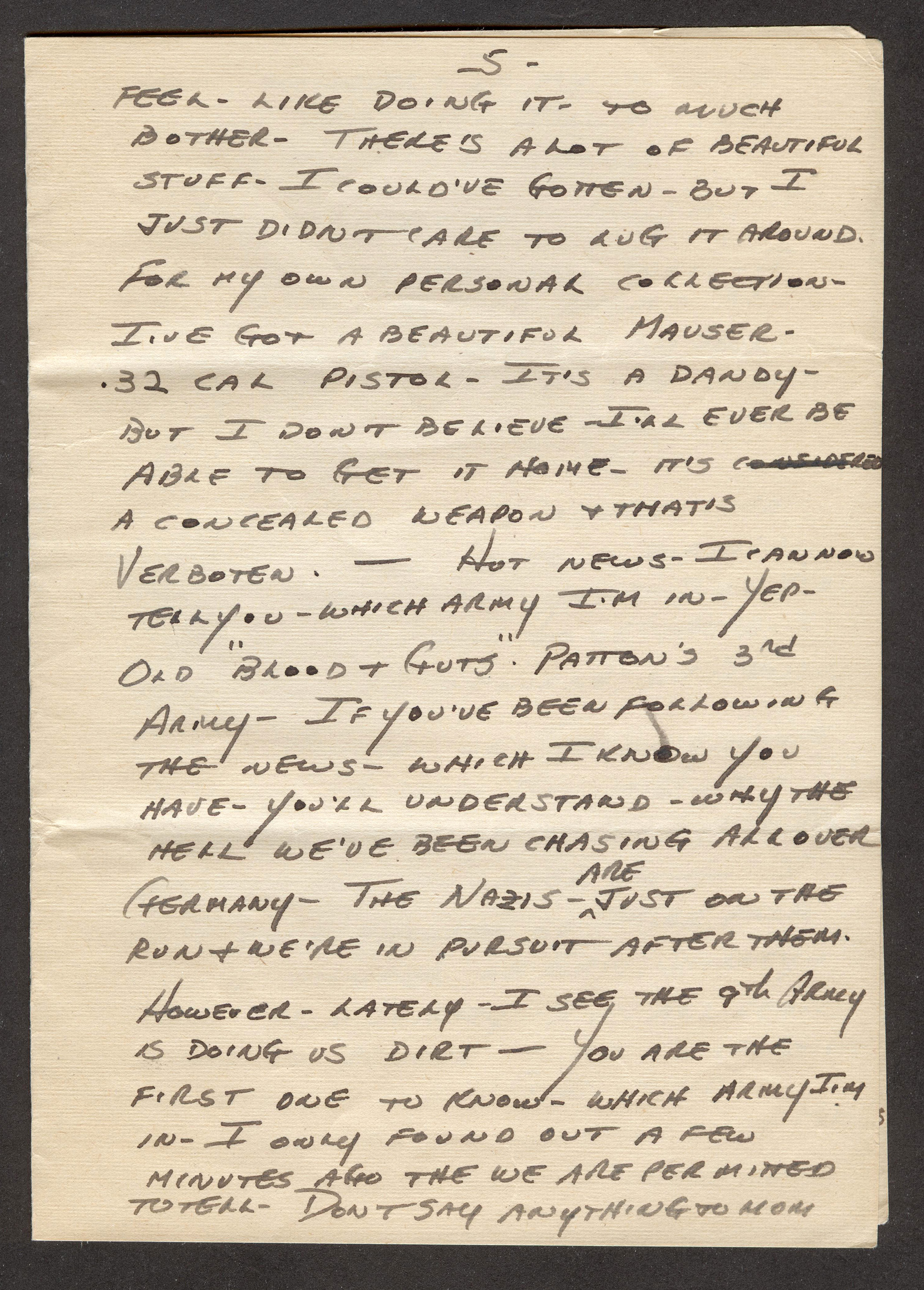
One of the interesting things in Solly’s letters is how he never calls another soldier by their name but rather identifies them by the city or state they come from, as with the Brooklyn Major (Medical Officer) he mentions in this letter and others.
I once asked my father if he made friends in the army and if he kept in contact with any of them and he told me he decided before he entered the service that he would not make any friends. It was not smart, he said, to get connected to anyone.
In the Help Identify category of photos on this blog the two pictures from Dec 1942, which are not Solly’s, also identify the people in the image with their state abbreviation instead of their name. Perhaps it was a common practice. (Still looking for help identifying the photos in Help Identify).
On view: 2 pages

 Love Solly