#22 – Engineers

It is not surprising that in WWII the U.S. Army was heavily equipped with engineer troops and equipment.  The Army’s officer corps was highly influenced by the teachings of the Military Academy at West Point, which was in fact the first engineering school in the United States.  Fittingly, the Army focused much of its resources and brains on building a force of engineers in the mid to late 1930’s who would later be a critical element in the ultimate defeat of the Germans and the new and accelerated kind of warfare Hitler and his Generals were waging across Europe.

The primary mission of combat engineers was to KEEP THE ARMIES MOVING TO ATTACK, AND IMPEDING THE ENEMY.
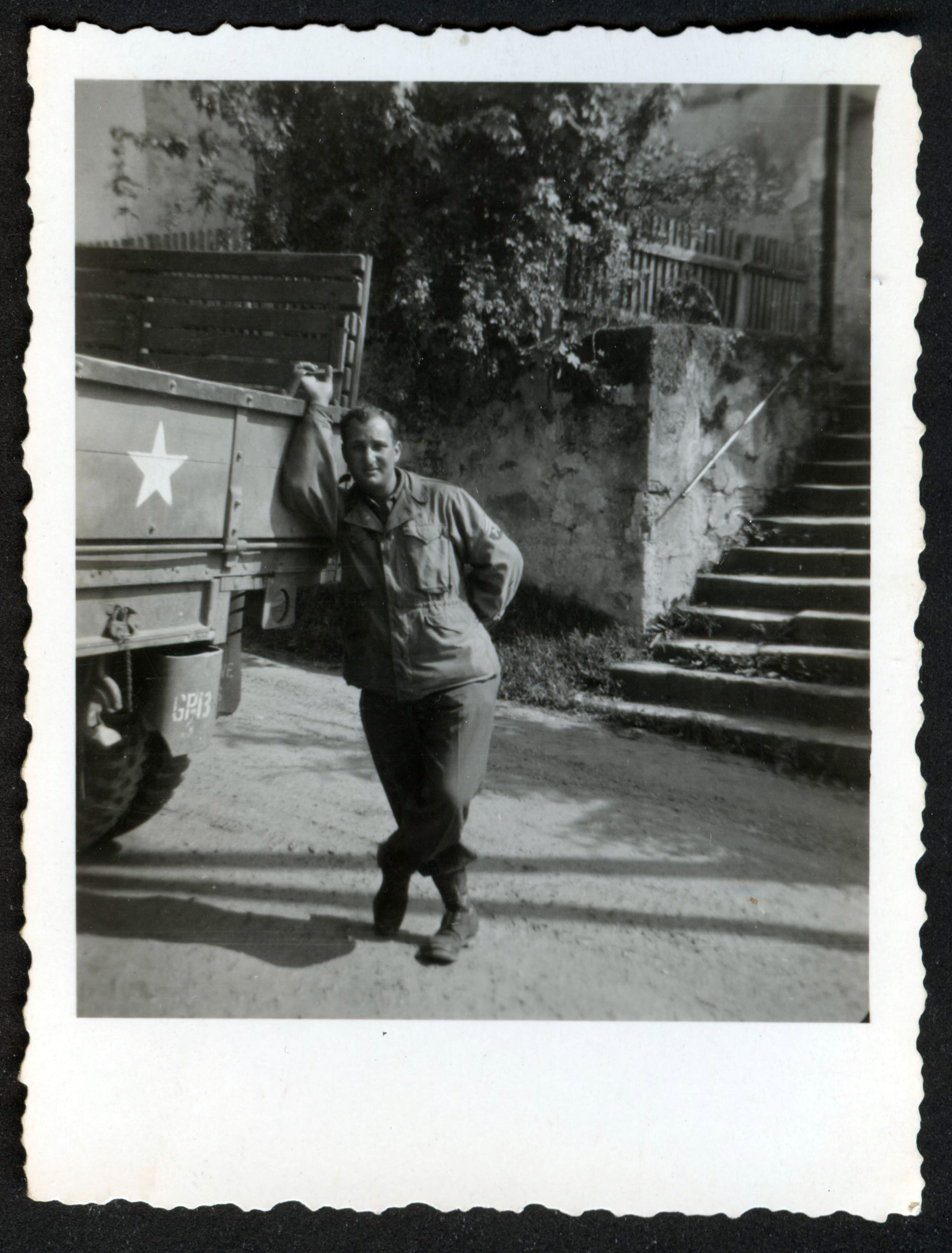
NP-Germany_Engineers_03_mst
Solly in Germany, 1945. Upon first seeing this picture, Selma said: “Now that’s what he looked like when I met him. He was very handsome.”

The divisional combat engineer battalions were trained to perform most engineering tasks including: demolitions; obstacle emplacement; fortification; bridge building which included mobile, floating and fixed bridges; mine warfare; and establishing ammunition dumps.   Combat engineers, like Solly, were considered to be elite specialists because they were the ones who got sent in before the larger corps of engineers arrived. (Read more in Menu>About).
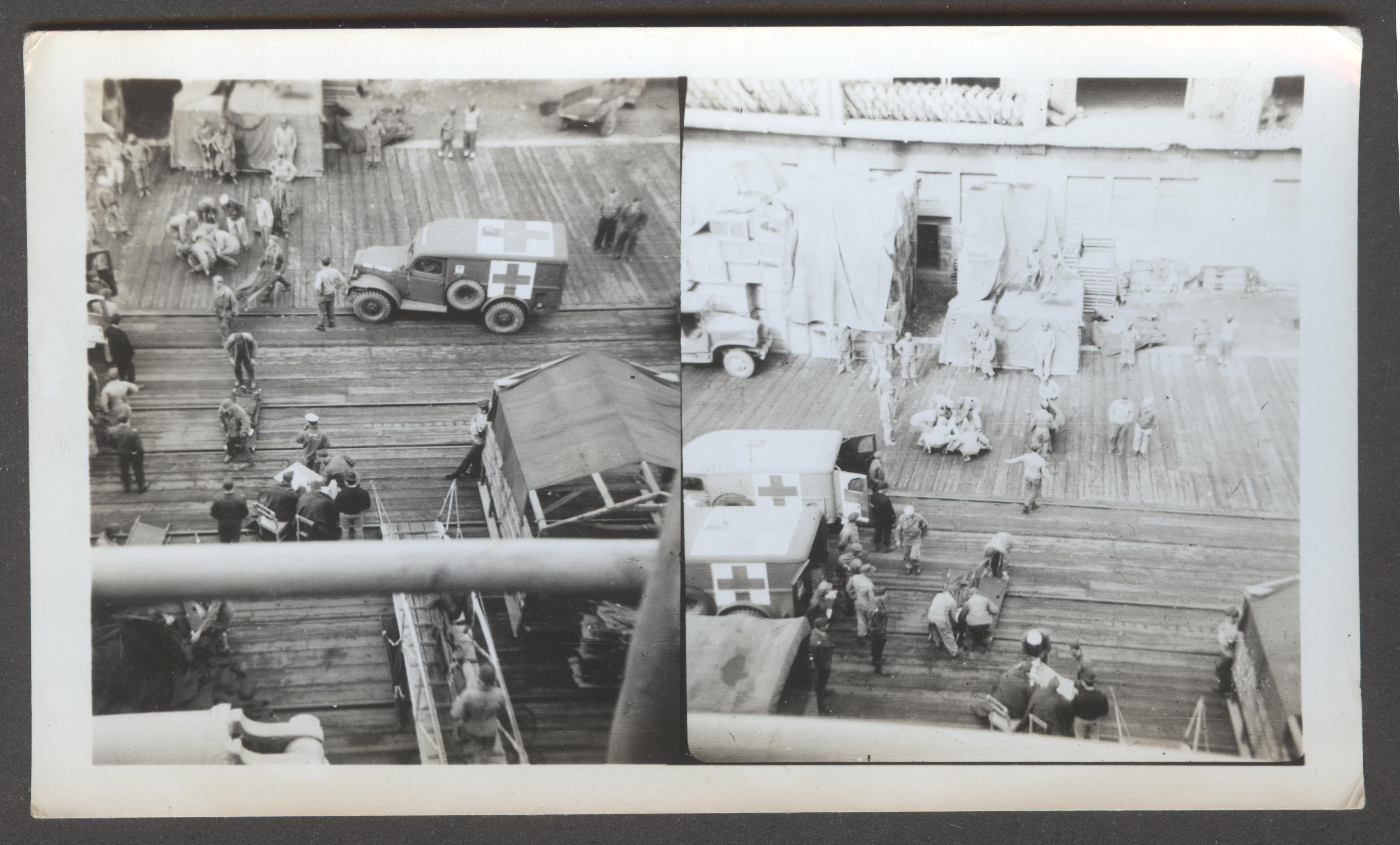
NP-Germany_Engineers_05_mst
Engineers and Medical units at a loading dock. Photo taken by Solly from the deck of a ship

Based on the number of photos Solly took of demolished bridges and the dates and drawings on The Map we know Solly’s Engineering outfit was also tasked with dealing with the rubble the Germans left behind for US forces as they withdrew further north into Germany.  The Germans not only destroyed all bridges along every road capable of handling military traffic but left behind ghost patrols, machine gun nests, and minefields to inflict as many casualties on forward moving groups of engineers and other infantry as possible.
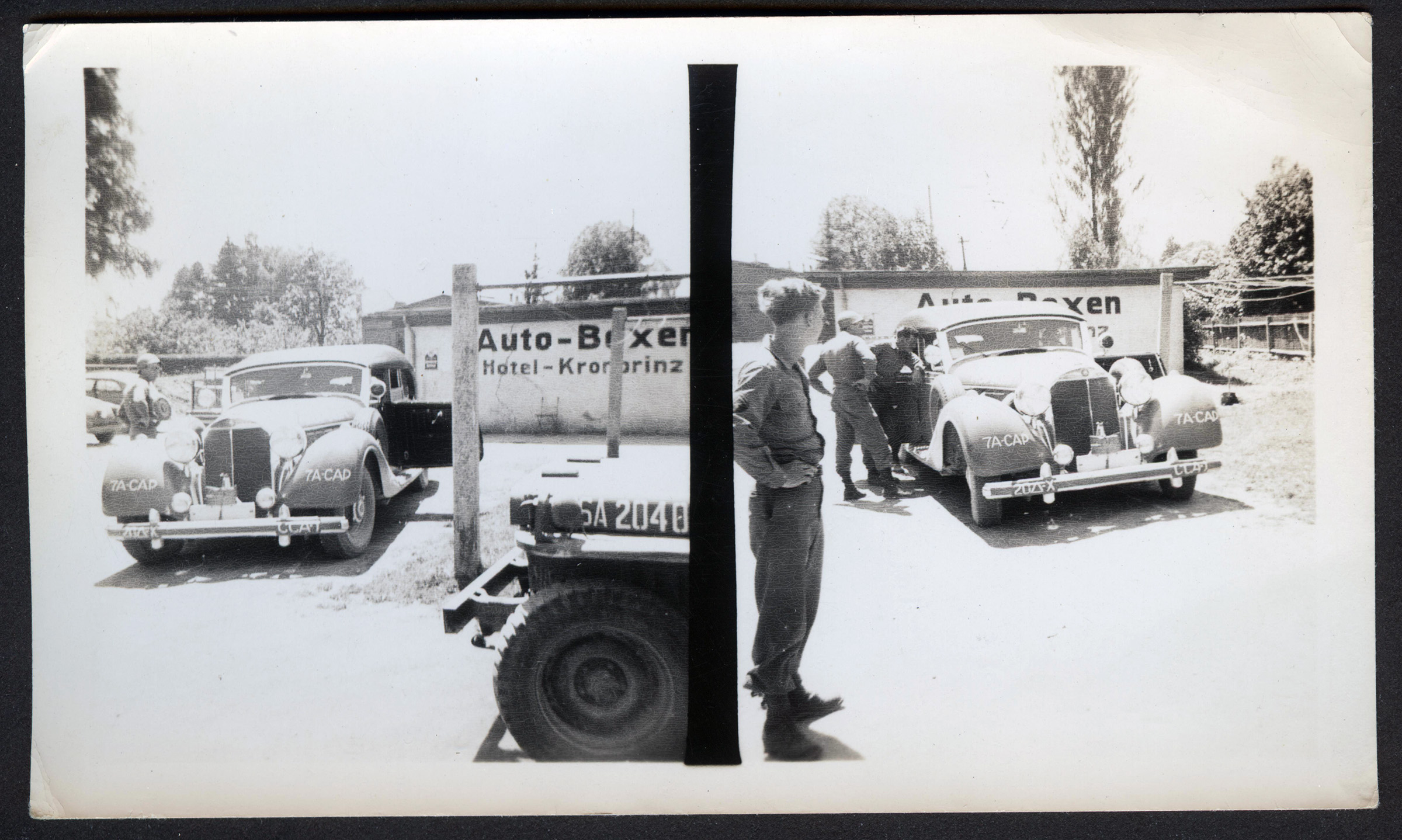
NP-Germany_Engineers_02_mst
Auto mechanic garage, Germany, 1945. Photo by Solly.

In my research I am more interested in the “colors” than the simple facts and I found lots of short films shot by the Army Signal corps of Combat engineers “on the move” during WWII.  For more context, I suggest 4 short reels (a few minutes each) of combat engineers from the months of March-May 1945.  They are either Solly’s army (although I don’t see him) or engineers covering similar terrain as he was at the same time, and place.

Cherbourg / Saint-Lô, start viewing at 1 min. 30 secs:
https://www.youtube.com/watch?v=AGMMo5uShPU

Search for German personnel in Mechernich, Germany, March 8 1945: https://www.youtube.com/watch?v=zevYR-4M_r8

River Crossing, Mar 23 1945:
https://www.youtube.com/watch?v=jZl9zGHgQNI

In the streets of Koblenz, Germany, Mach 1945:
https://www.youtube.com/watch?v=llAFFg8pZEU
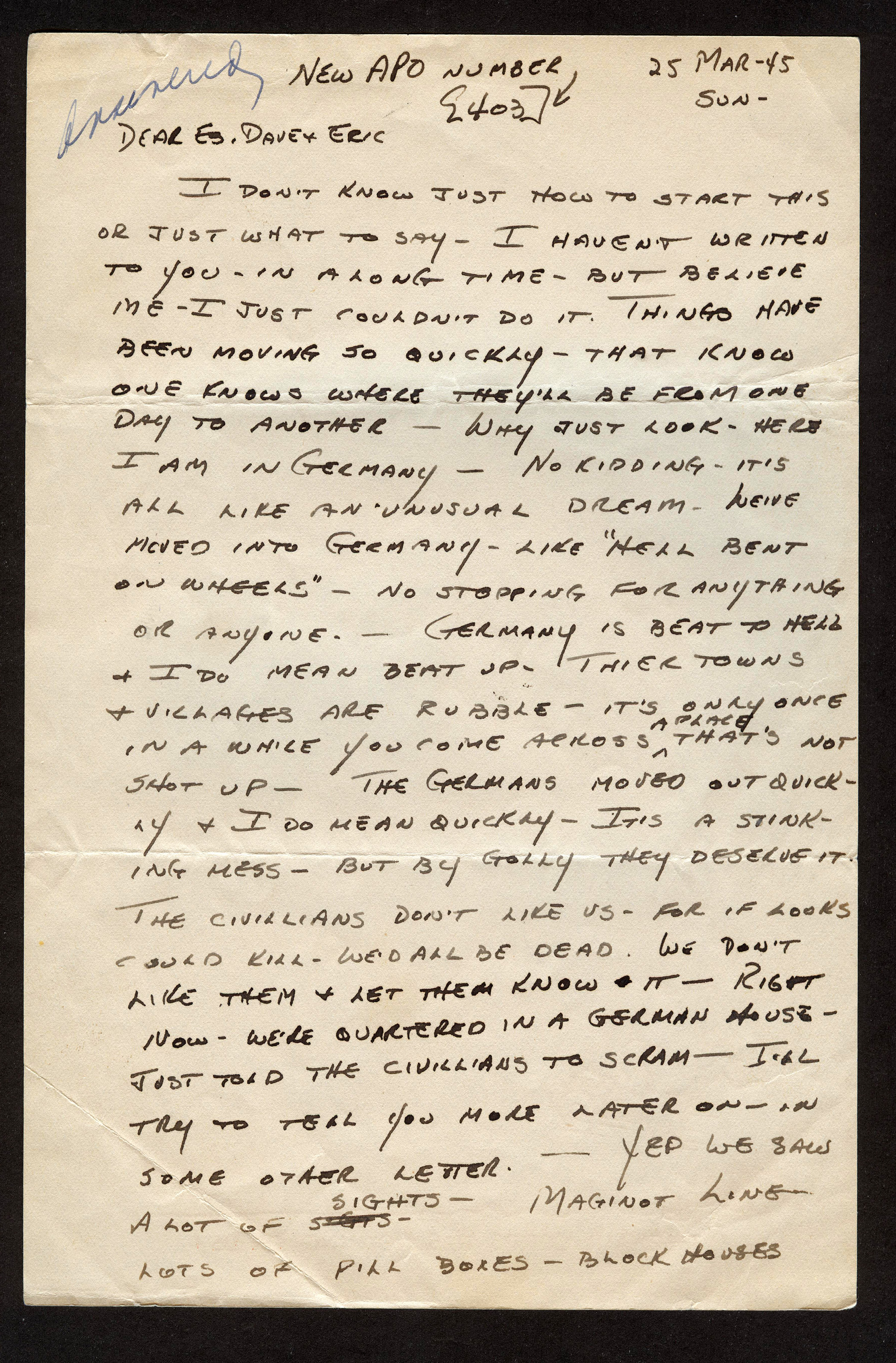
#23 – March 25, 1945

It has been at least 11 days since Solly’s last letter and his company is now fully on the move again.  The Map indicates that the 1200 mile combat campaign had begun a few days after the last letter.  He is now in Germany.

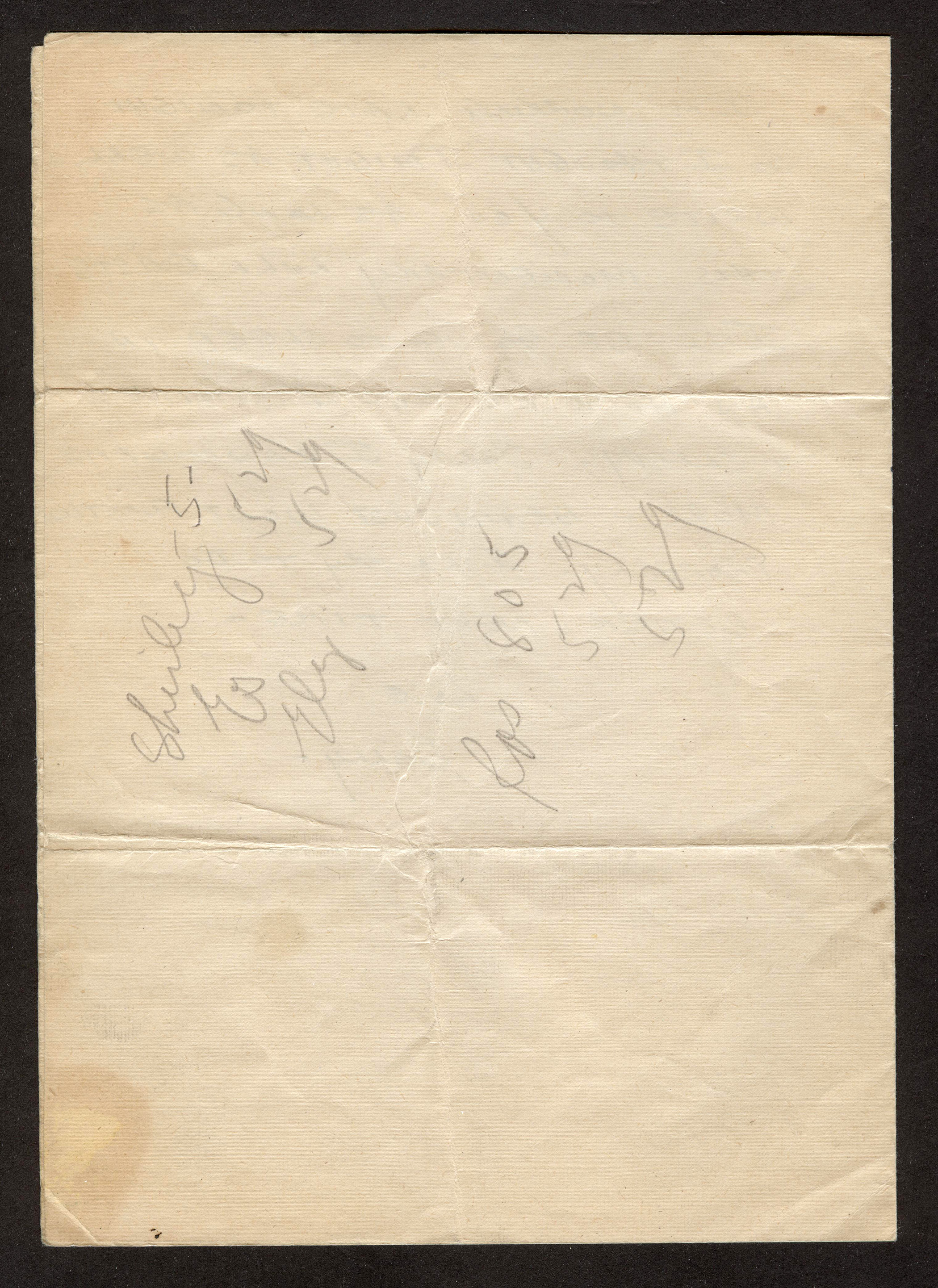
On view: 2 pages and one reverse side of stationary page

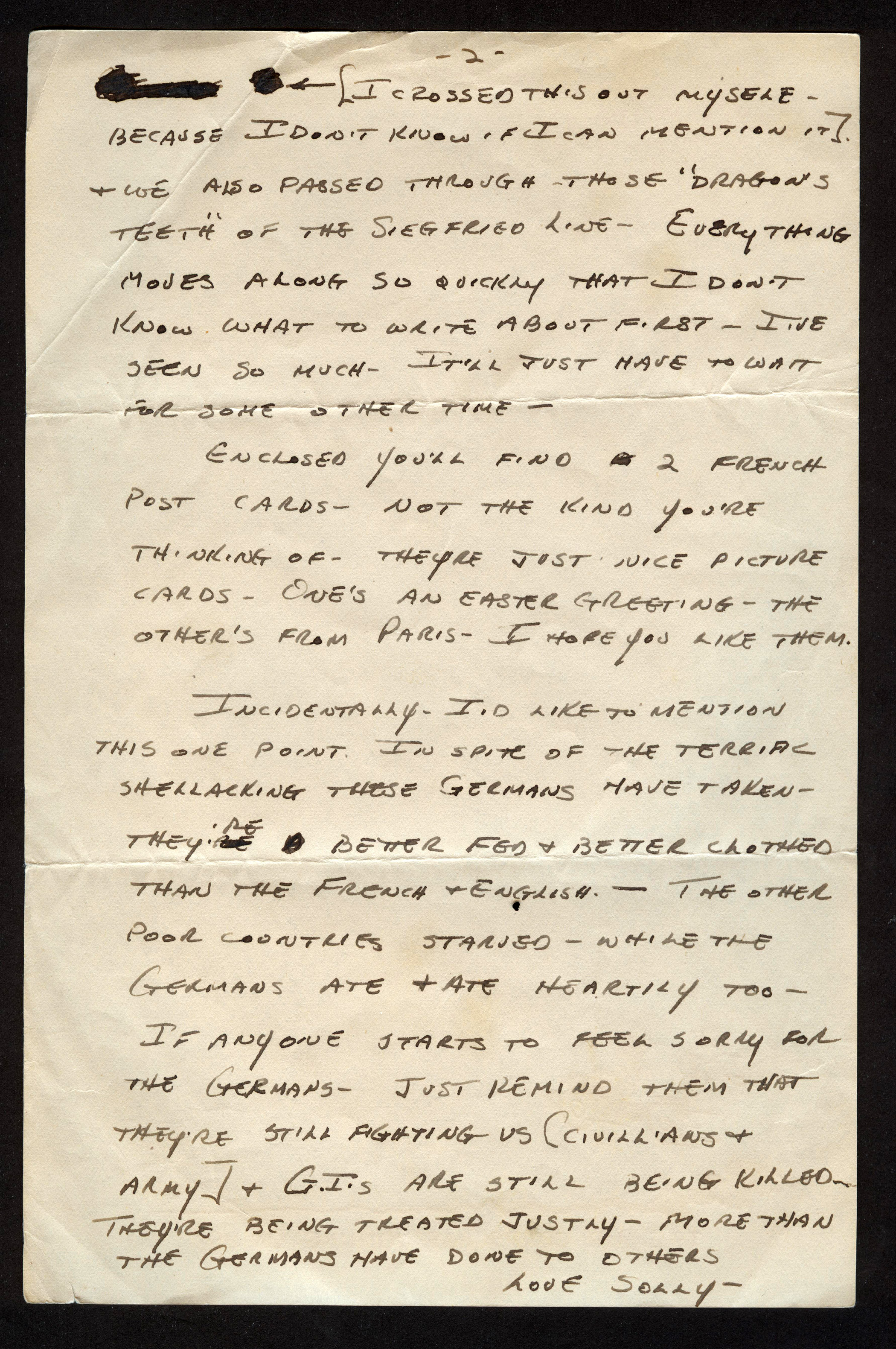
032545_1_mst
March 25, 1945, p. 1
032545_2_front_mst
p. 2
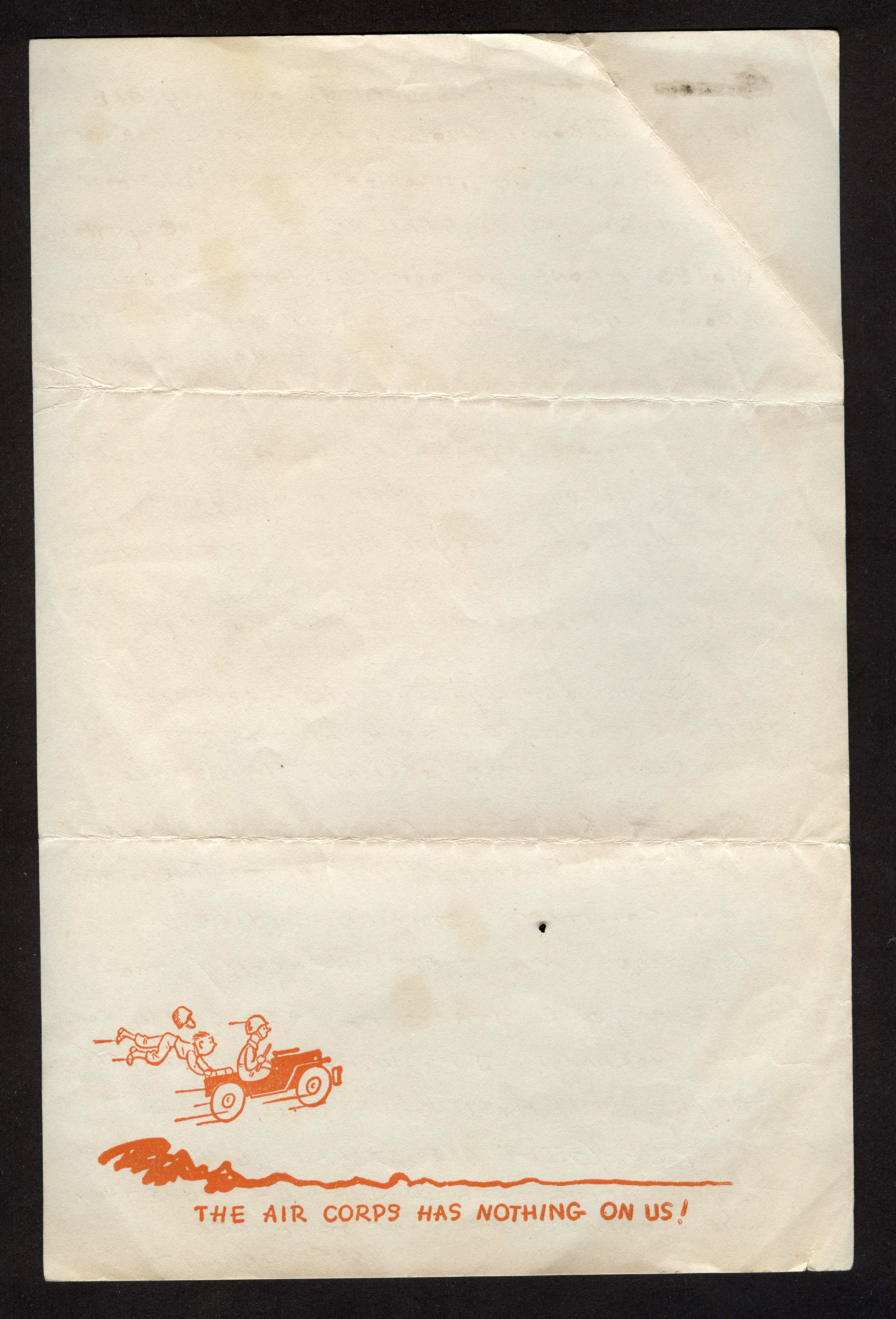
032545_2_rear_mst
Reverse side of p. 2


#24 – AGFA accordion style camera

The photographs Solly took during the era of letters home were an incredibly important part of Solly’s mission to share news and information with Es, Dave and Eric.  Solly writes about taking pictures and his camera(s) a number of times.  He clearly appreciates photography and the tech behind it and is particular about the camera, film, and privacy surrounding the development of his rolls of film.  You can sense Solly’s excitement and disappointments with the camera.

In the April 19, 1945 letter Solly writes about his camera for the first time.

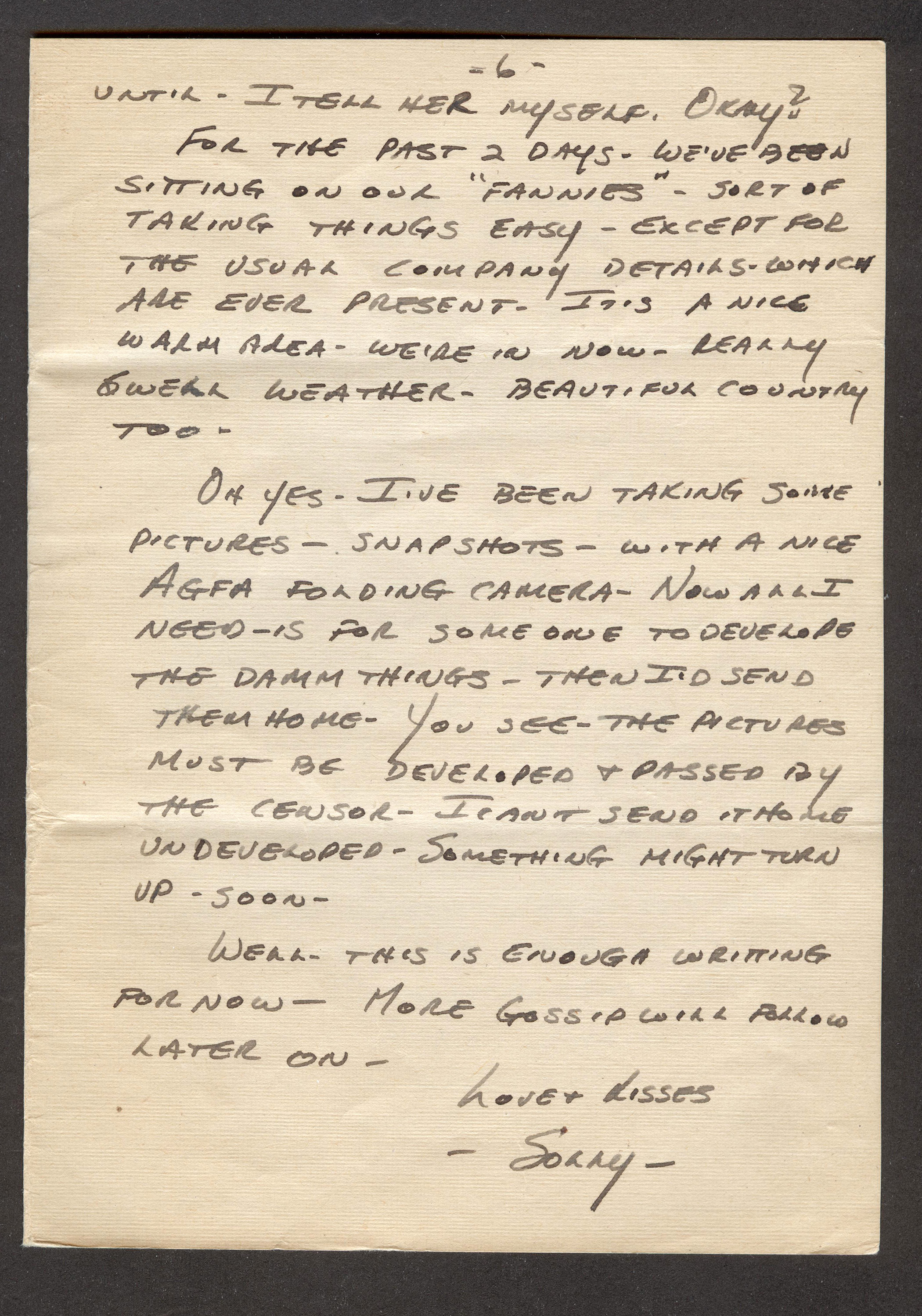
Oh yes – I’ve been taking some pictures – snapshots – with a nice AGFA folding camera – Now all I need – is for some one to develope the damn things – Then I’d send them home – You see – The pictures must be developed and passed by the censor – I can’t send it home undeveloped – Something might turn up – Soon –

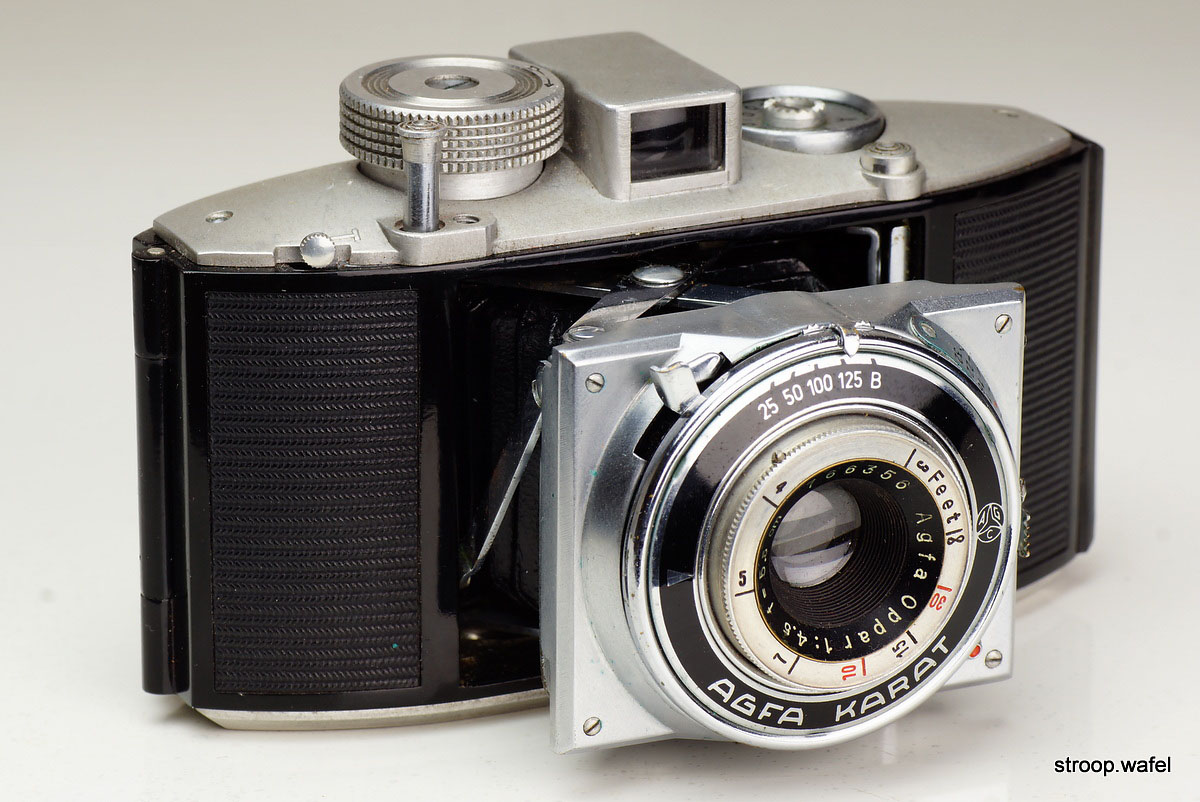
45
Popular version of AGFA folding camera, late 1930’s

Then in the May 16, 1945 letter he describes in detail how he believes his film was sabotaged by Army censors and how he plans to wait for his camera to come from home.  After that incident, Solly stops mentioning anything about his plans for photos or ideas about film development, which makes sense if he is planning a new method of taking and keeping photos and which he wants to keep Army censors from reading about it in his letters.  On May 18, two days after the May 16th letter he does write that he received “his camera” and 5 rolls of film.

On May 31, 1945 he says he has developed a roll of film and now has pictures to send home but is going to hold off doing so until he makes more copies of the photos so he can send them to a number of people stateside at the same time. In the June 9, 1945 letter Solly writes: “Enclosed you will find a few pictures.” Those particular photos can be viewed in the June 9th letter post.

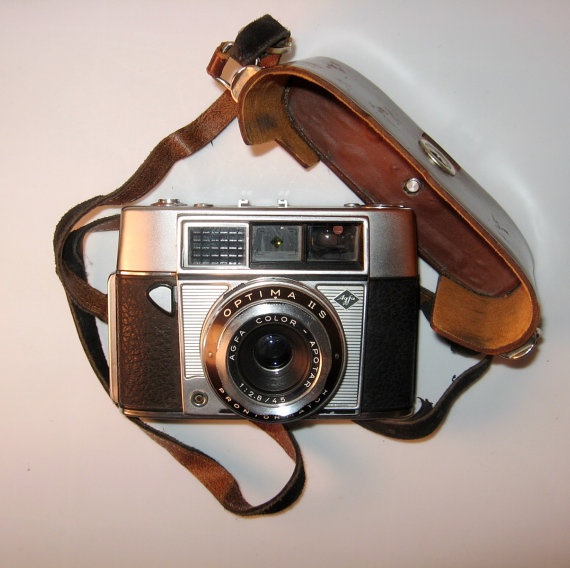
il_570xN.277232641
Another popular version of the AGFA folding camera, late 1930’s

There are many more photos on this blog that are also of his time in Germany including photos of blown up bridges, bombed out towns, and a number of photos of him stateside and in uniform with fellow G.I.’s prior to being shipped overseas. These latter photos did not come to me from Esther but from my mother who gave me a small pile of my Dad’s photos many years prior to receiving the envelope from Esther.

How did Solly get those other pictures home with him?  I cannot say for sure but by the time Solly was sent home in January 1946 photos were not contraband, or concealed weapons, or an issue with censors.

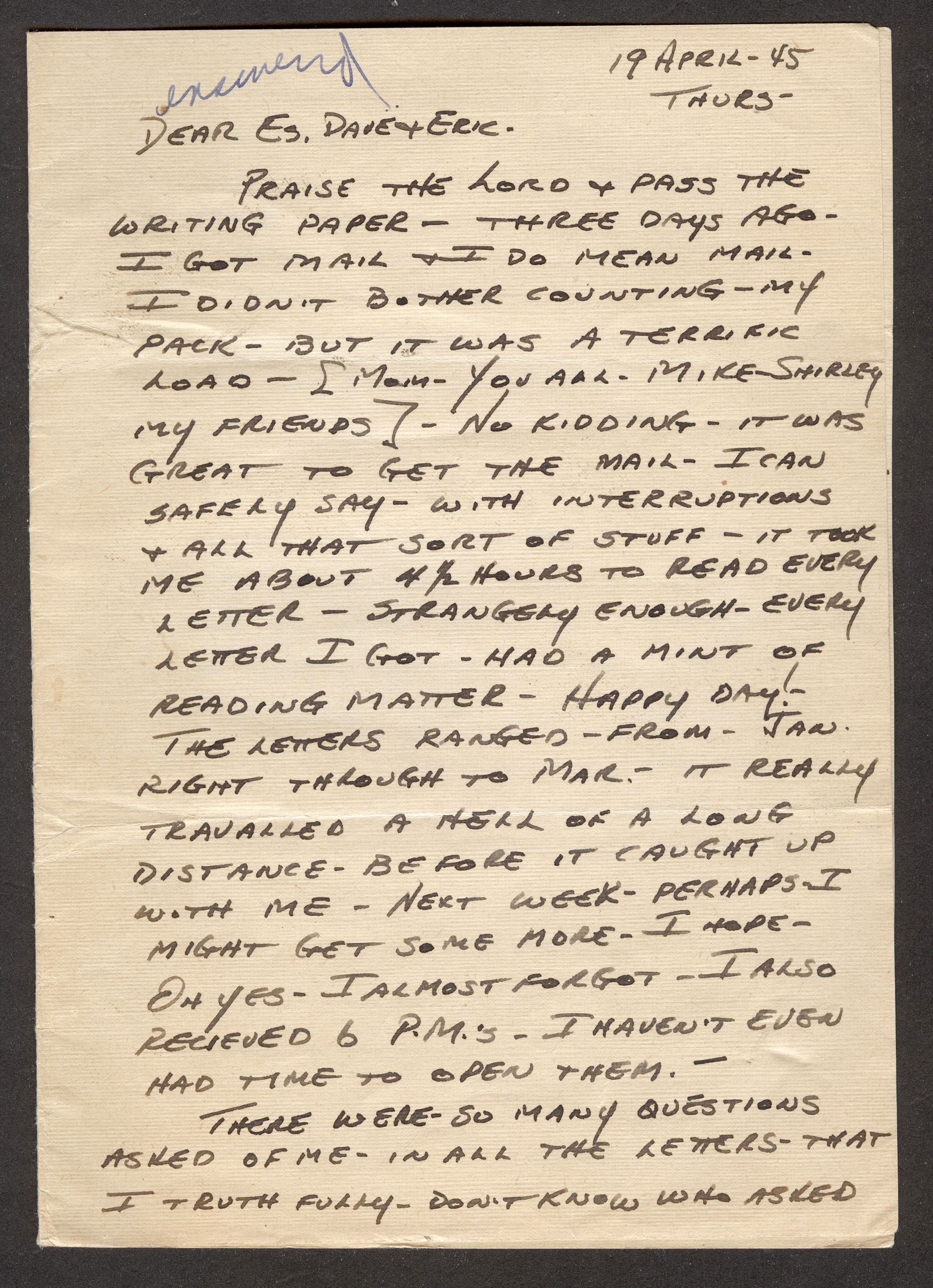
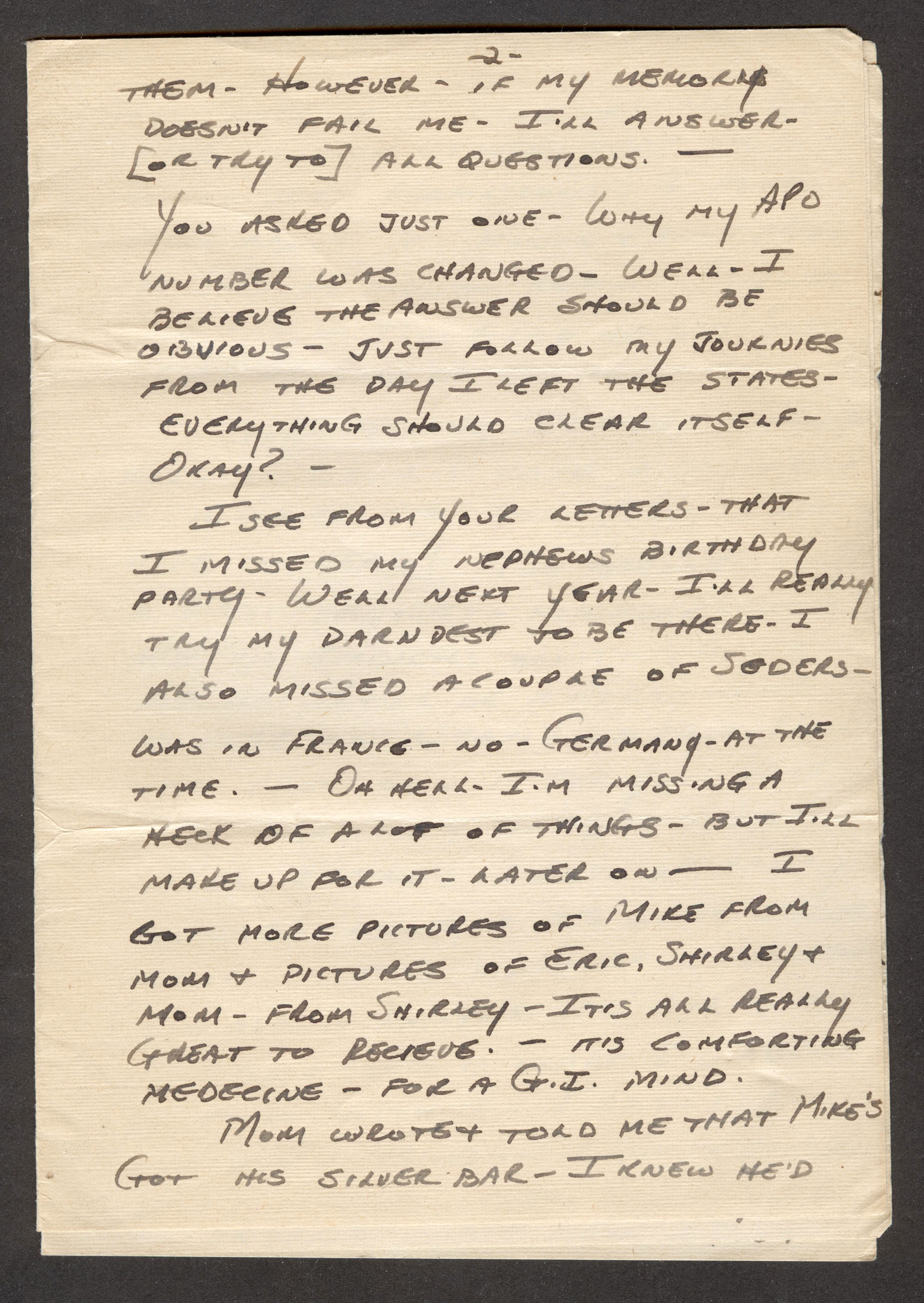
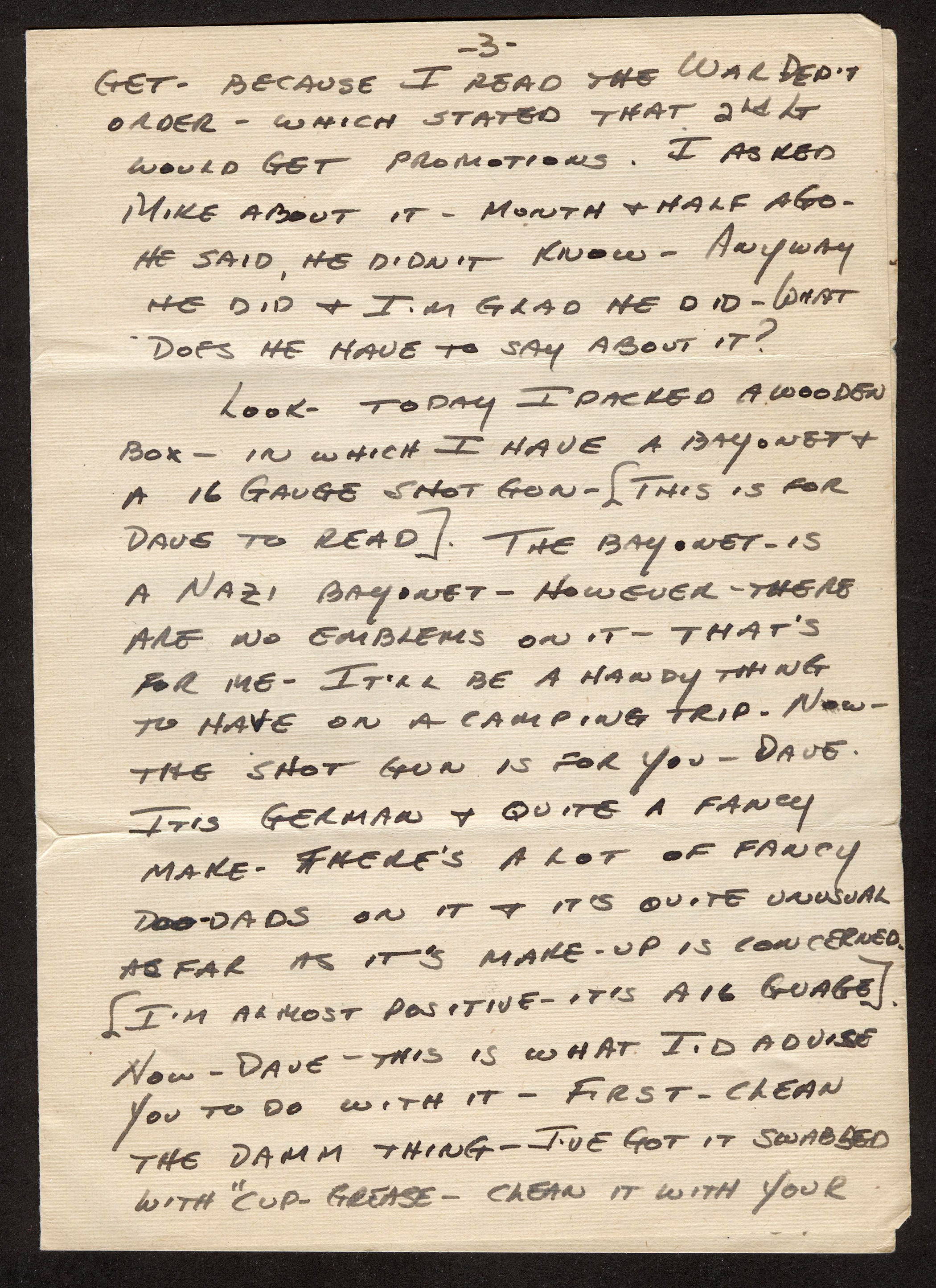
#28 – April 19, 1945

April 19, 1945 is a turning point and you can feel it.

For Solly, like most G.I.’s, he has passed through heavy fire, survived, and is momentarily at rest.  There has been mail call and Solly is elated.  By this time, according to the Map, Solly’s company has passed through Burgstadt, Germany and is out past the farthest, most eastern edge of the last campaign.

Solly mentions P.M., the Brooklyn newspaper, once again in this letter.

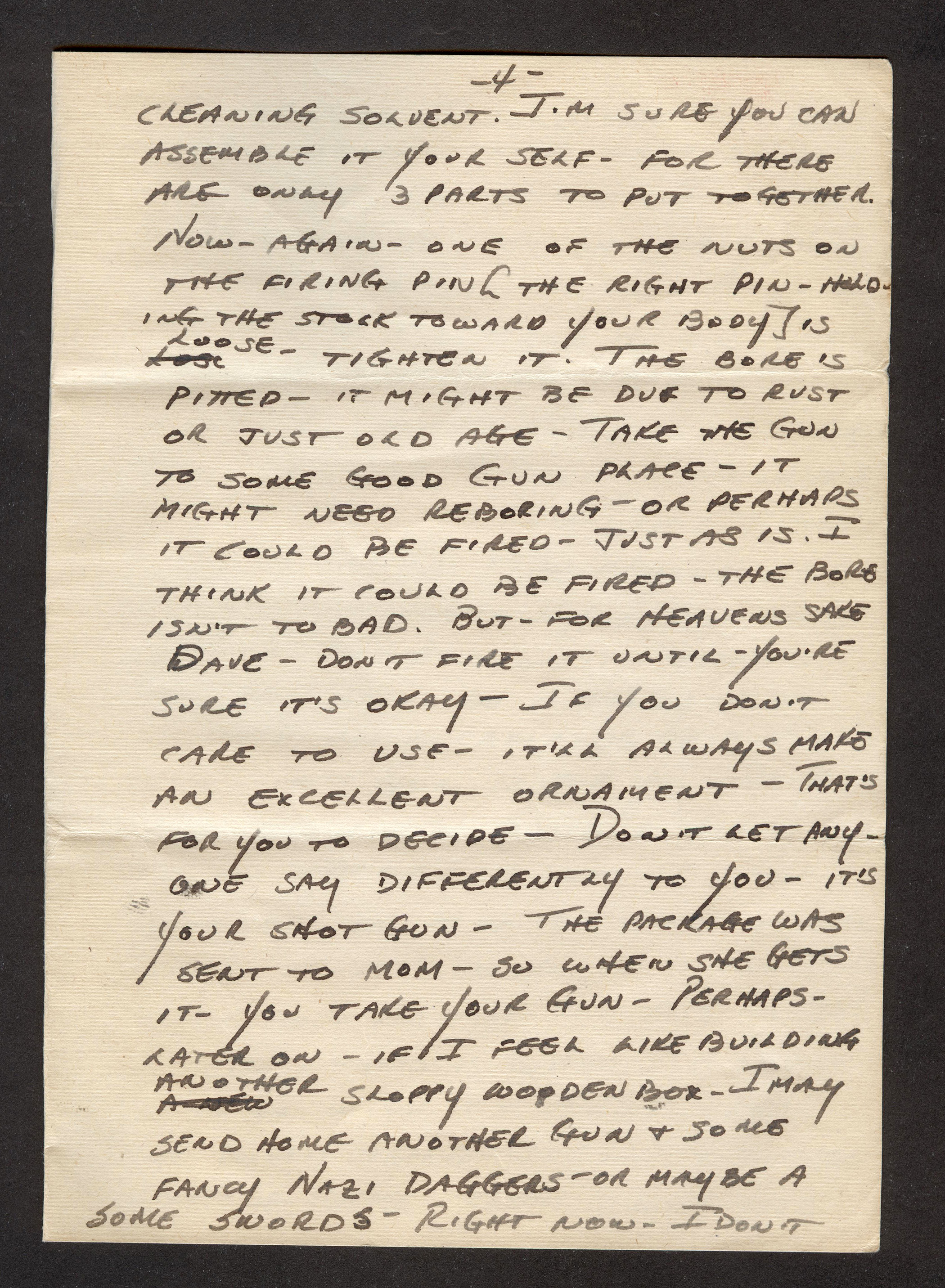
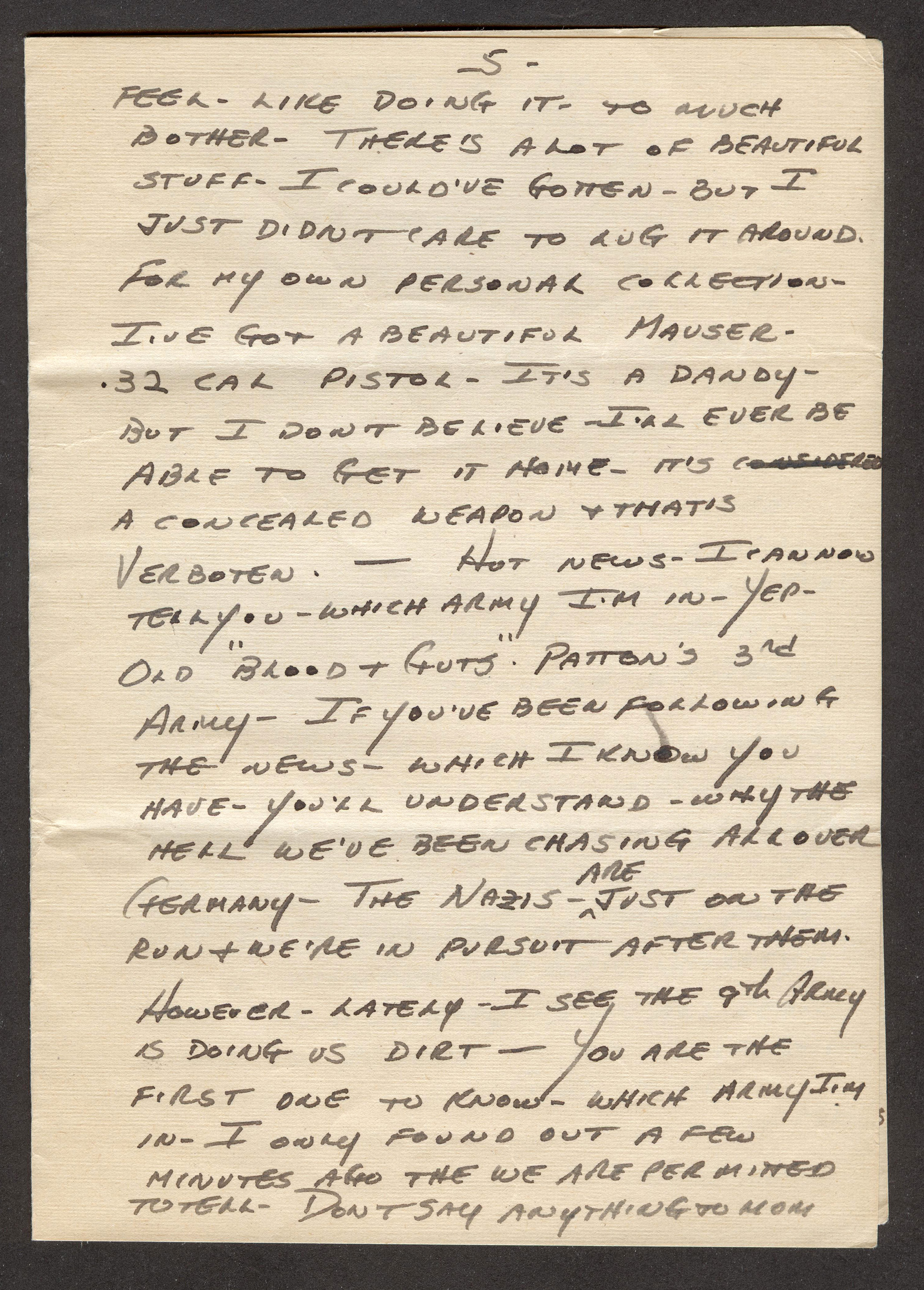
The Solly in this letter, as well as in future letters, knows and appreciates guns and writes Dave that he is boxing up and shipping him a Nazi bayonet and a 16 gauge shotgun.

In this letter Solly also talks about his camera for the first time and having recently shot a roll of film but not sure what to do with it next.  Censorship is a given and probably not something you think about when you are in combat and on the move, but now that they have a brief pause, or as Solly says they are “sitting on their fannies”, censorship must feel intrusive to him all over again.

On view: 6 pages

041945_1_mst
April 19, 1945, p. 1
041945_2_mst
p. 2
041945_3_mst
p. 3
041945_4_mst
p. 4
041945_5_mst
p. 5
041945_6_mst
p. 6