On view: 4 pages
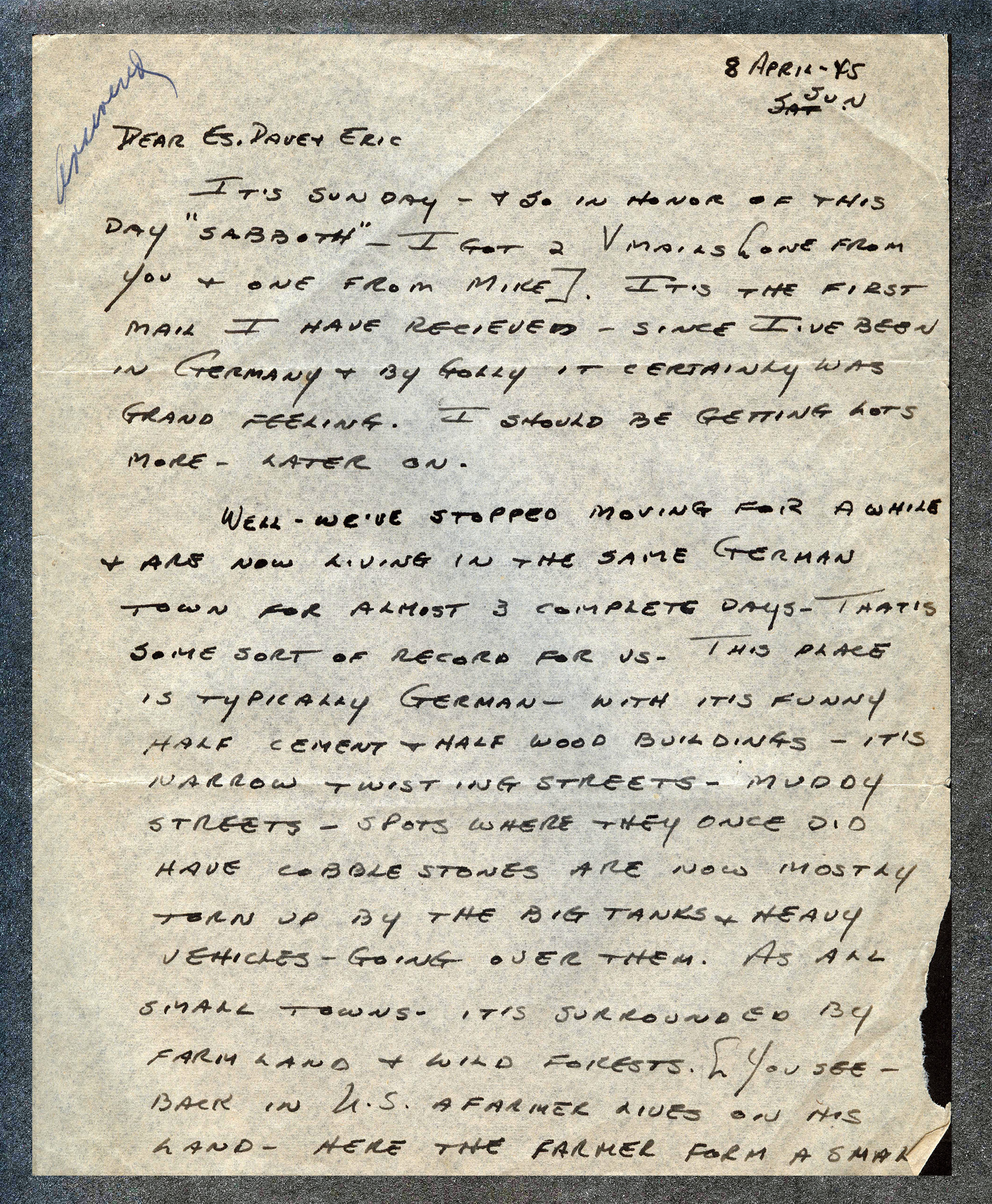
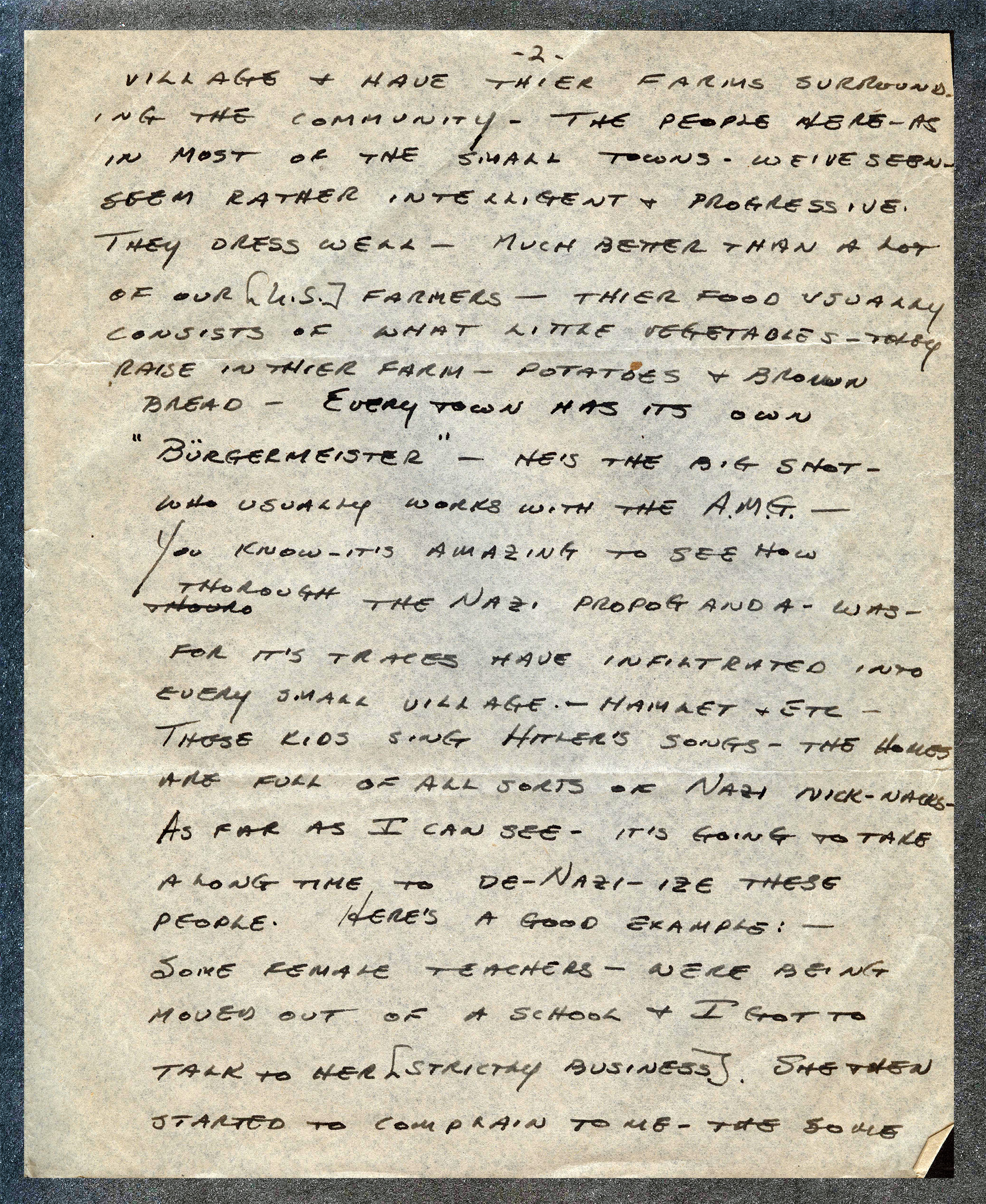

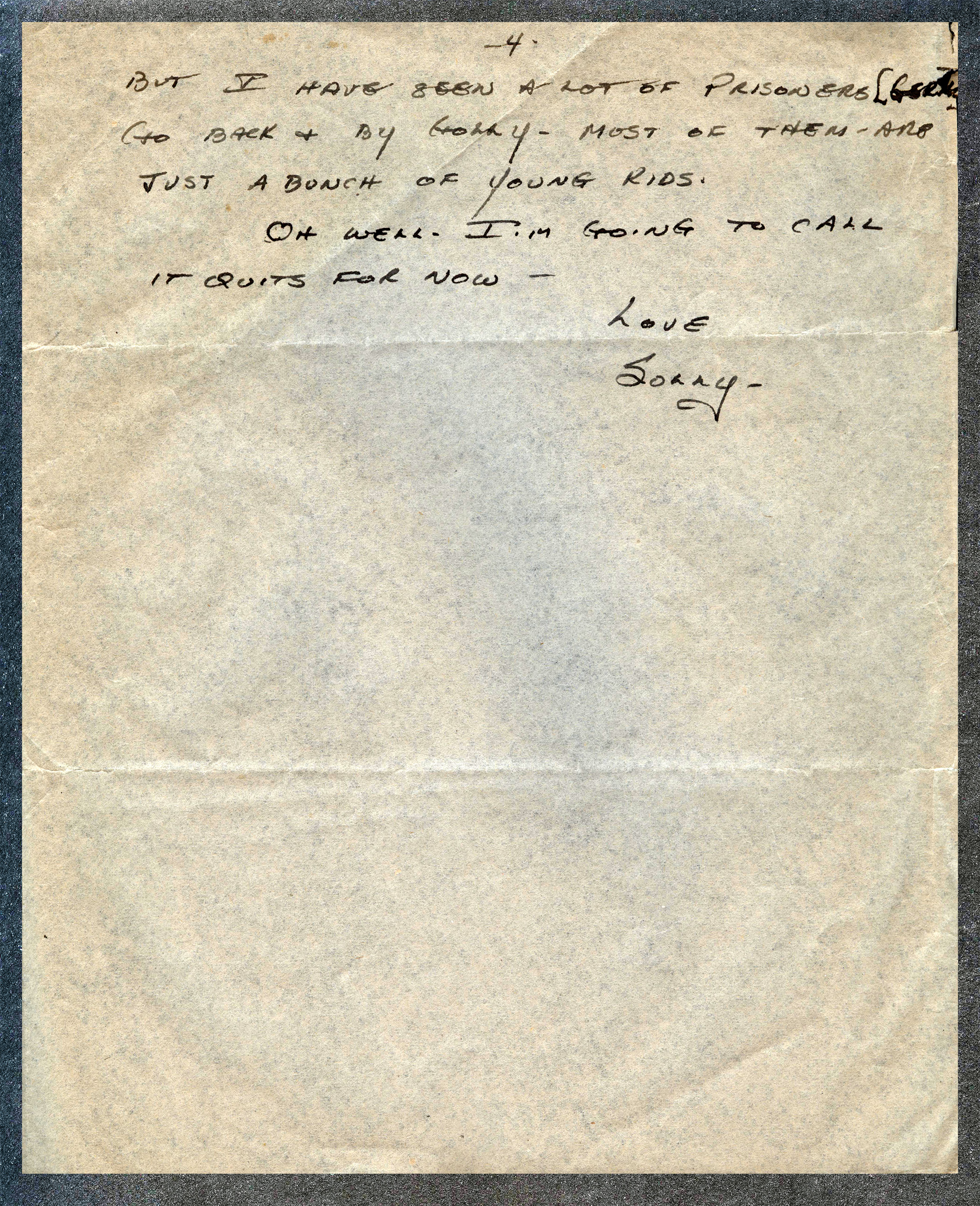
On view: 4 pages
On view: 2 pages and Nazi Ballot
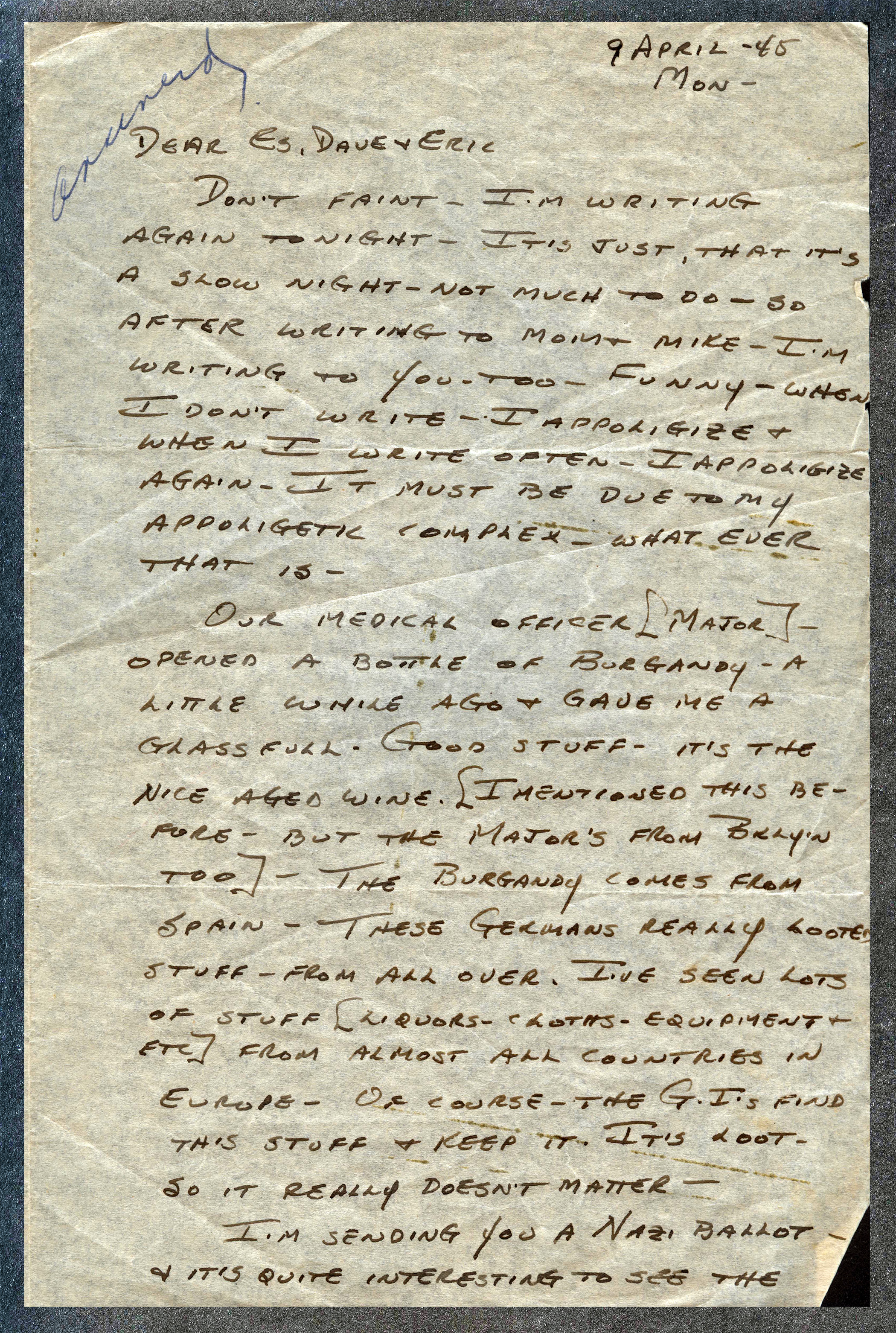
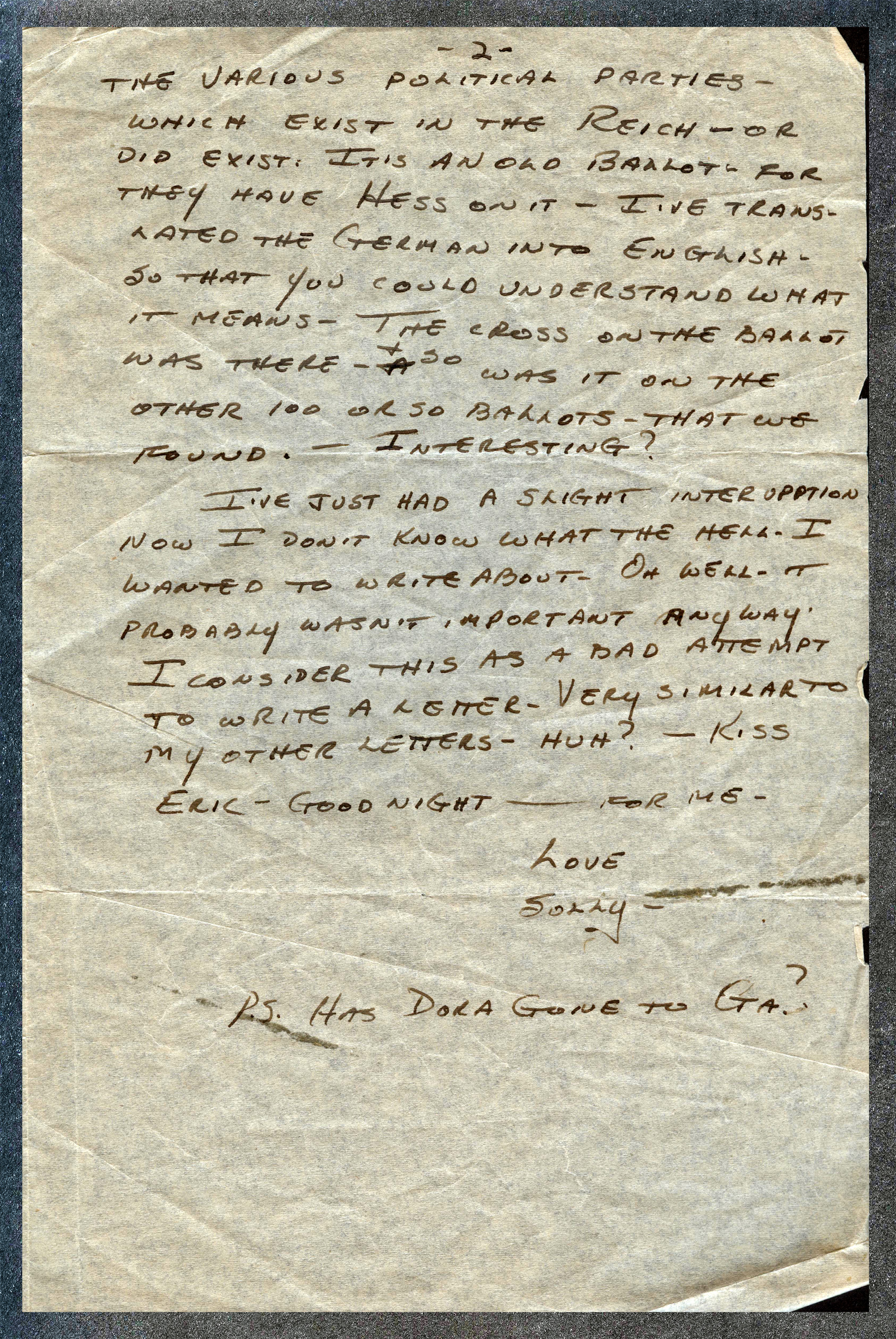
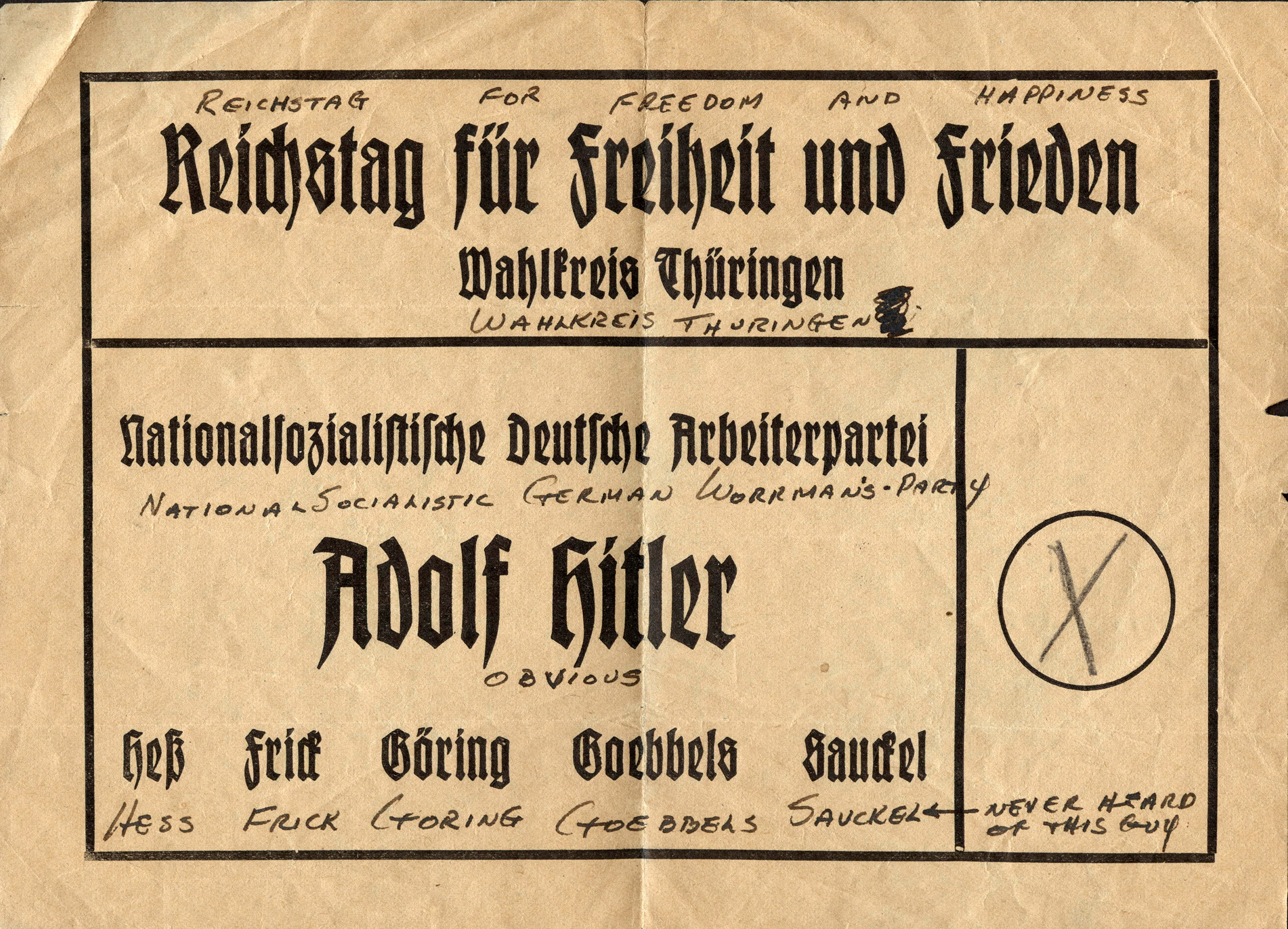
On view: 2 pages and one reverse side image of p. 2 with handwritten notes by Esther
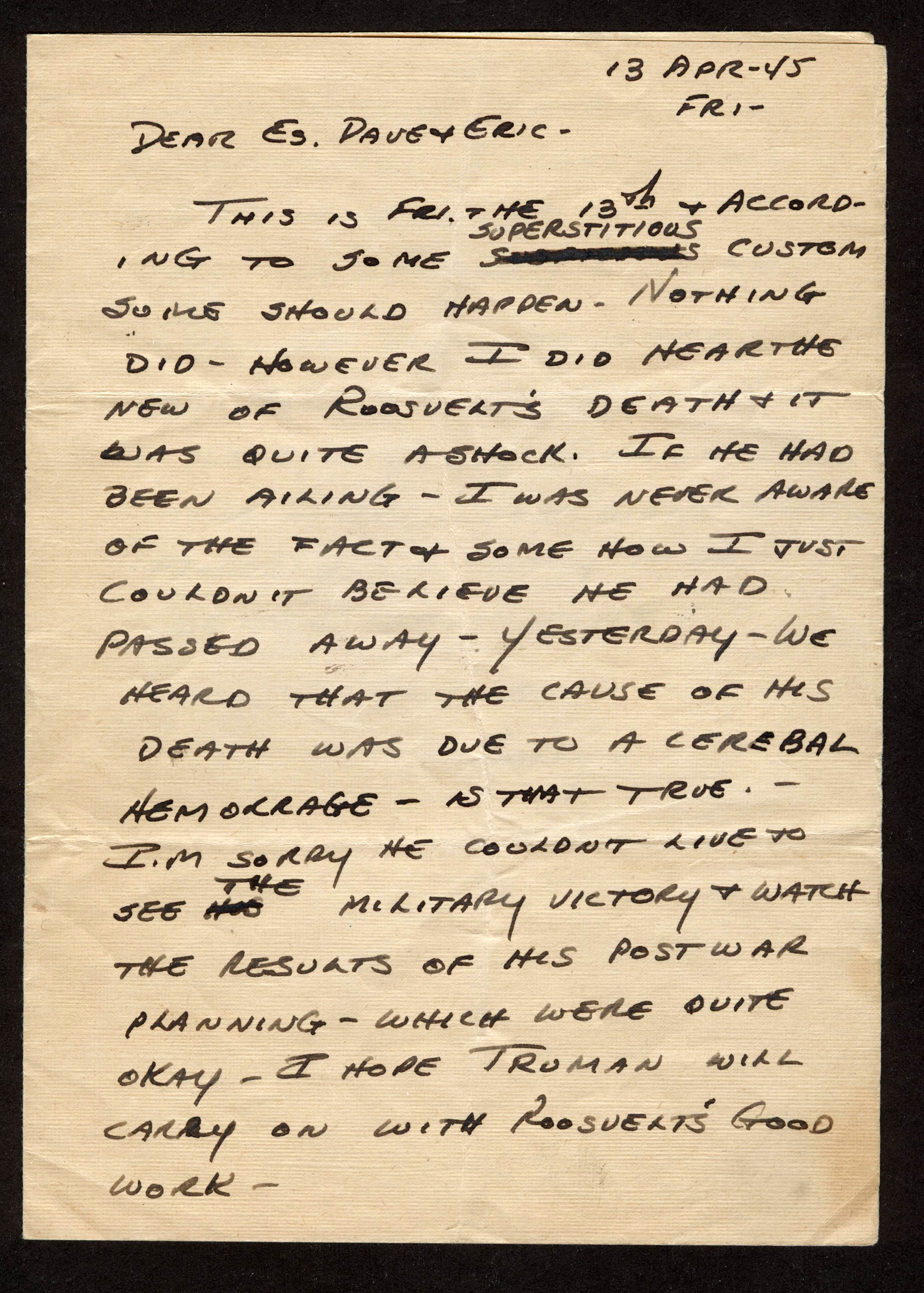
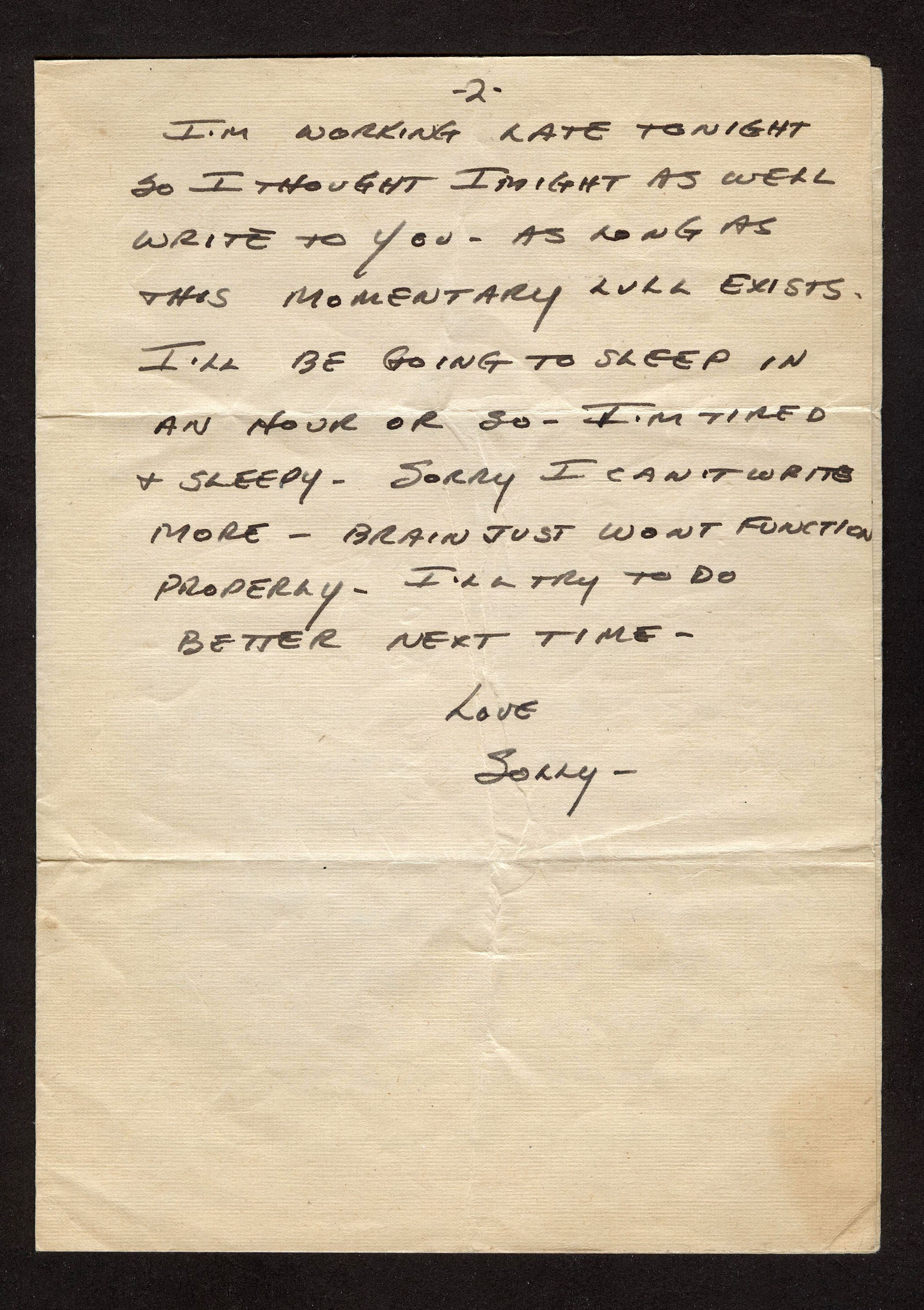
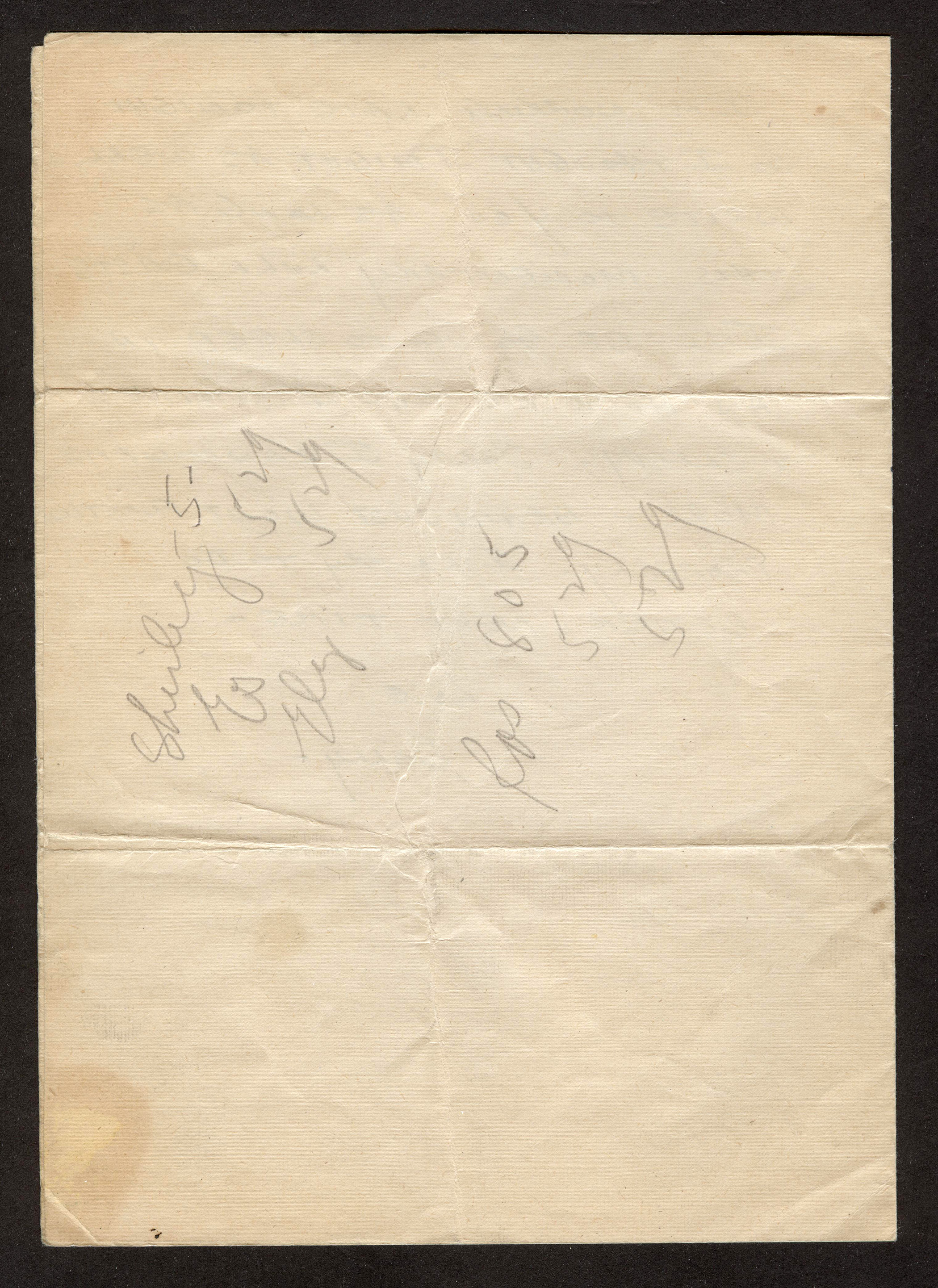
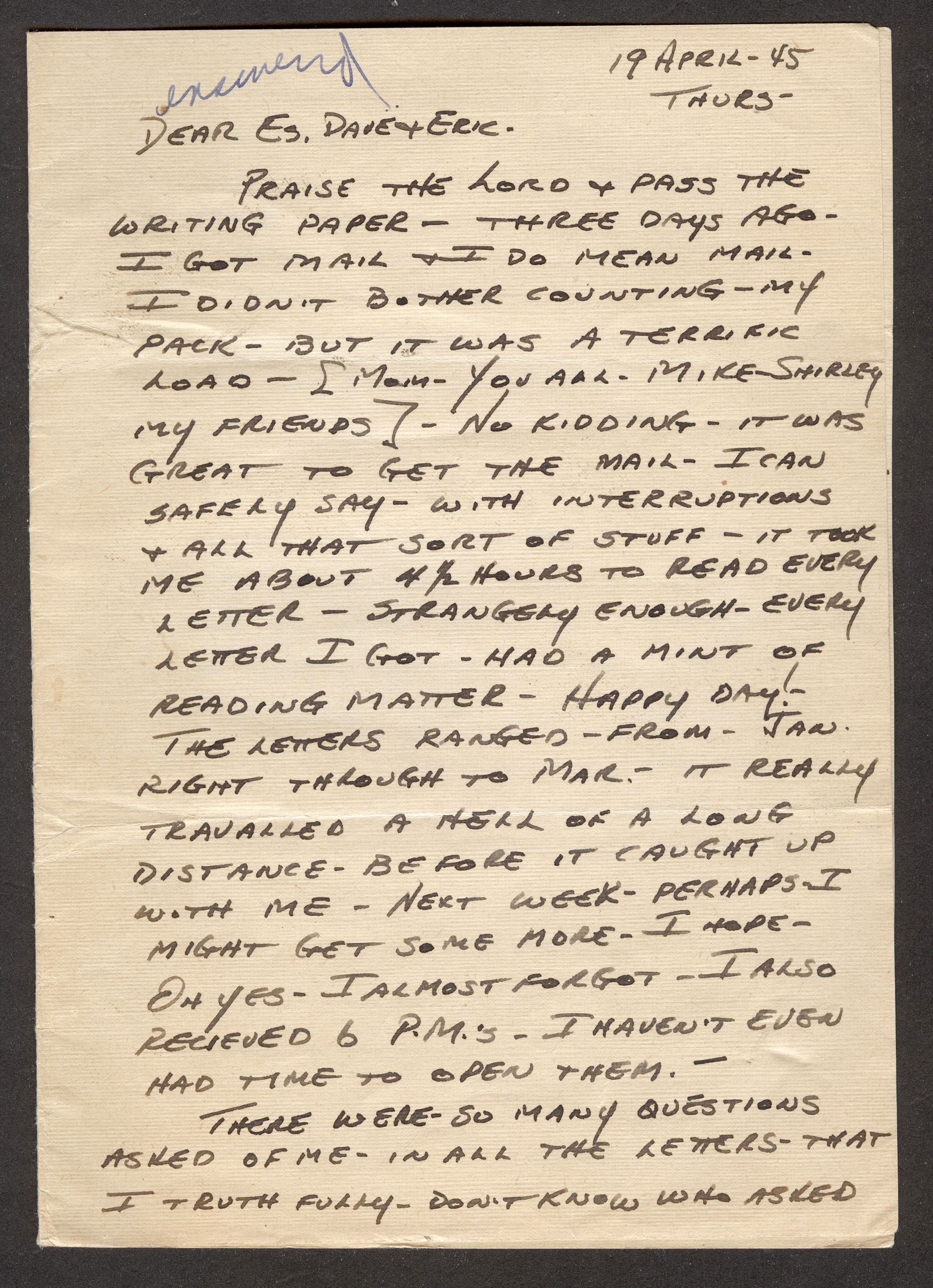
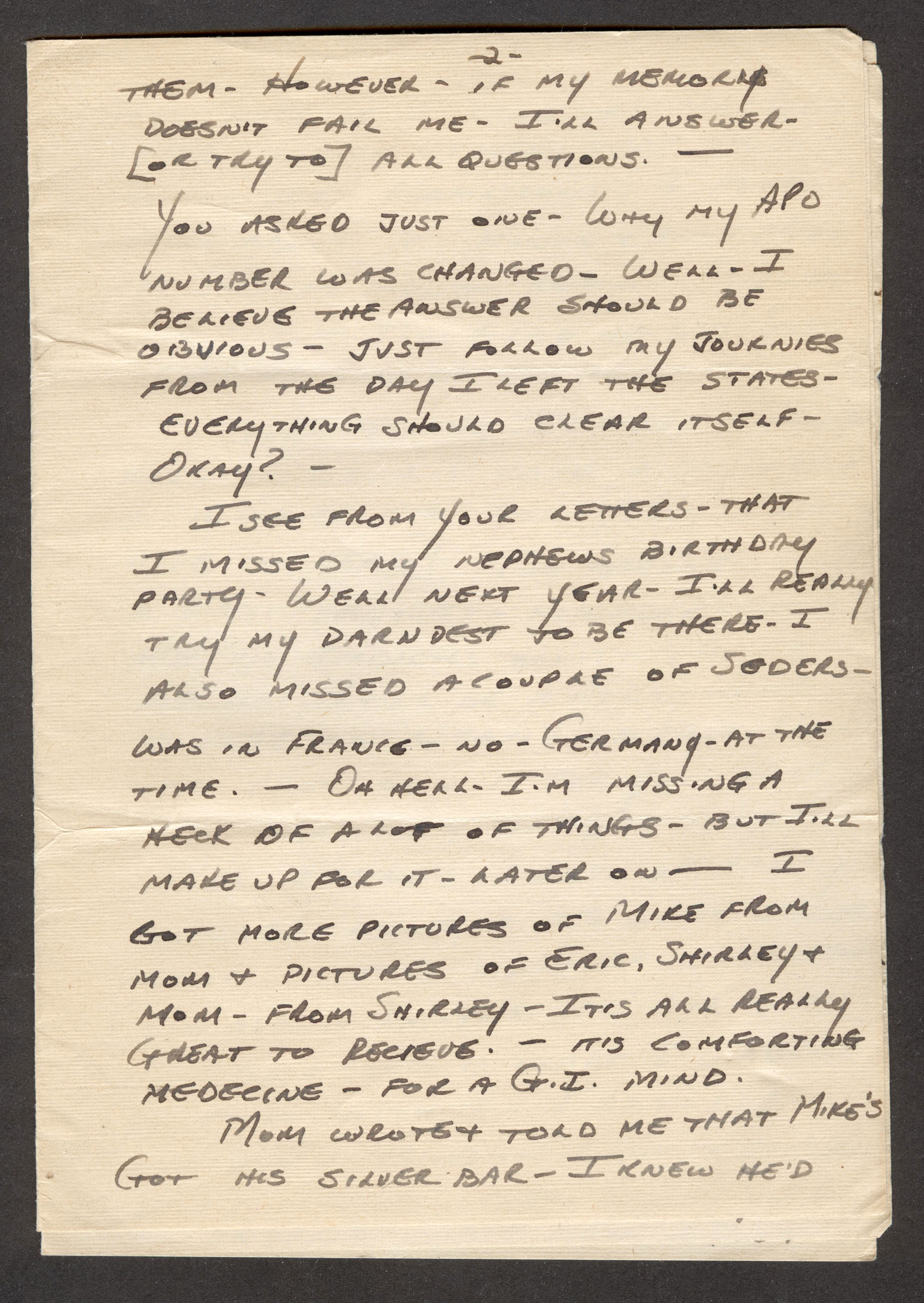
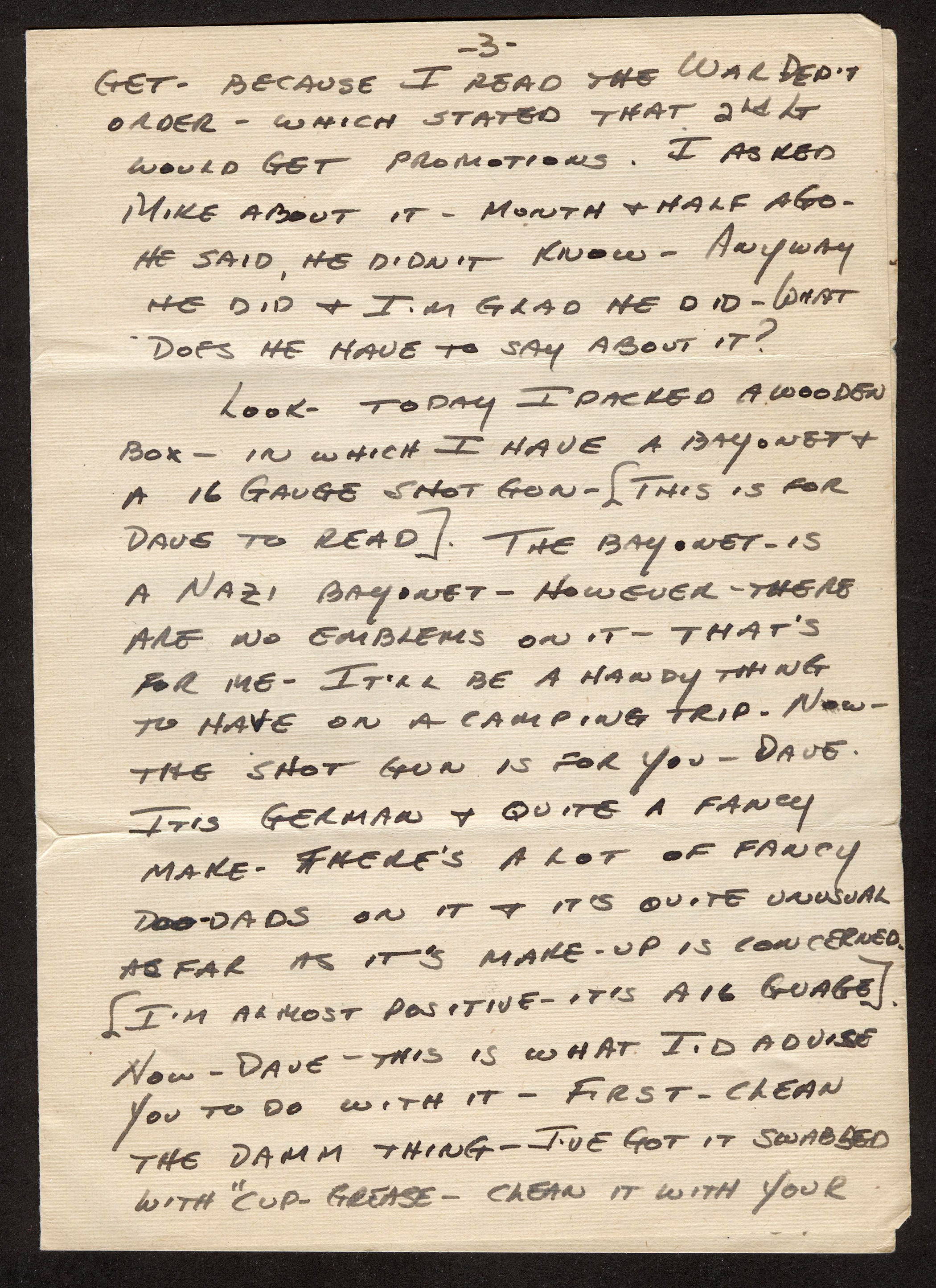
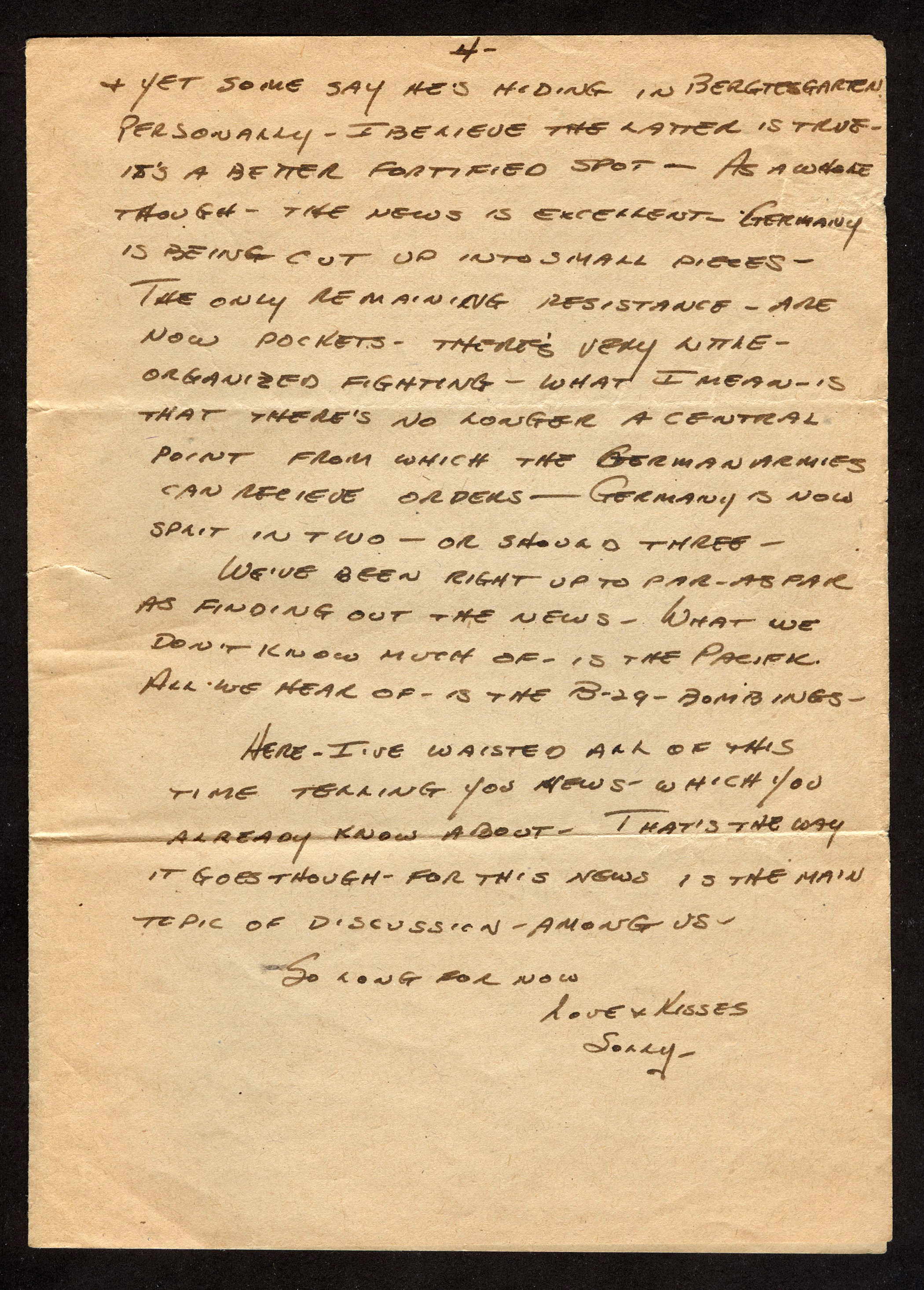
April 19, 1945 is a turning point and you can feel it.
For Solly, like most G.I.’s, he has passed through heavy fire, survived, and is momentarily at rest. There has been mail call and Solly is elated. By this time, according to the Map, Solly’s company has passed through Burgstadt, Germany and is out past the farthest, most eastern edge of the last campaign.
Solly mentions P.M., the Brooklyn newspaper, once again in this letter.
The Solly in this letter, as well as in future letters, knows and appreciates guns and writes Dave that he is boxing up and shipping him a Nazi bayonet and a 16 gauge shotgun.
In this letter Solly also talks about his camera for the first time and having recently shot a roll of film but not sure what to do with it next. Censorship is a given and probably not something you think about when you are in combat and on the move, but now that they have a brief pause, or as Solly says they are “sitting on their fannies”, censorship must feel intrusive to him all over again.
On view: 6 pages
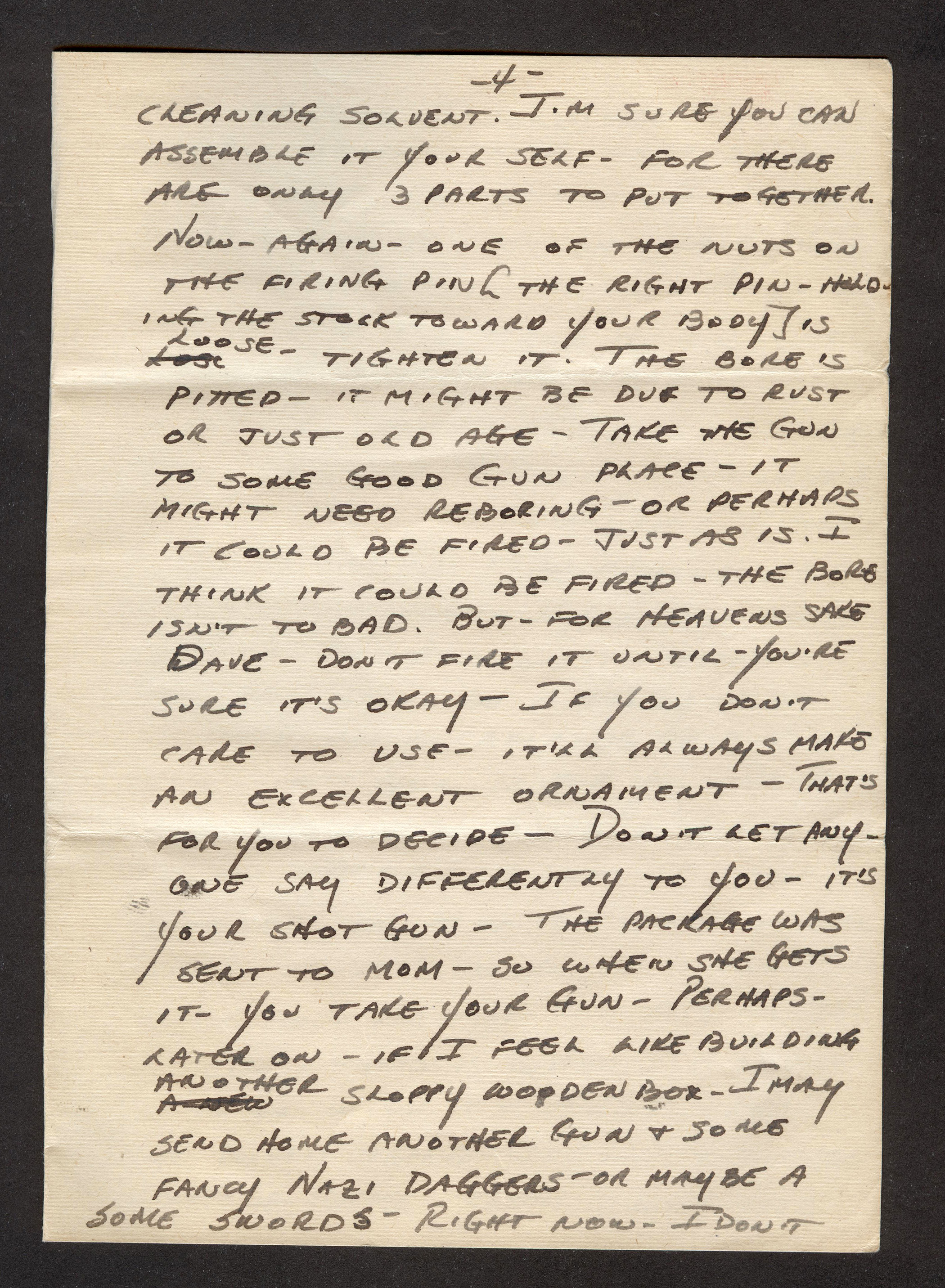
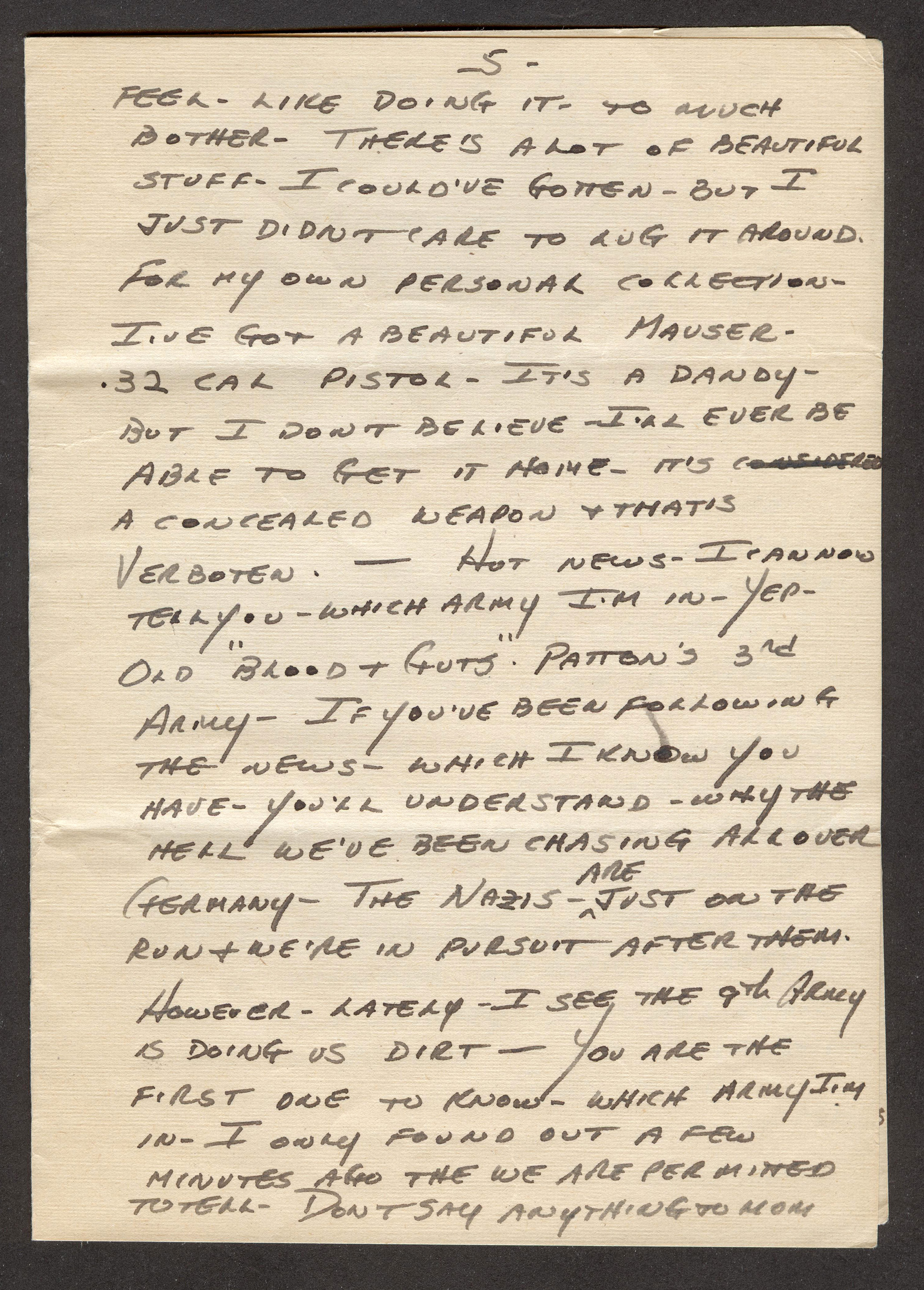
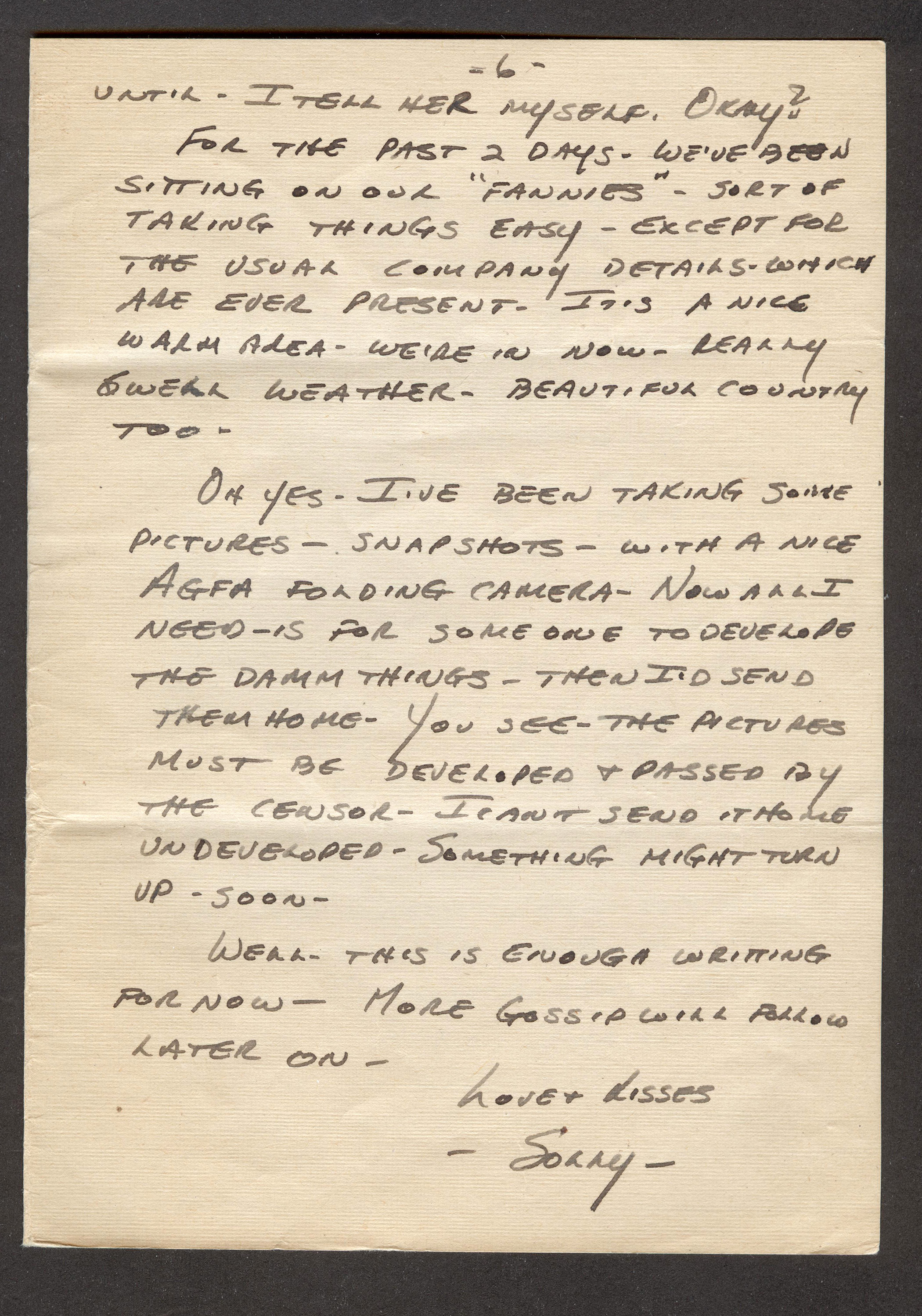
Below is an image of what a V-mail (Victory Mail) looked like. It was a hybrid process used during WWII in America as the primary and secure method to correspond with soldiers stationed abroad.
To reduce the cost of transferring an original letter through the military postal system, a V-mail letter would be censored, copied to film, and printed back to paper upon arrival at its destination. V-mail correspondence was on small letter sheets (7 by 9 1/8 in.) that would go through mail censors before being photographed and transported as thumbnail-sized images in negative microfilm. Upon arrival to their destination, the negatives would be blown up to 60% of their original size (4 ¼ in. by 5 3/16 in.) and printed.
I know this V-mail is hard to read but if you right click on the image and download it to your desktop you can open it with your desktop picture viewer and zoom in.
This is actually a high-res digital file and will not distort or blur as you zoom in.
On view: V-mail, 1 page only. Page 2 is missing.
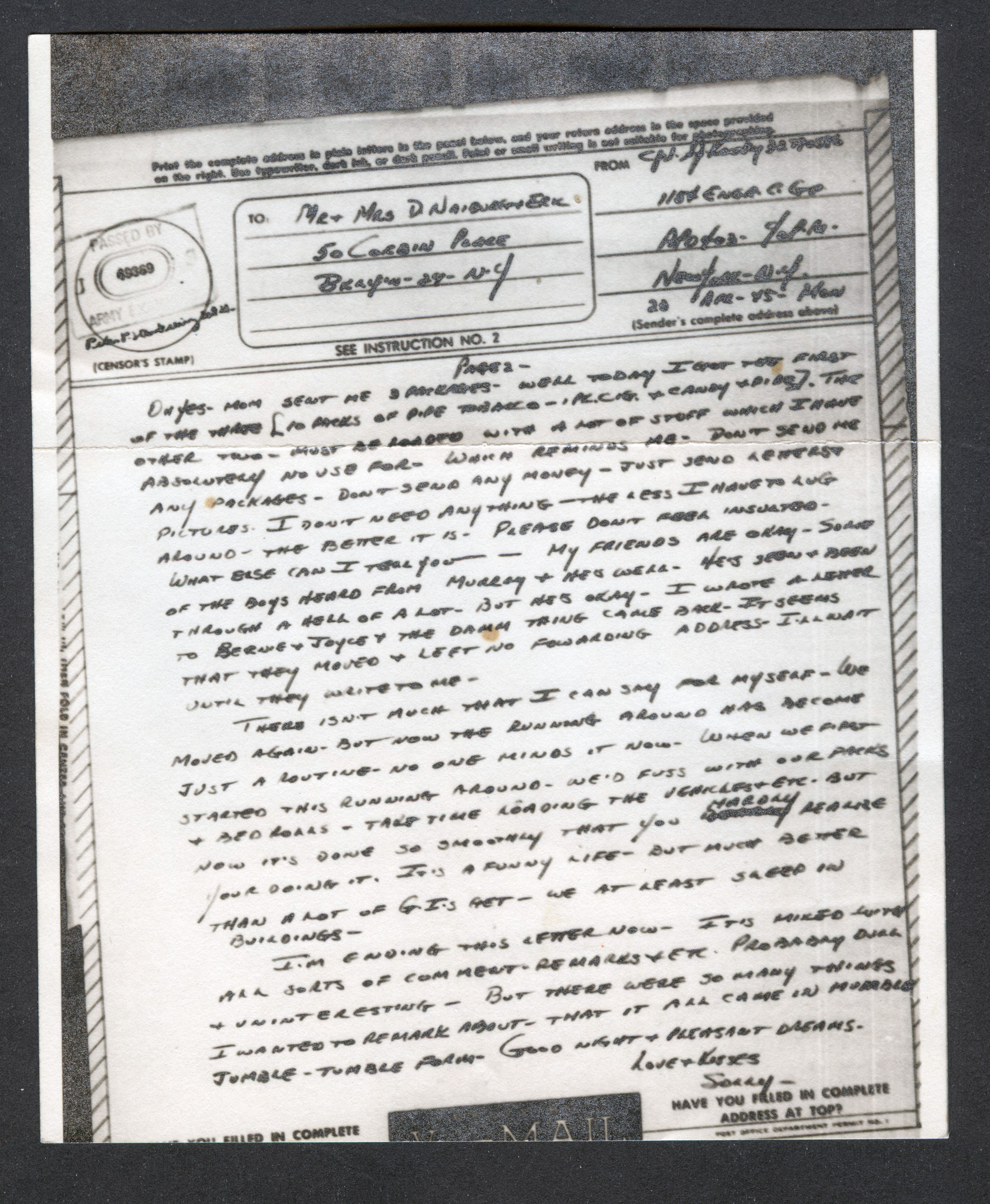
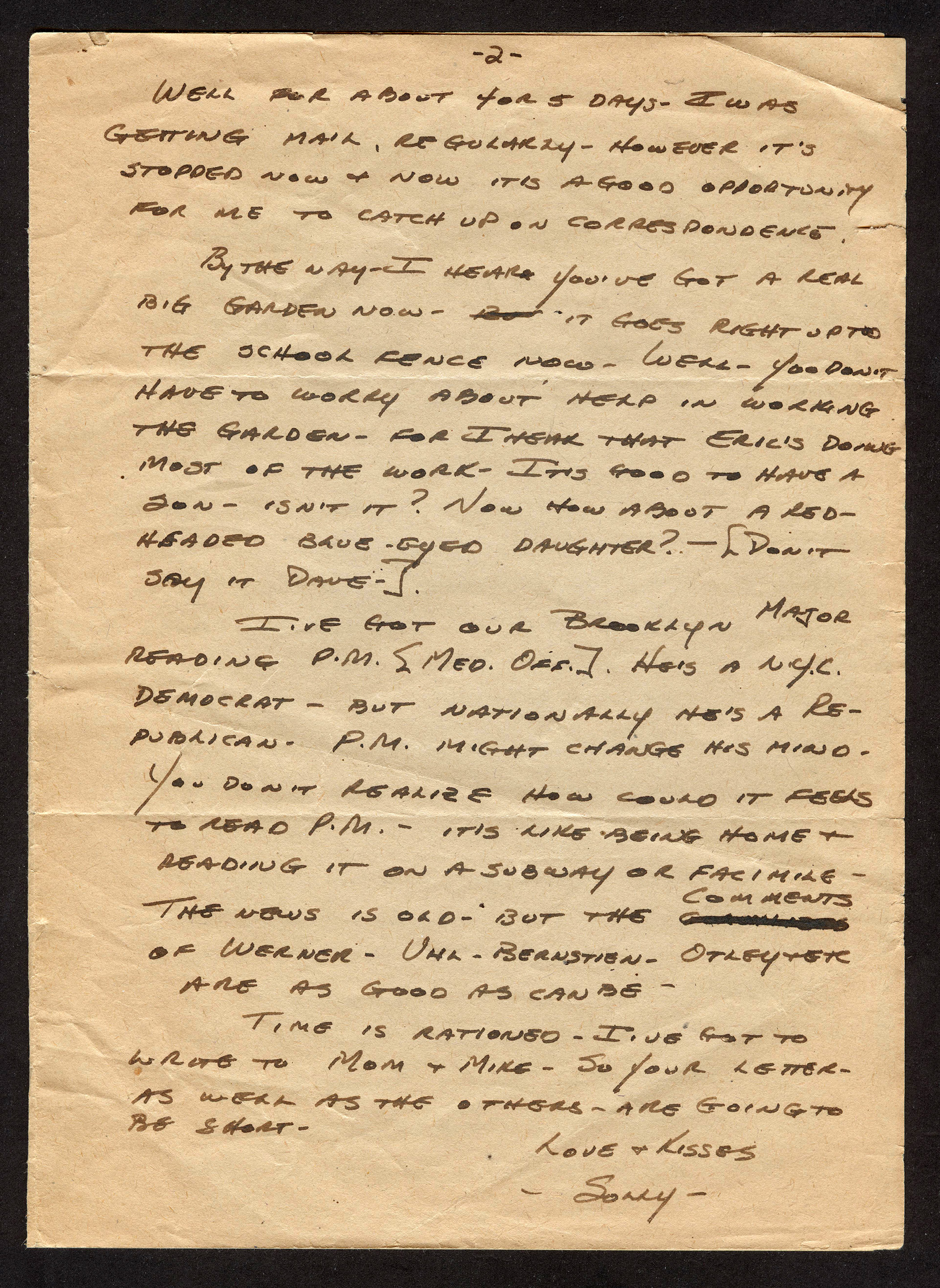
One of the interesting things in Solly’s letters is how he never calls another soldier by their name but rather identifies them by the city or state they come from, as with the Brooklyn Major (Medical Officer) he mentions in this letter and others.
I once asked my father if he made friends in the army and if he kept in contact with any of them and he told me he decided before he entered the service that he would not make any friends. It was not smart, he said, to get connected to anyone.
In the Help Identify category of photos on this blog the two pictures from Dec 1942, which are not Solly’s, also identify the people in the image with their state abbreviation instead of their name. Perhaps it was a common practice. (Still looking for help identifying the photos in Help Identify).
On view: 2 pages

On view: 4 pages
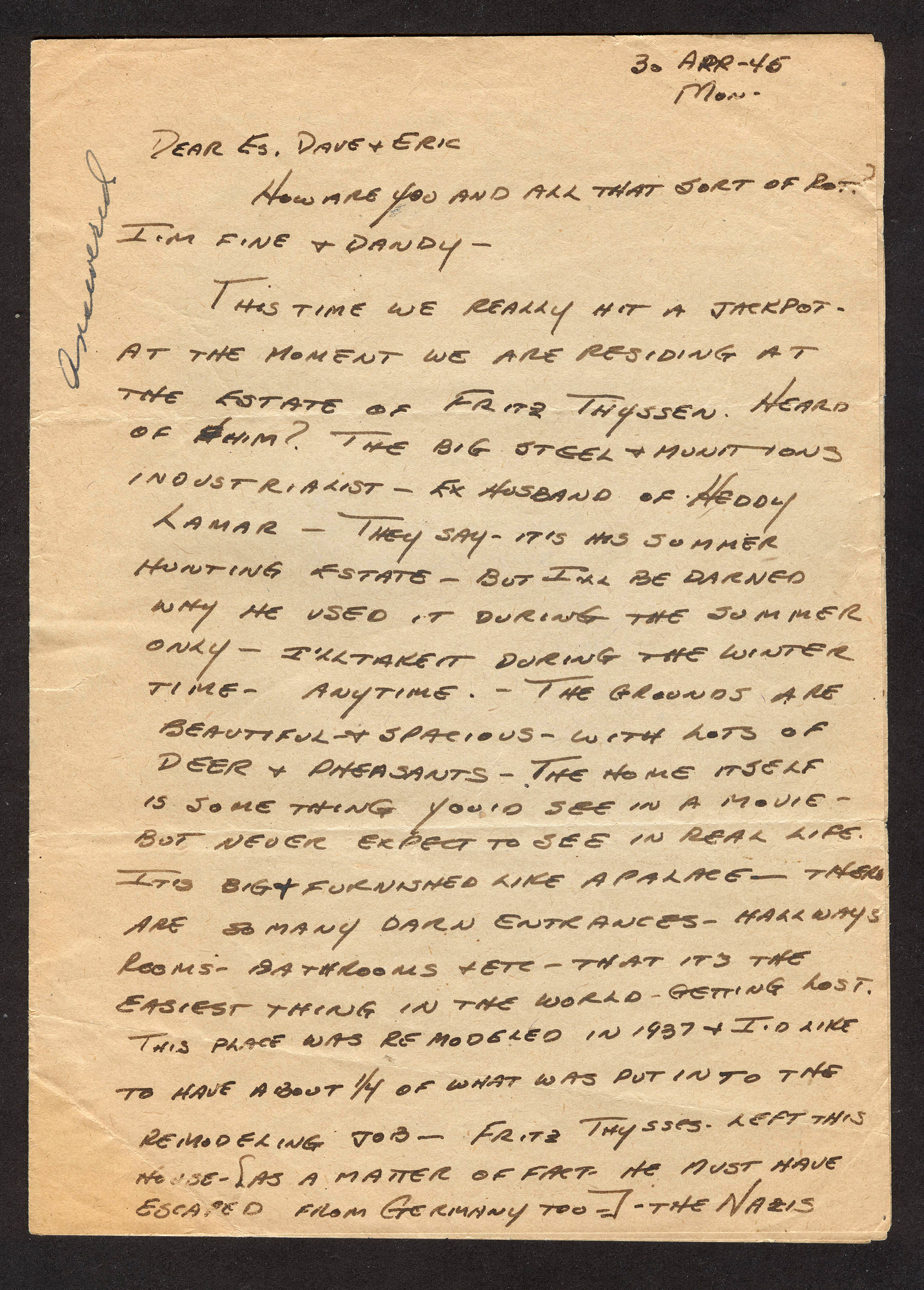
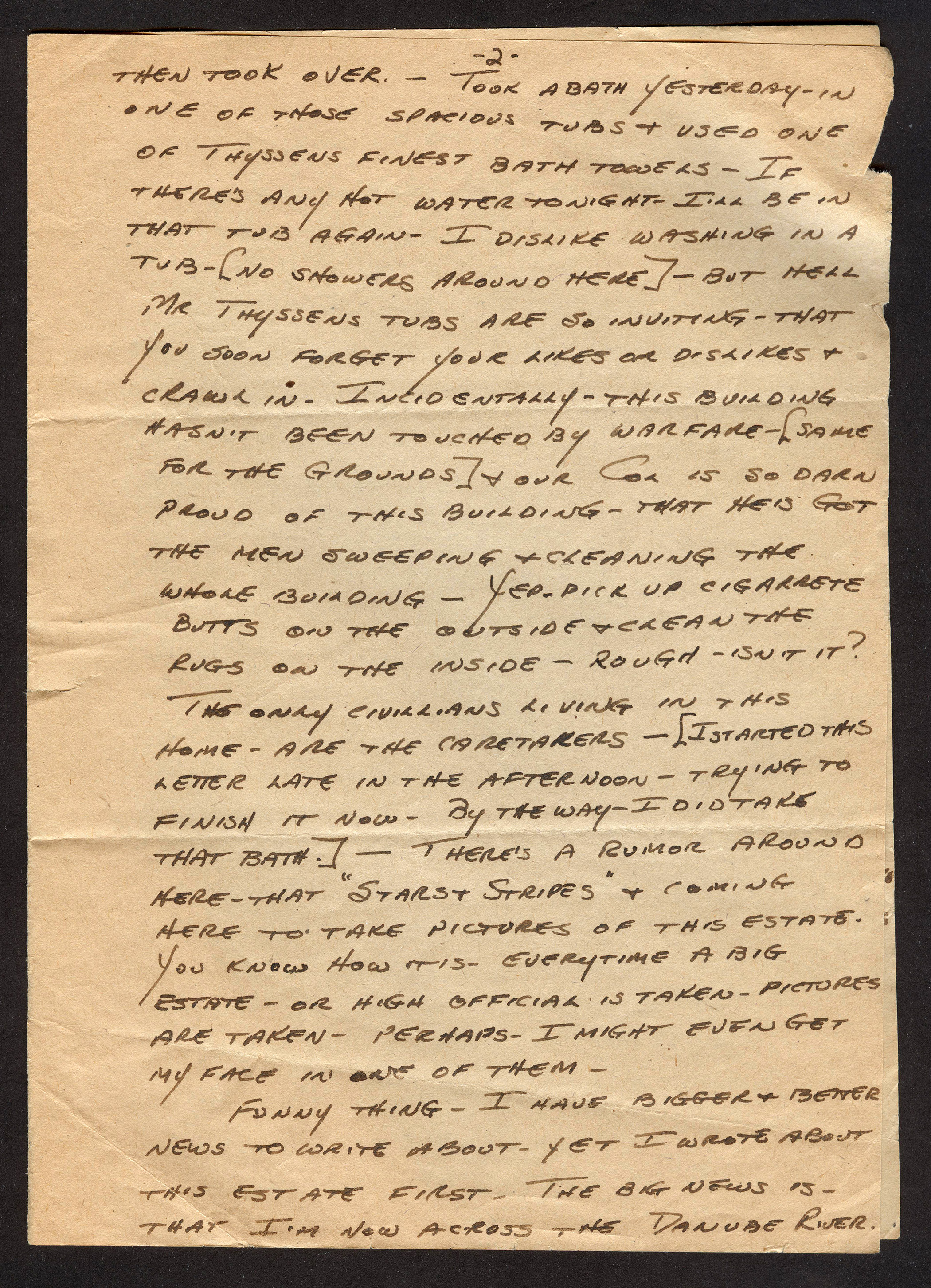
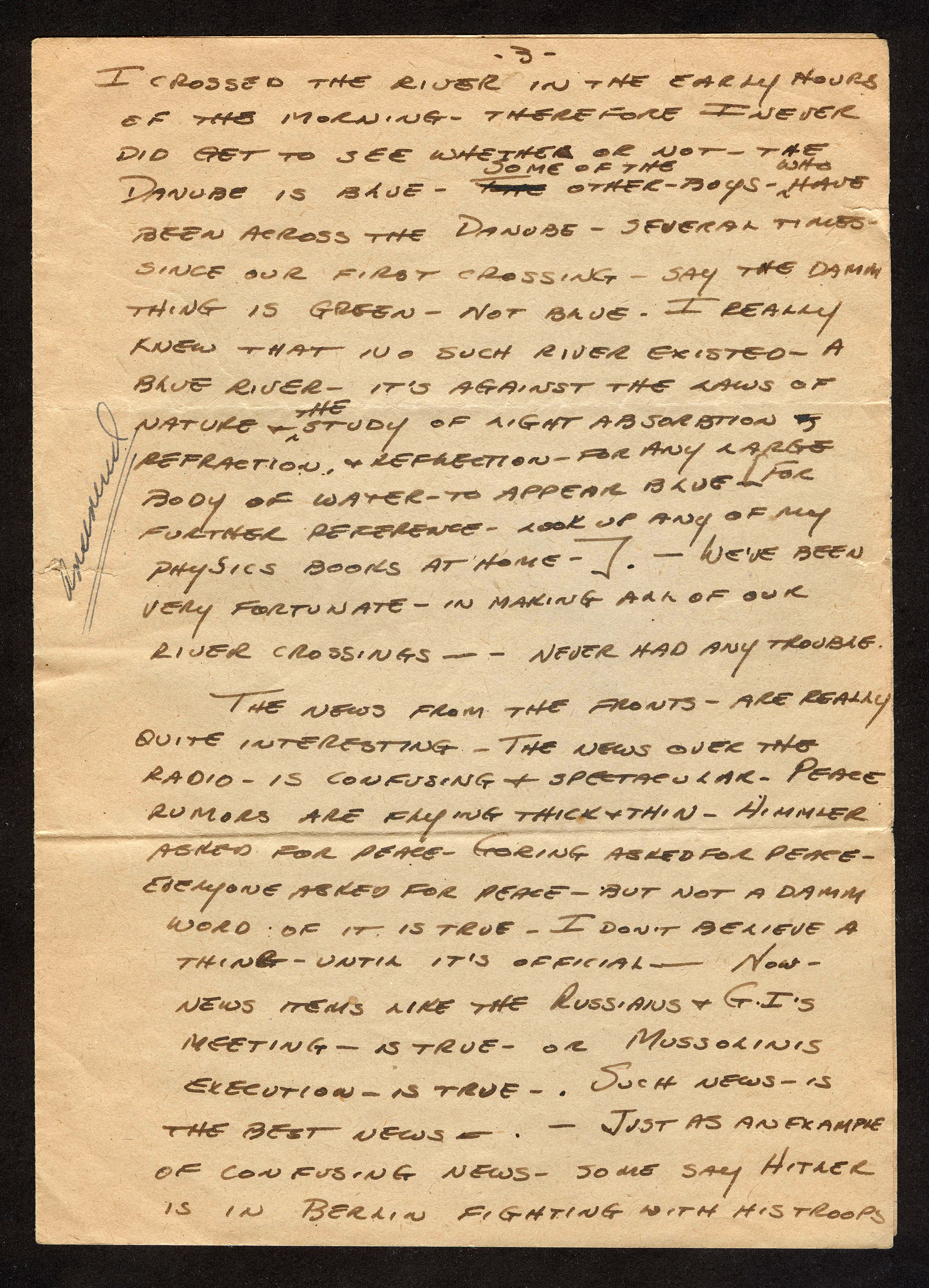
 Love Solly