JANUARY POSTS: #1- Esther saved each letter

#1 – ESTHER SAVED EACH LETTER

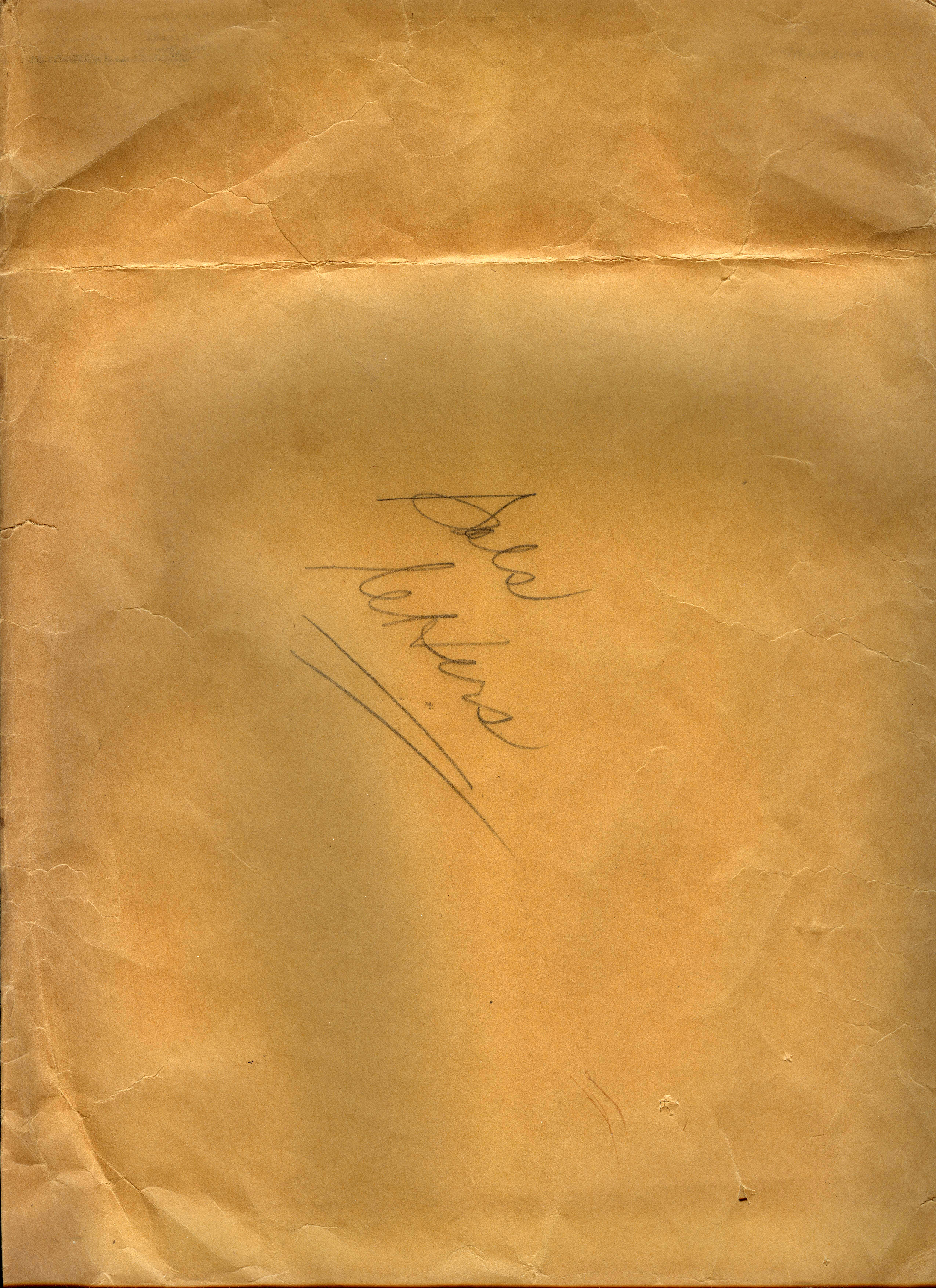
Esther told me she saved all the letters starting with the very first one.  She kept them in this envelope.  The envelope and the letters inside it are at least 72 years old.  Esther’s handwriting: “Sols letters“.

On view:  1 manila envelope with Sols letters written on it.
Esther'sEnvelope_mst
Esther’s envelope

The letters were mostly in order, facing up, with the first letter from December 1944 on the top of the pile and the last letter from January 1946 on the bottom.

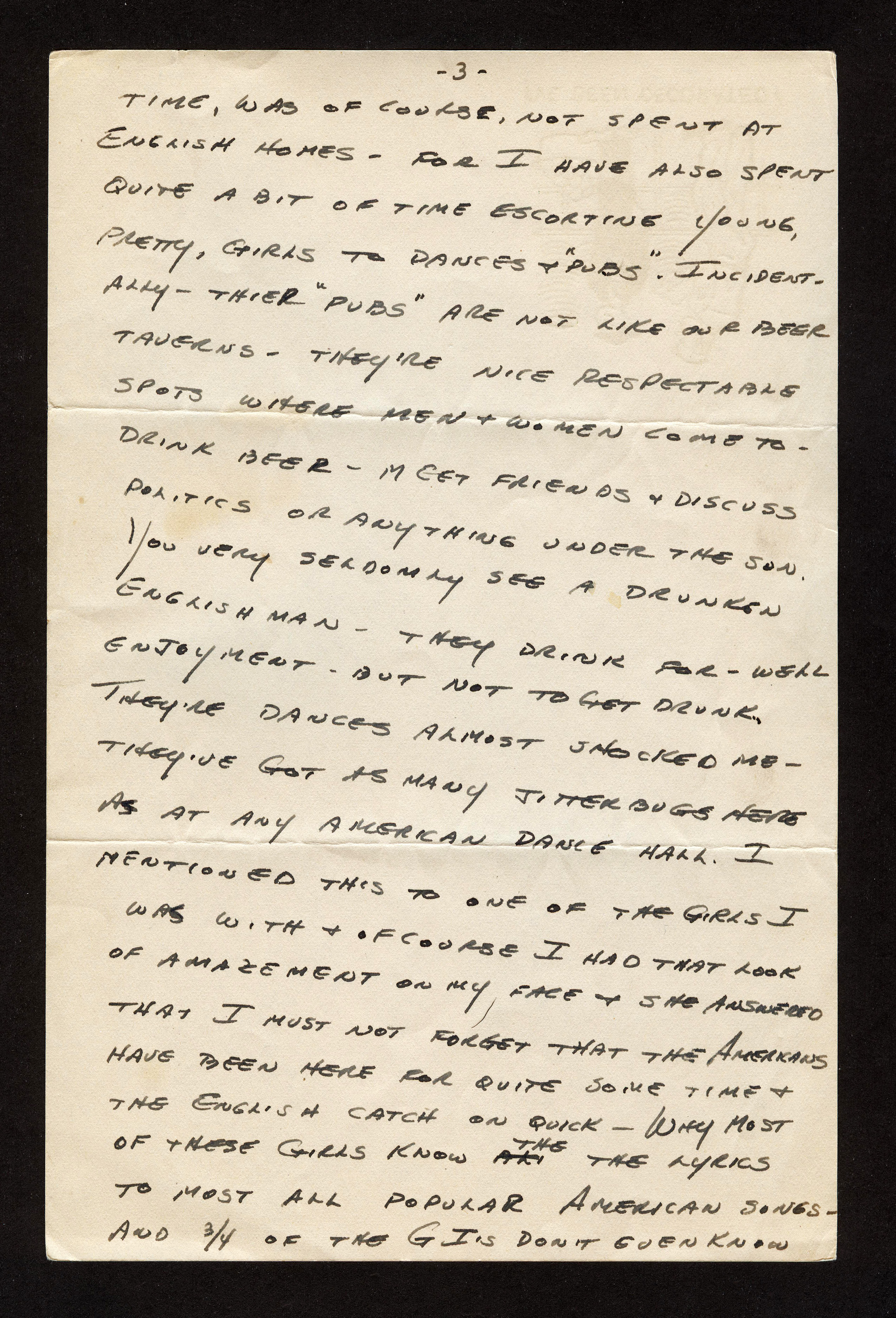
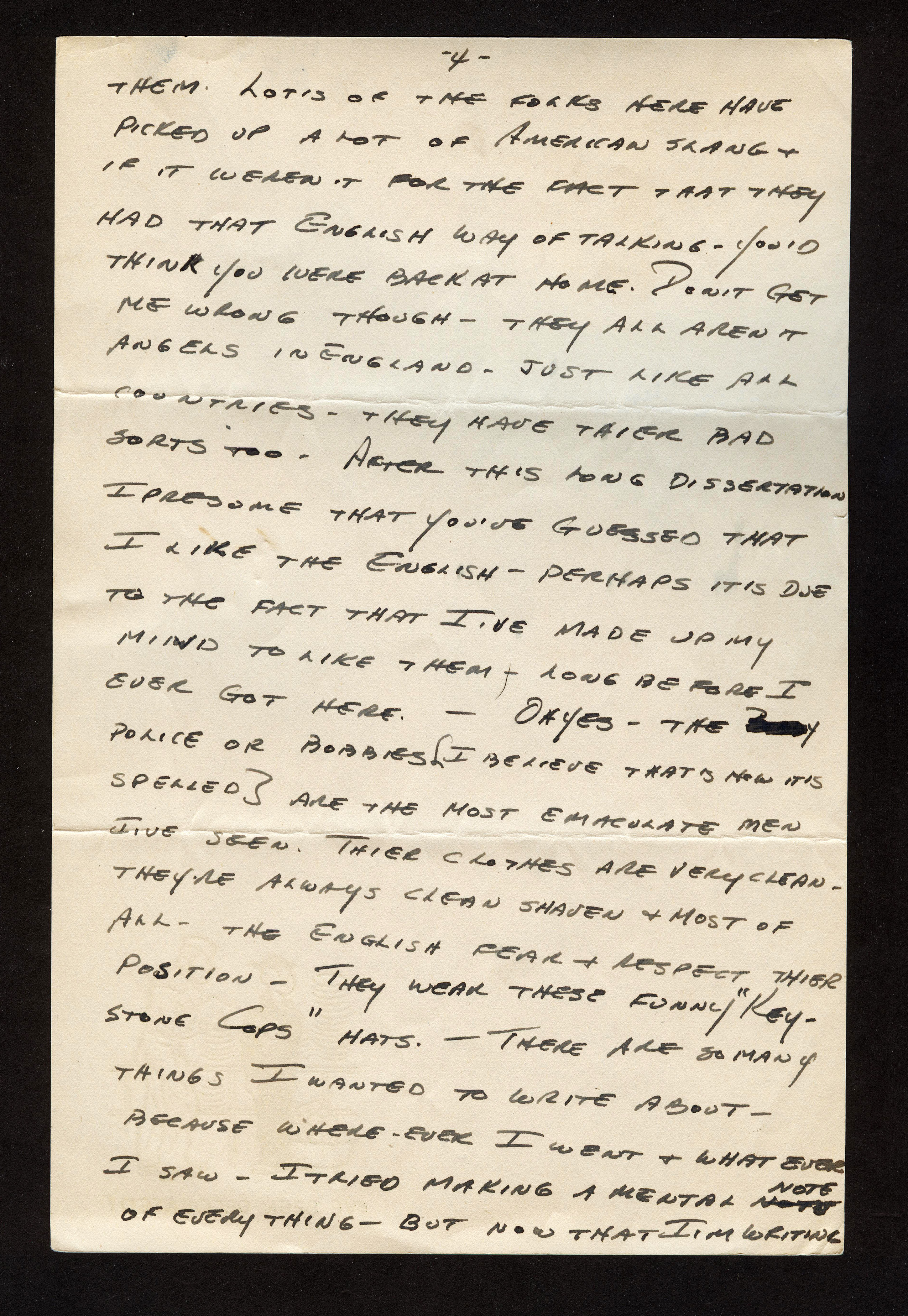
They were not clipped or stapled and were only folded if the actual letter had been folded when originally mailed.  They had been carefully handled. The letters had weathered and faded in places. Solly only wrote on one side of a piece of stationary and used additional folded sheets as insets, numbering the tops of pages so you knew which page or side of stationary to pull out and read next.
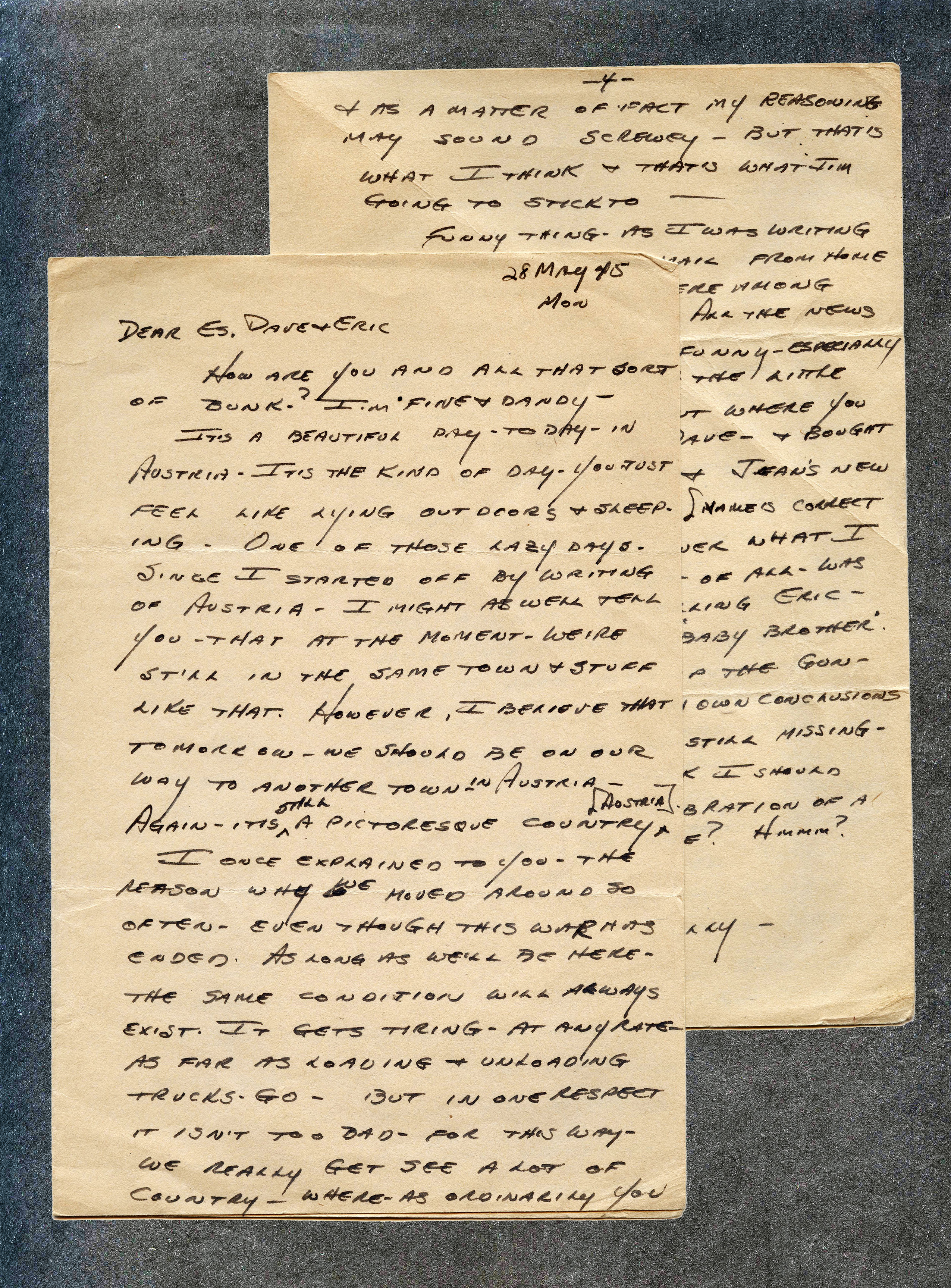
PageLayout_02_mst
Example of stationary layout. This letter will be easier to read when posted with the May, 1945 letters

The photos were scanned at 2400 dpi and some at 1200 dpi.  The letters were mostly scanned at 600 dpi.  Both the photos and letters were formatted slightly to restore some of the tonal qualities time had weakened.
#2 – Dec 26, 1944 – First letter

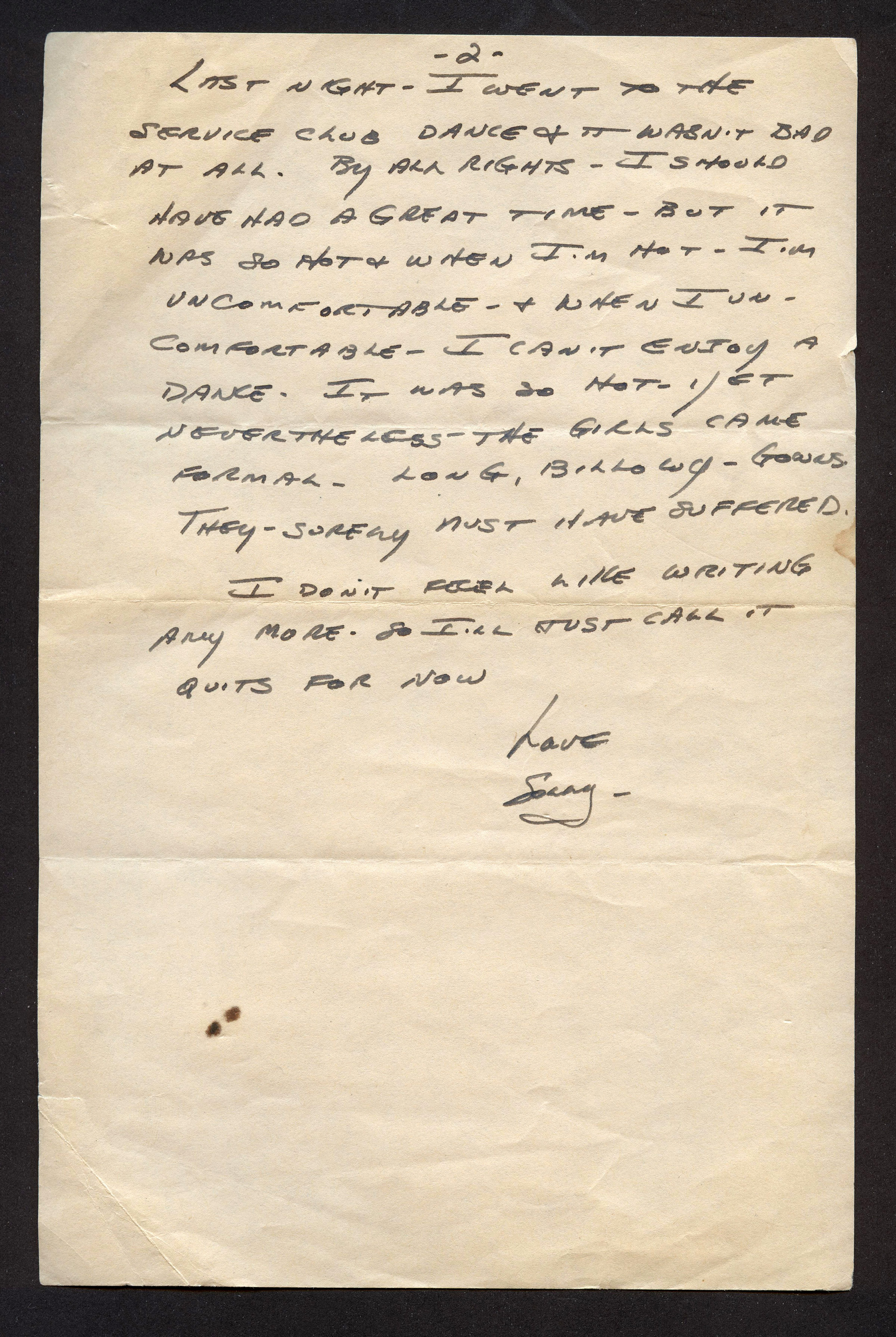
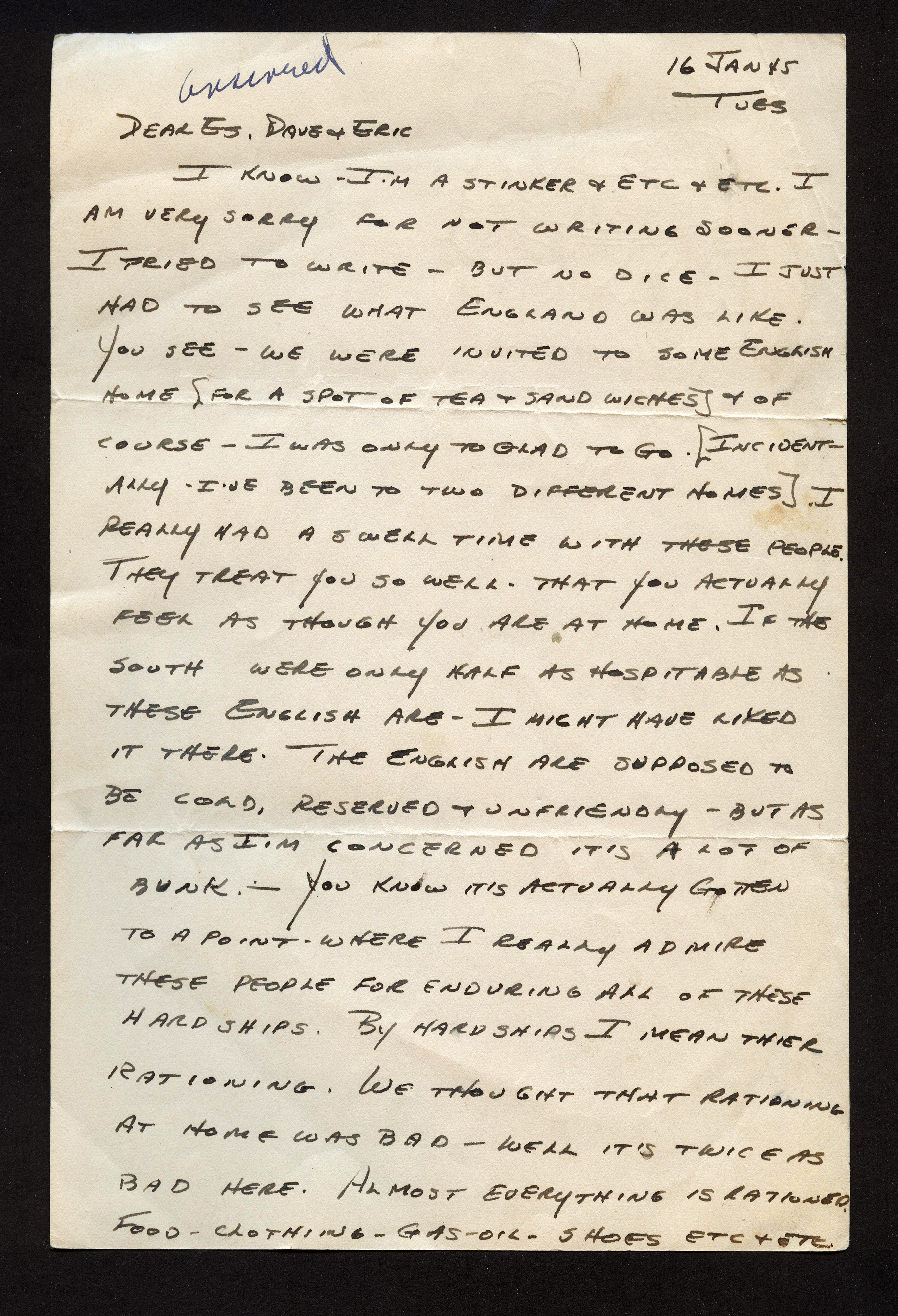
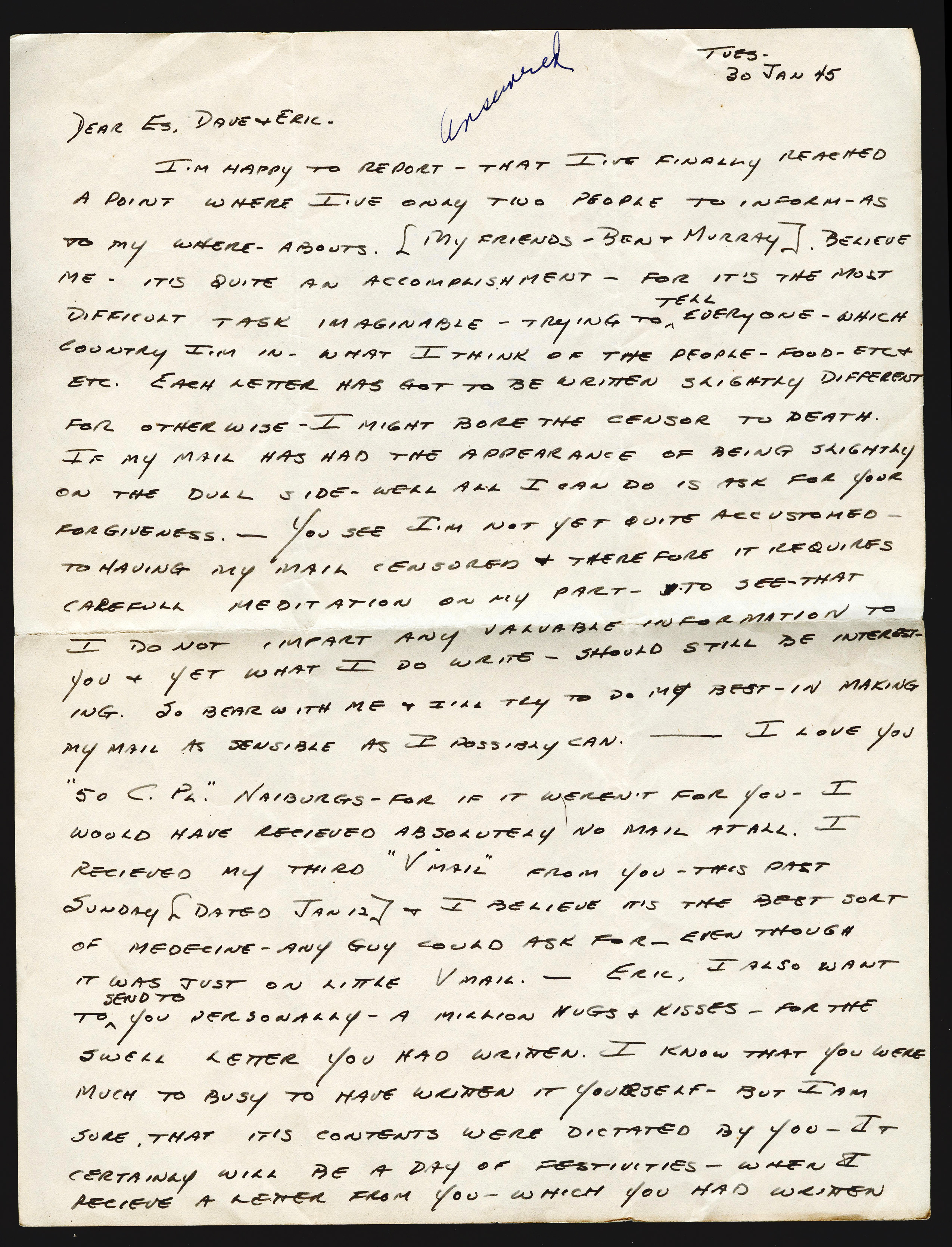
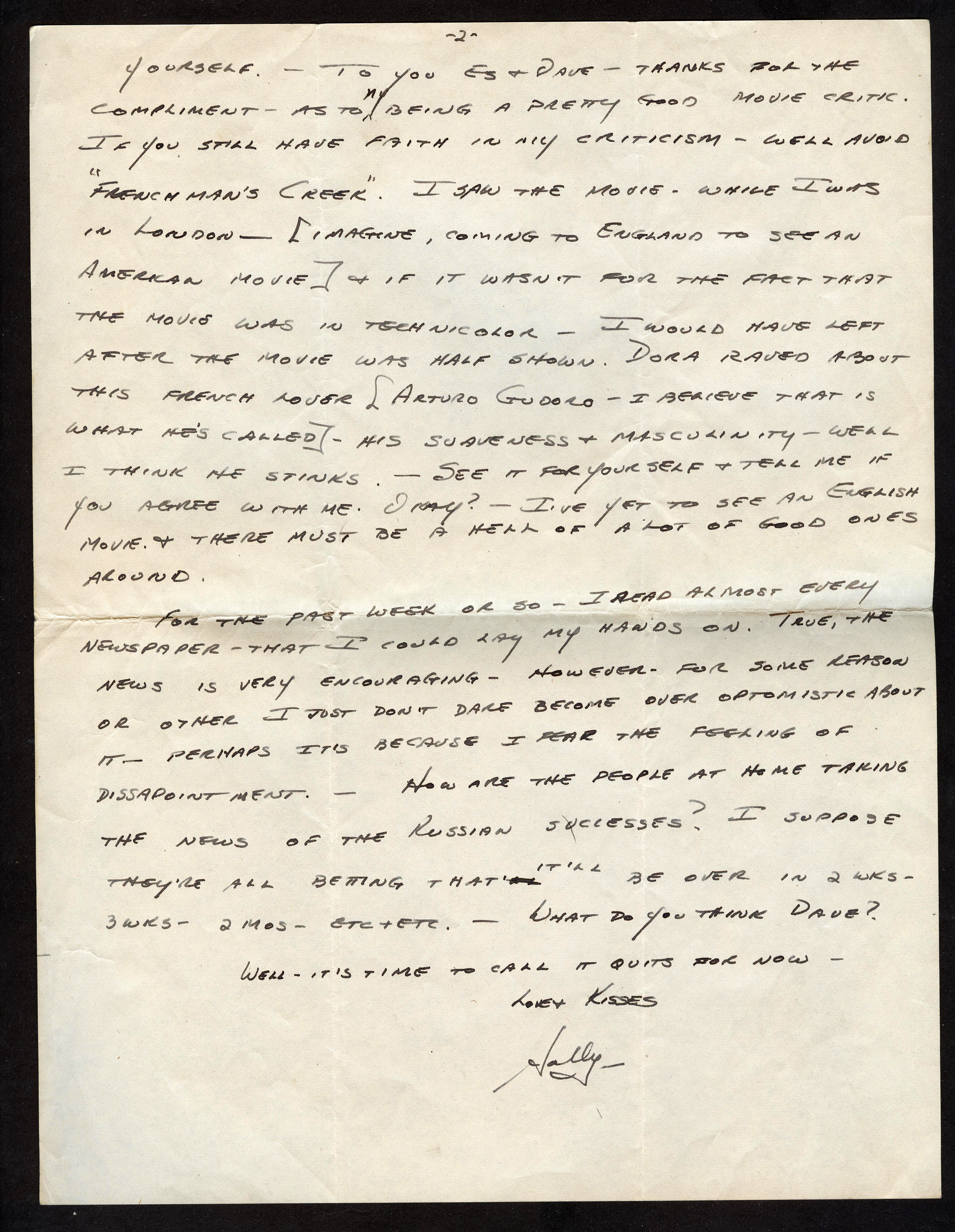
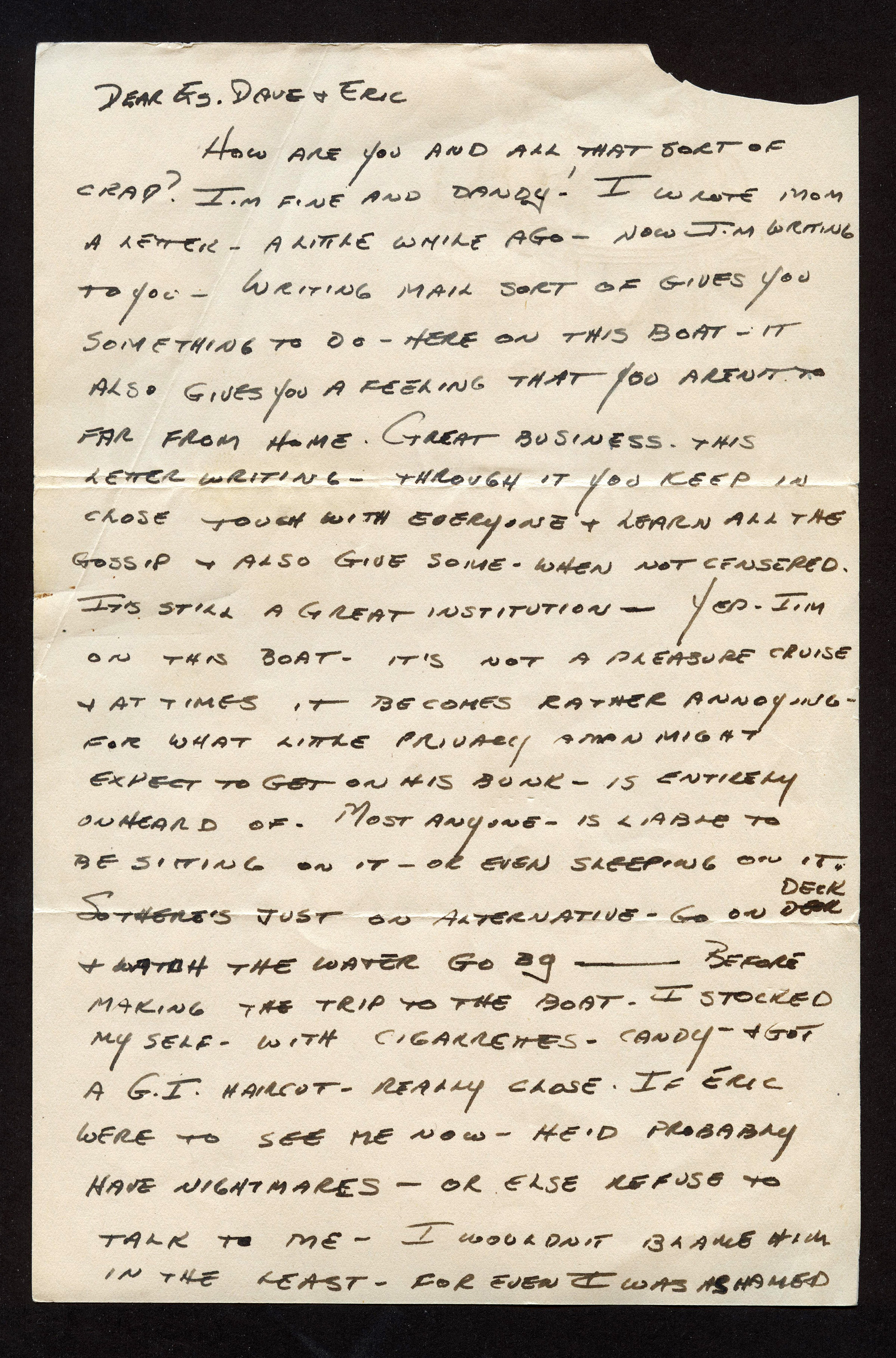
This is the first letter in the collection.  Even though the date is torn off in the upper right corner, Solly writes he is on the transport ship and refers to the Service Club Dance he went to the night before; a typical G.I. send-off event before being shipped out.  These two facts, plus his official Army documents which record his overseas shipping date as December 26, 1944 confirm that this letter was written by Solly on the same date, and thus make it the first letter in the group.

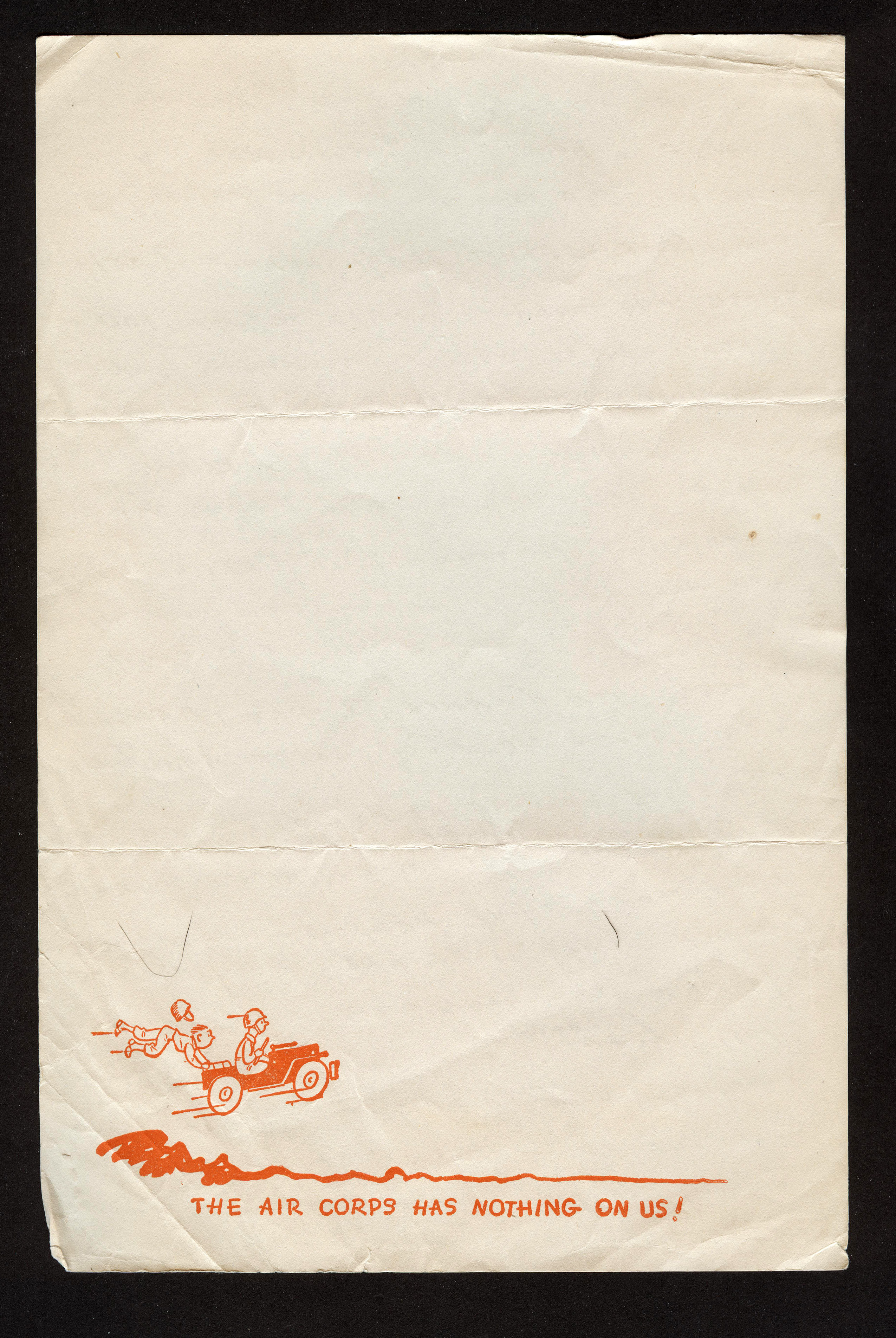
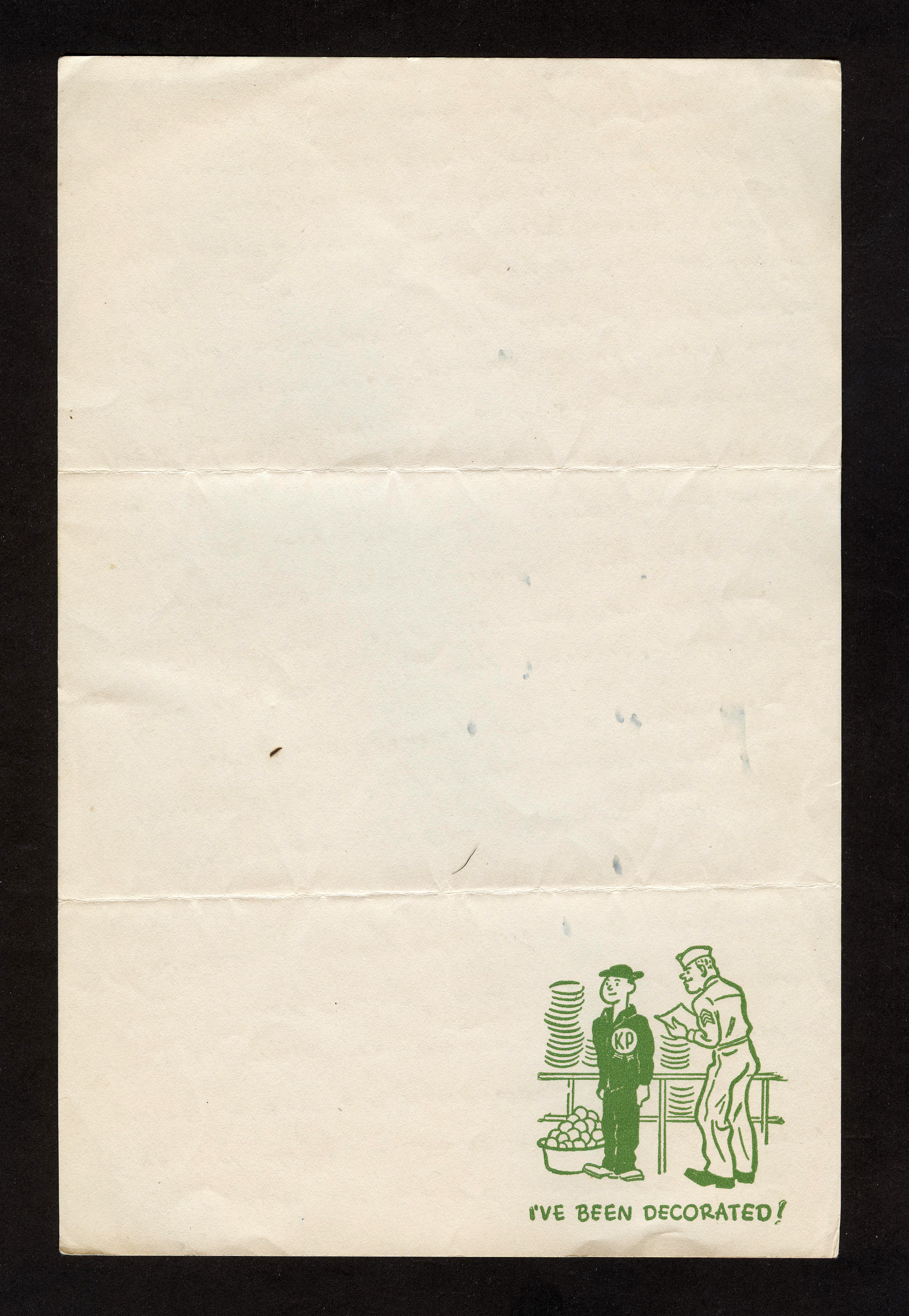
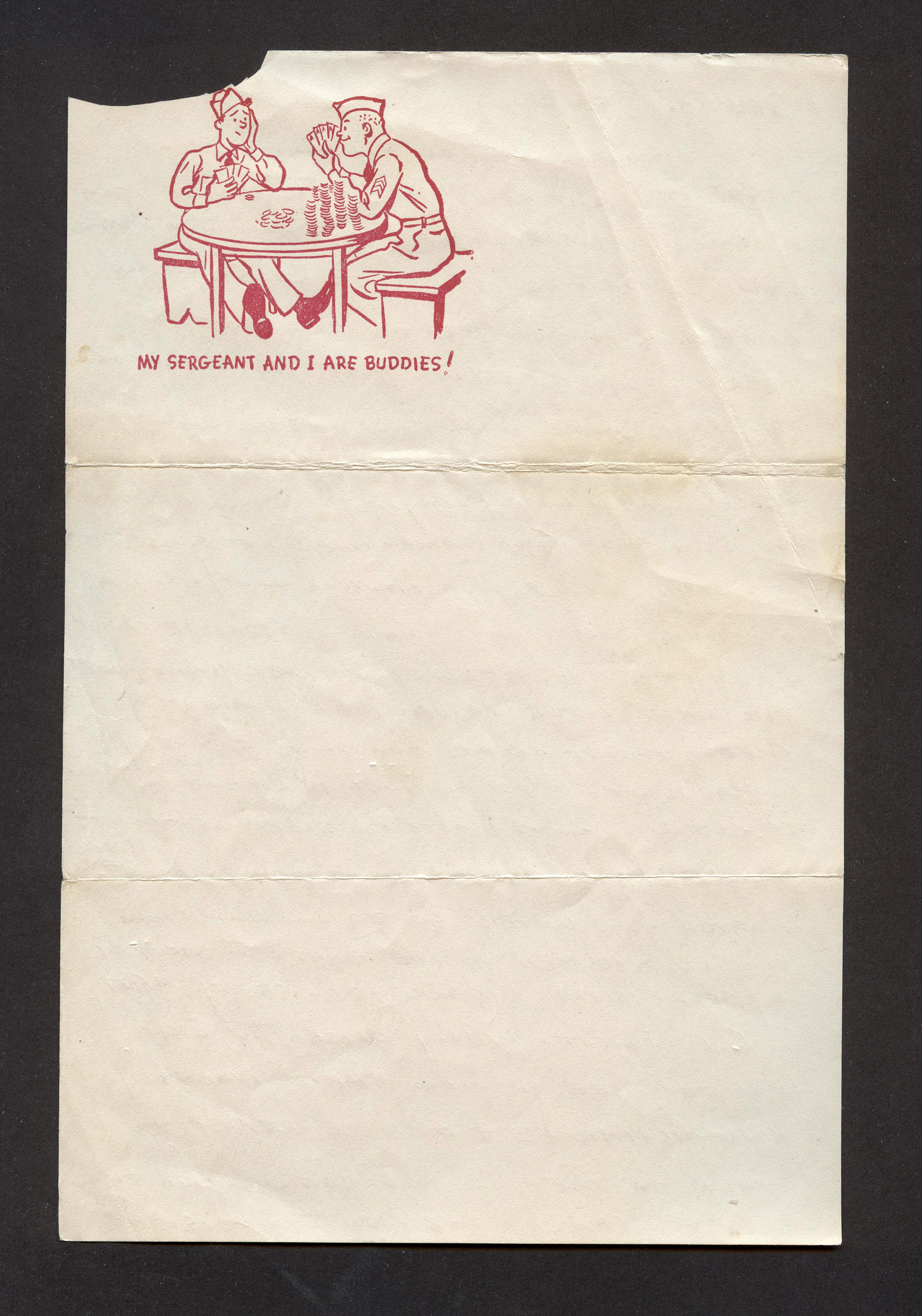
Most often Solly wrote home on plain unlined stationary but some letters, like this first one, were written on Service Club stationary that featured different graphics on the back side of the paper.  When such stationary was used an image of that stationary is included.

On view:  2 pages with one reverse side image of the stationary.

UnknownDate_1_1244_front_mst
December 26, 1944, p. 1
UnknownDate_1_1244_rear_mst
backside of p. 1 stationary
UnknownDate_2_1244_mst
p. 2


#5 – Notes on Style

The war was a career changer for Mike and Solly as much as a life and identity transformation.  The Kovsky brothers were getting an education beyond what we can imagine anyone in the family tree ever had in at least 400 years and possibly much longer.   Solly, in particular, was seeing the world, other nations and cultures, meeting different kinds of Americans from all over the country, learning foreign slang and new expressions, encountering new ideas, and fighting for a country he believed was his home.

Solly grows in the letters as fast as the new experiences come at him and there are periods, many connected to the journey on the Map (see Menu>The Map) where he is on the go, moving all day and night, with one thing slamming him in the face after another.

Early Observations on:

  1. Change – At the very beginning of the letter’s series Solly is on a boat heading to war in Europe and he is naive, scared, having little real to say about himself or about what is exactly happening.  Partially because he is being censored by the Army, being constantly rushed through new preparations, he says a lot less about his situation than he does later on.  The truth is that it is all changing at a rate and magnitude that I found hard to imagine, yet alone comprehend, until I read up on some of the backstory and related facts from the letters.
  2. The dash – It took me years to really notice it clearly: Solly uses the dash symbol (-) as his primary form of punctuation, replacing comma’s, colons, periods and more.  He is not lazy, he is talking his thoughts out.  A dash like that gives a writer a space to pause in their writing and speaking mind.  I can hear him reaching through a millisecond of space to a full second pause, following a thought forward, completing a phrase with a slightly shorter emphasis, or cooling something down. All the Kovsky’s reading this know exactly what I am describing.  It’s how they told a story, a joke, and even how they sat and questioned us – there were dashes back and forth, and lots of time in between for you to answer and for them to listen.
  3. The dinner table – The dash, and other stylistic and content emphasis in the letters is similar to the rhythm and subjects Solly knew from the dinner table growing up with sister, brother and mother.  The table was the primary place for sharing news, information, and ideas, and it all continues as part of the conversation he has in his letters to Es, Dave and Eric.  Solly fills nearly every page of his letters with observations, details, and information and a good deal of it has the “newsy” feel of sitting around with family and bringing people up to date on what you did that day.  Solly also knows his audience well and he doesn’t bullshit them.  There is no bravado.  Solly also tells them when he thinks his objectivity is somewhat skewered by subjective feelings he has about a particular event or people.  Solly’s letters to Es, Dave and Eric are as much an exchange of ideas as anything else.

Unfortunately we do not have the other half of this conversation because the letters they sent to Solly no longer exist.  Remarkably, Solly’s reference to a question asked of him in a prior letter or an outright answer that begins a paragraph to follow are very rarely without some context.  Once or twice there is mention of someone back home who I did not know but it did not create any confusion.


#6 – Whippets

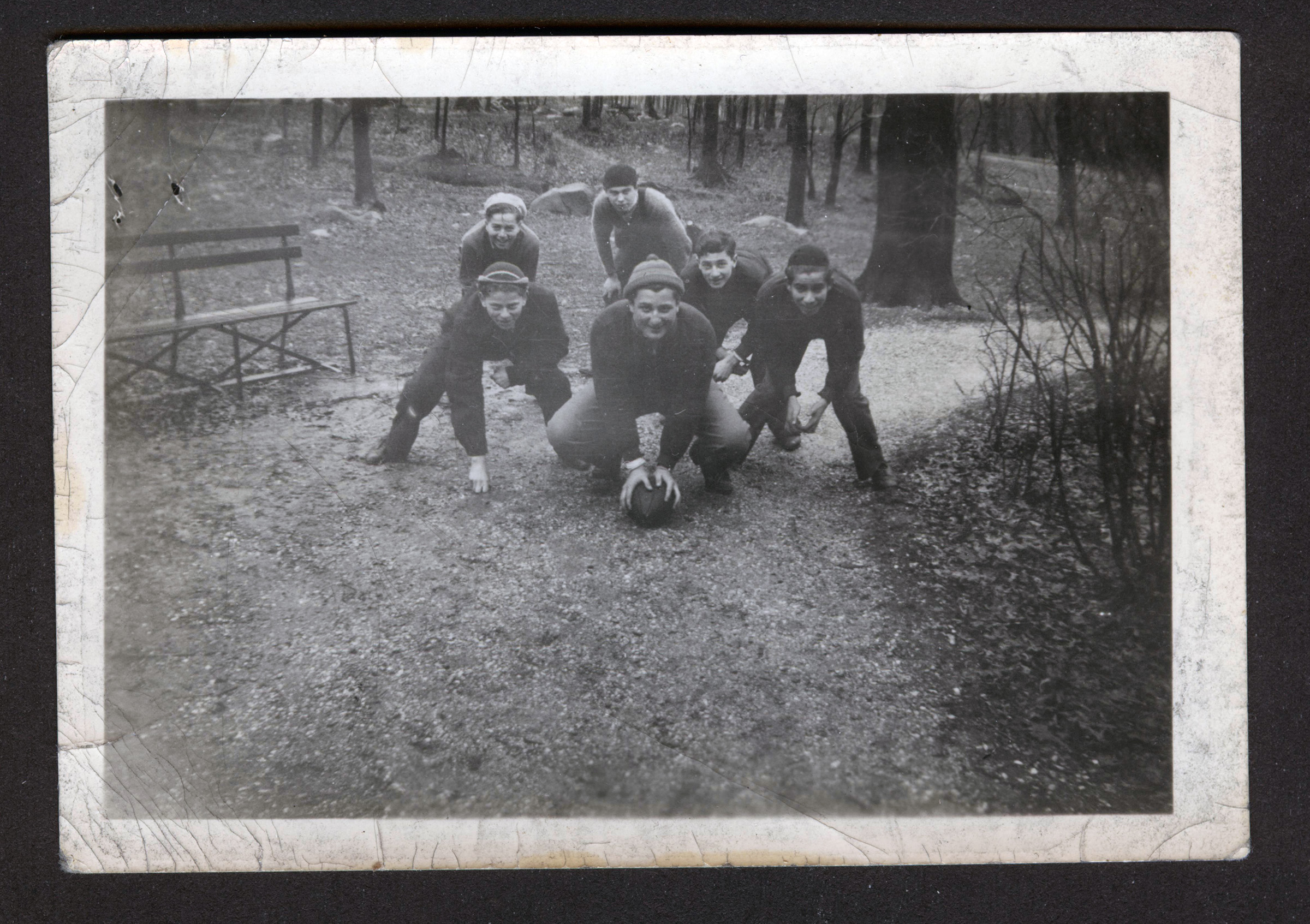
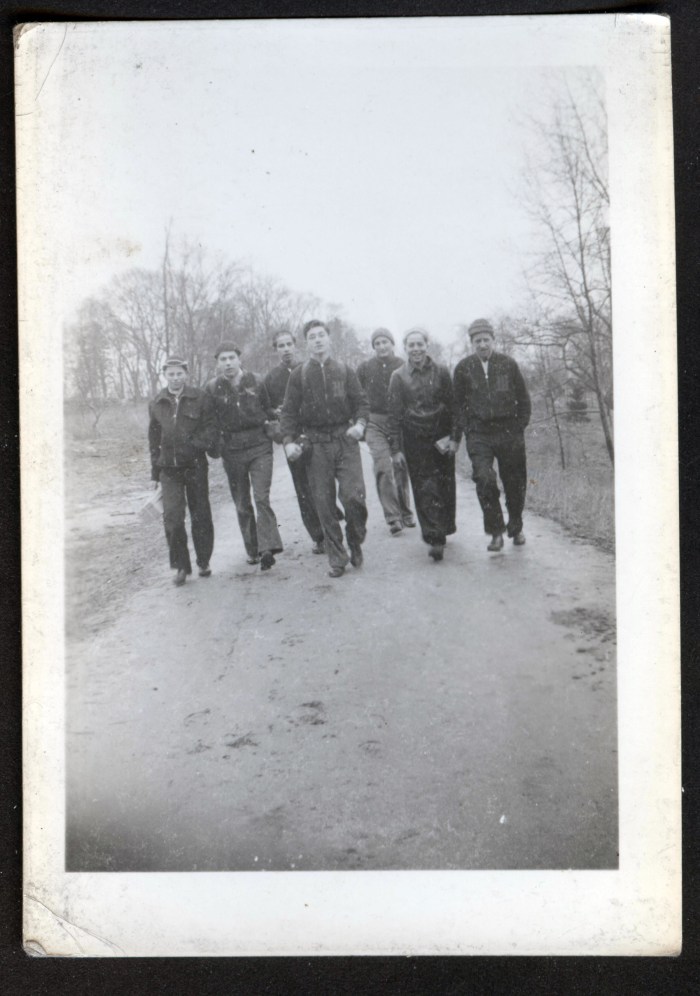
I was always under the impression that the Whippets, the group of boys Solly grew up with,and the friends he worries about in the letters, was a gang.  All the stories I heard were about breaking into places or breaking out of places.

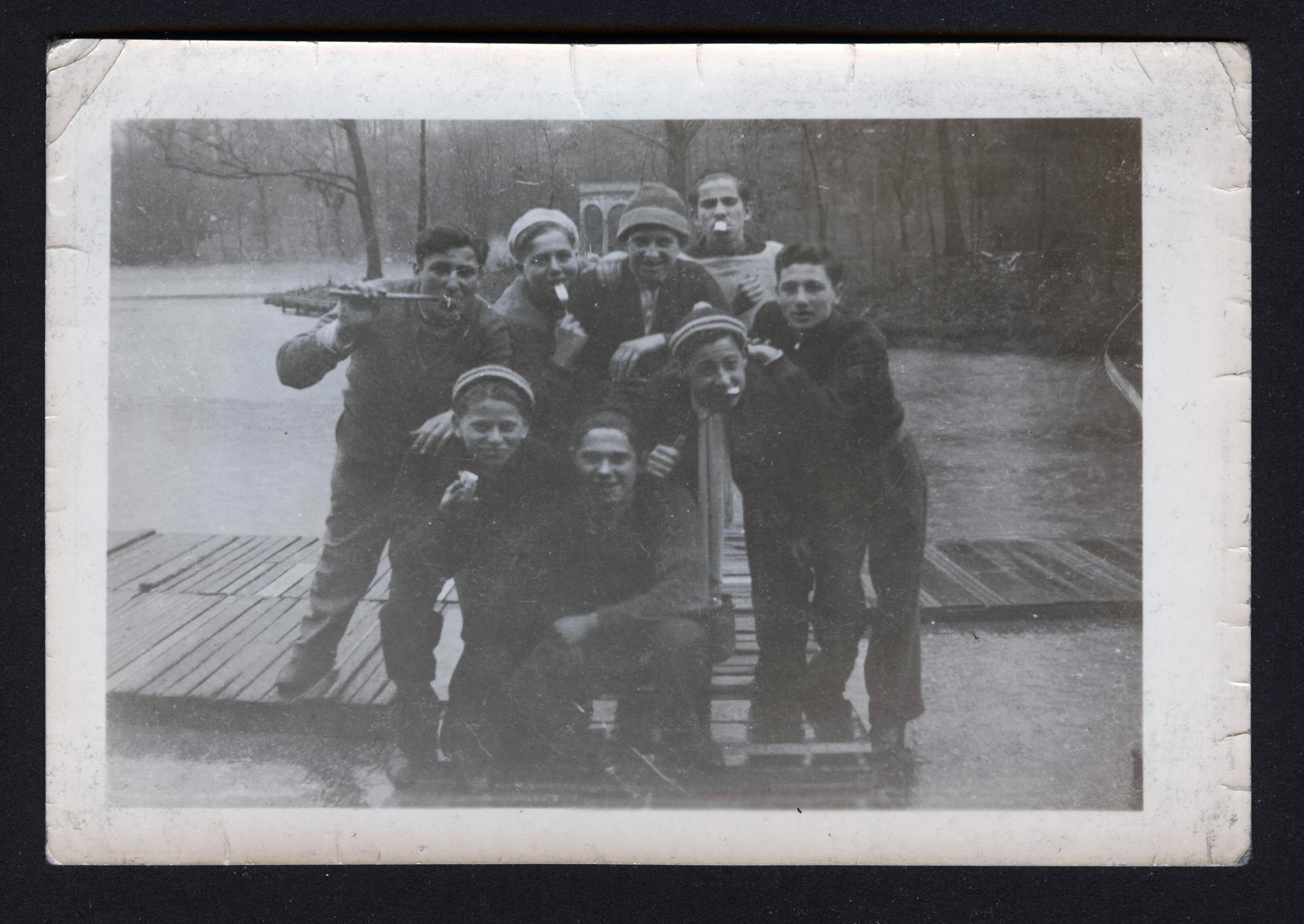
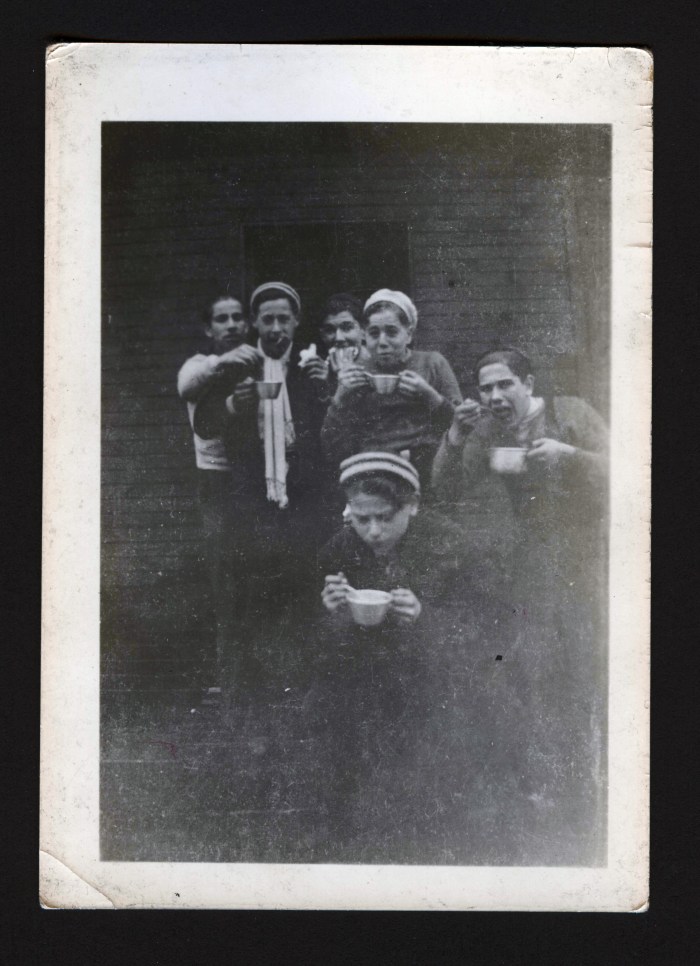
These four pictures were found in Solly’s envelope of photos I refer to in the About page. I felt they should be included in the Blog.  Besides the obvious connection to the letters, such as Solly writing and inquiring in them about the other guys, it seemed like Sol, what he was called at the time he started to save these items, kept them together with with the Army photos and documents deliberately.

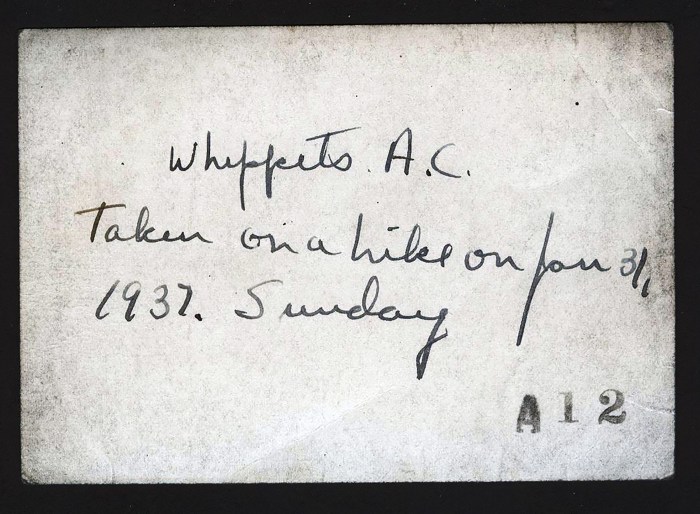
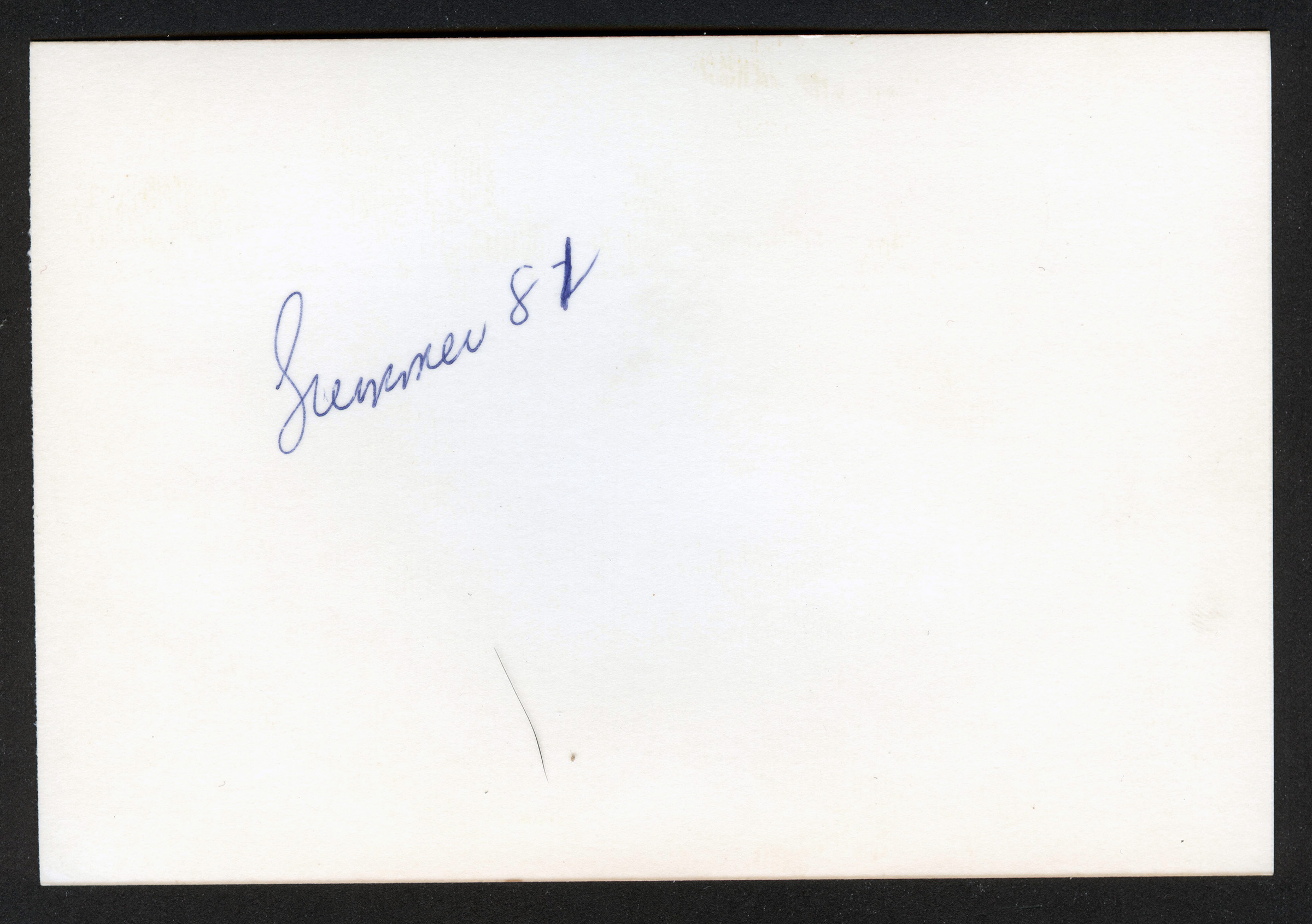
On the back of the first photo below they are referred to as Whippets A.C., which means Athletic club.  Selma was only able to identify one of the other boys for sure and in some of the pictures actually had to have Solly pointed out to her.  “I did not know him when he had that fat face,” Selma said.

All of these pictures appear to be the same day as the first photo below, which is marked on the reverse side by Esther as January 31, 1937.  Solly is 15 1/2.

Whippets_02_front_mst
Solly up front with hands on football, Ben Derzansky behind his left shoulder, Jan 31, 1937.
Whippets_02_reverse_mst
Reverse side above picture
Whippets_04_mst
Solly far left, Ben Derzansky far right, Jan. 31, 1937. Marshmallows on a stick?


Whippets_05v1_mst
Metal cups and pots for canteen cups.  An all day outing.


Whippets_03_front_mst
The Whippet in front appears to be carrying the only back pack.

We believe there were 9 Whippets in total.  We believe all of them were shipped overseas and fought in the war in Europe and the Pacific.  We believe they all returned home in one piece.

The Whippets kept in close contact their entire lives with yearly gatherings that included all their children.

This is a photo of some of the Whippets at one of the large multi-family gatherings we all attended in 1981.

Whippets_06_front_mst

Whippets_06_reverse_mst

#7 – Help Identify

Can you help identify . . .

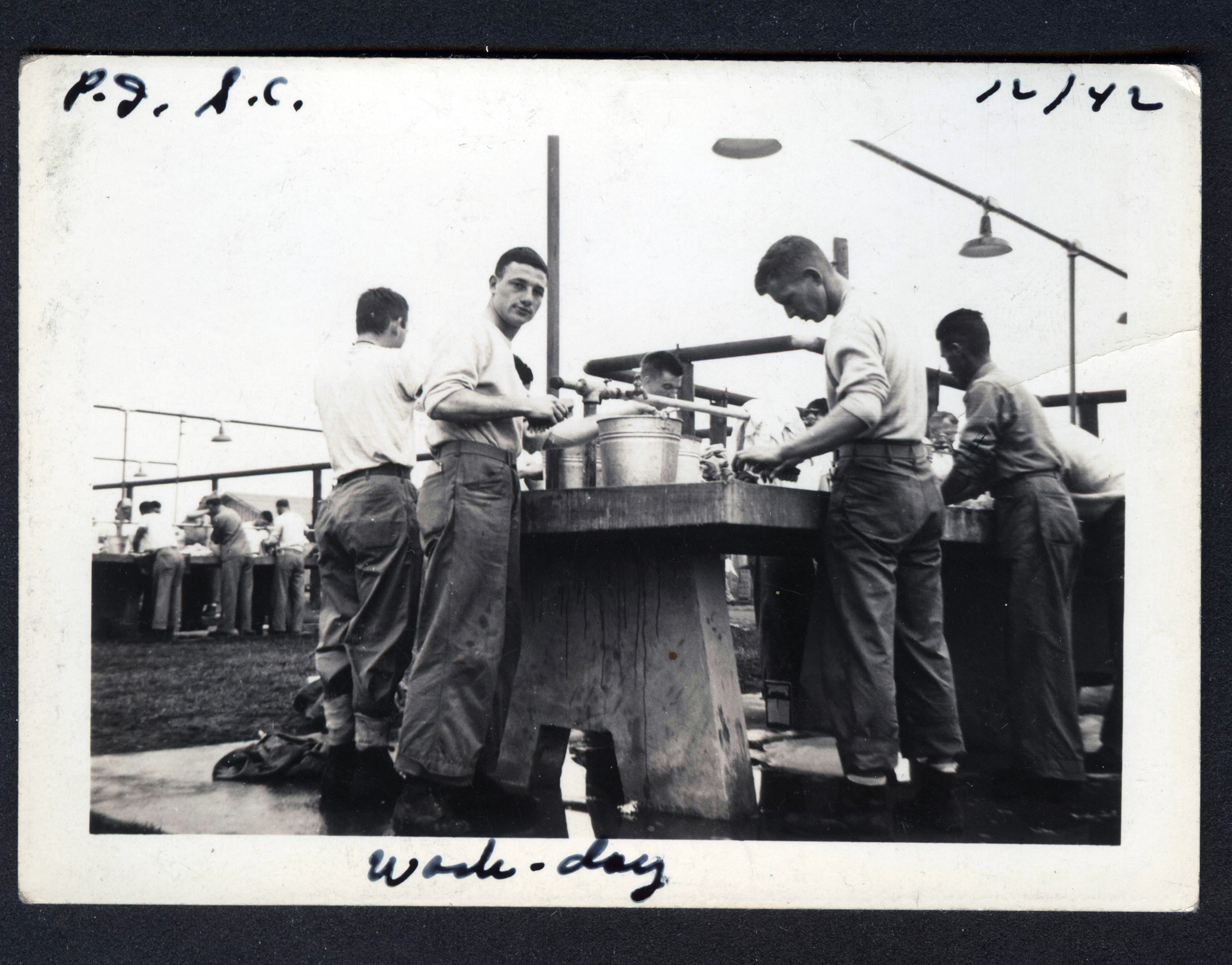
These two photos were either in the envelope Esther kept or in one of Sol’s desk draw envelopes.  Both pictures are dated December, 1942, nearly a year before Solly was drafted.  So, who are they of?  If the relevant clue is that they are deliberately part of Esther or Solly’s collection then it must be from or of someone in the family inner circle?  First thought – Mike.  He is not in the pictures but he still could have sent them home.  The uniforms are Army.  The notation in the upper left corner of both photos seems to indicate a place in South Carolina. Notice how the people in the picture are not identified by name but by state.  The handwriting looks like Esther’s.

Pre1944_18_1942_unknown_mst
Unidentified picture #1
Pre1944_19_1942_unknown_mst
Unidentified picture #2